


Researchers from Hong Kong University of Science and Technology have published a dissertation titled " High-field electron transport properties of α-Ga2O3 " in Applied Physics Letters.
Background
Alpha-phase gallium oxide (α-Ga2O3) with a corundum structure has attracted increasing attention as a promising ultra-wide- bandgap semiconductor for power electronics. Compared with the monoclinic b-Ga2O3 phase, α-Ga2O3 offers the advantage of heteroepitaxial growth on commercially available a-Al2O3 substrates using techniques such as Mist-CVD, enabling large-area, low-cost wafer production. Furthermore, controllable n-type doping via Sn, Si, or Ge incorporation has been experimentally demonstrated, establishing α-Ga2O3 as a viable platform for scalable device technologies. Previous studies on α-Ga2O3 have primarily focused on low-field electron transport, where polar optical phonon scattering was identified as the dominant mobility-limiting mechanism. Experimental and theoretical investigations have also reported anisotropic effective masses and phonon dispersions, suggesting a possible link between lattice dynamics and transport anisotropy. However, existing models largely rely on effective-mass approximations and simplified scattering treatments, which become inadequate under high electric fields where electrons have higher energy. A comprehensive microscopic understanding of high-field electron transport in α-Ga2O3—particularly the origin of transport anisotropy—remains lacking.
Abstract
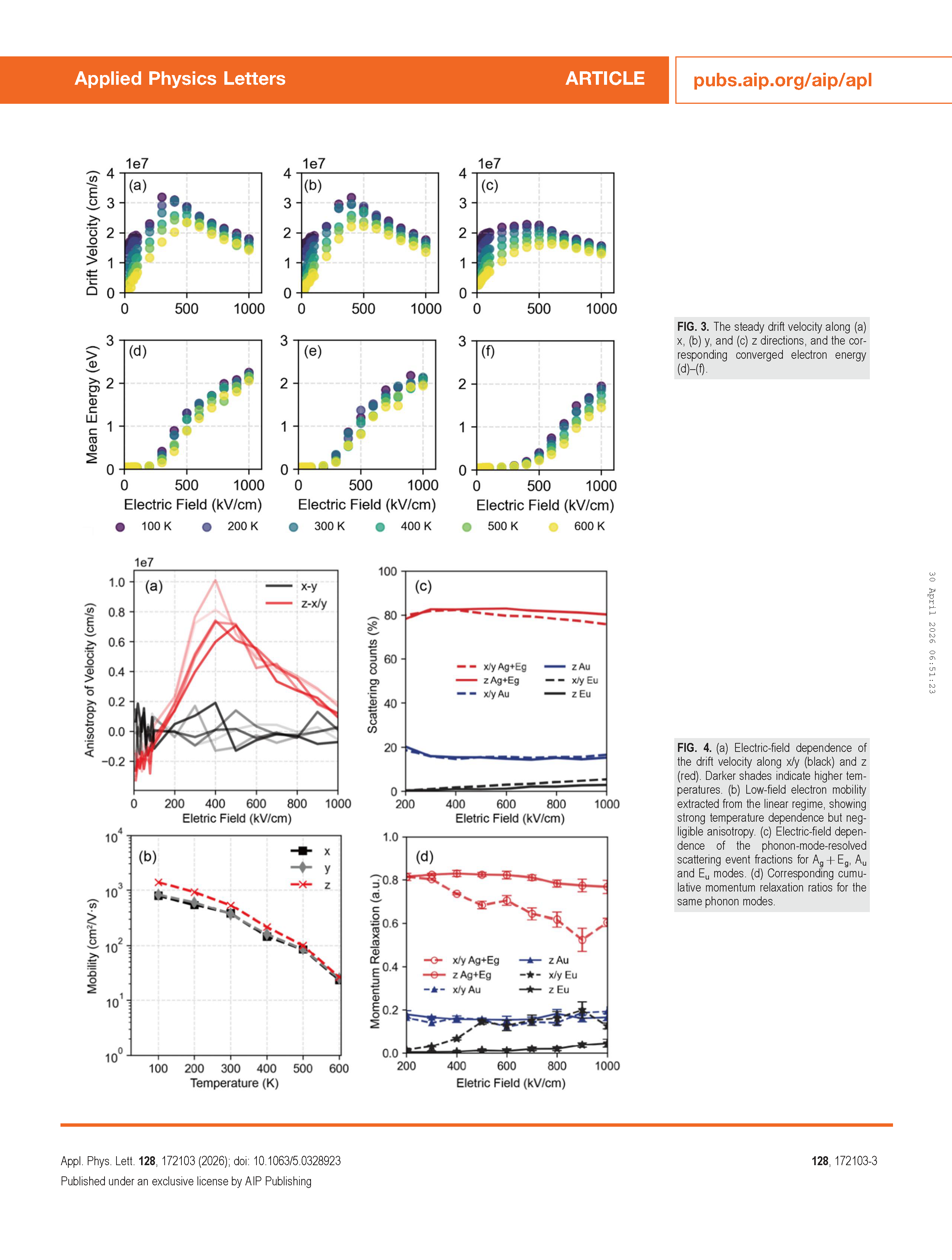
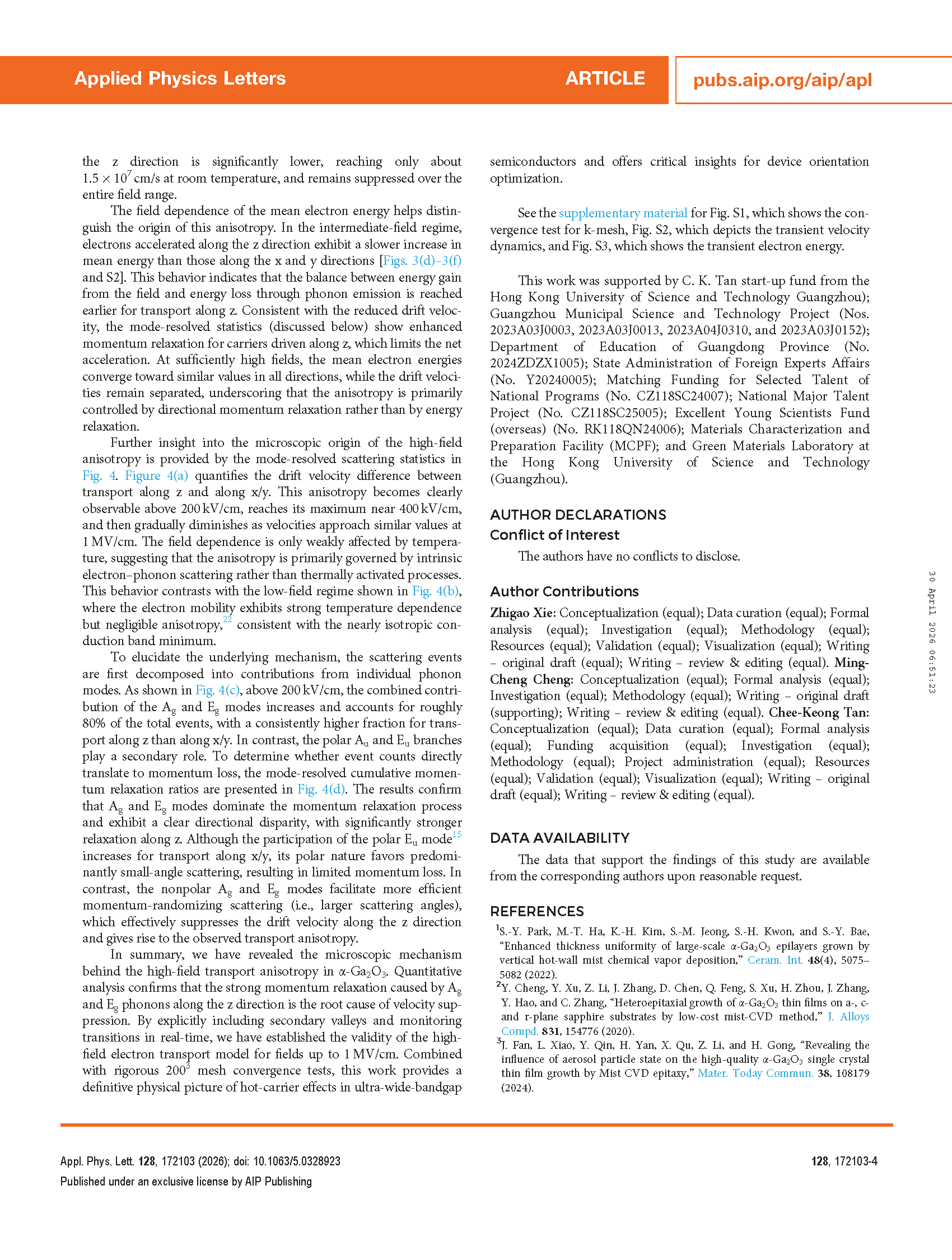
The high-field electron transport properties of alpha-phase gallium oxide (α-Ga2O3) under electric fields up to 1 MV/cm have been investigated using an integrated approach combining full-band first-principles calculations and Monte Carlo simulations. The electron–phonon scattering rates show strong temperature dependence at low electron energy, whereas at higher electron energy, the scattering rates become nearly temperature independent. At room temperature, the peak drift velocity reaches 2.5×107 cm/s at 400 kV/cm along x and y directions, decaying to 1.0×107 cm/s at 1 MV/cm. A drift velocity anisotropy emerges above roughly 200 kV/cm, with the drift velocity along the z direction consistently lower than that along x and y. Mode-resolved momentum relaxation analysis shows that Ag and Eg phonon modes are identified as the primary drivers of this anisotropy due to enhanced momentum randomization along the z direction. These results provide a comprehensive understanding of high-field electron transport in α-Ga2O3, offering valuable insights for optimizing high-power electronic devices.
Conclusion
In summary, we have revealed the microscopic mechanism behind the high-field transport anisotropy in α-Ga2O3. Quantitative analysis confirms that the strong momentum relaxation caused by Ag and Eg phonons along the z direction is the root cause of velocity sup pression. By explicitly including secondary valleys and monitoring transitions in real-time, we have established the validity of the high- field electron transport model for fields up to 1 MV/cm. Combined with rigorous 2003 mesh convergence tests, this work provides a definitive physical picture of hot-carrier effects in ultra-wide-bandgap semiconductors and offers critical insights for device orientation optimization.
Project Support
This work was supported by C. K. Tan start-up fund from the Hong Kong University of Science and Technology Guangzhou); Guangzhou Municipal Science and Technology Project (Nos. 2023A03J0003, 2023A03J0013, 2023A04J0310, and 2023A03J0152); Department of Education of Guangdong Province (No. 2024ZDZX1005); State Administration of Foreign Experts Affairs (No. Y20240005); Matching Funding for Selected Talent of National Programs (No. CZ118SC24007); National Major Talent Project (No. CZ118SC25005); Excellent Young Scientists Fund (overseas) (No. RK118QN24006); Materials Characterization and Preparation Facility (MCPF); and Green Materials Laboratory at the Hong Kong University of Science and Technology (Guangzhou).
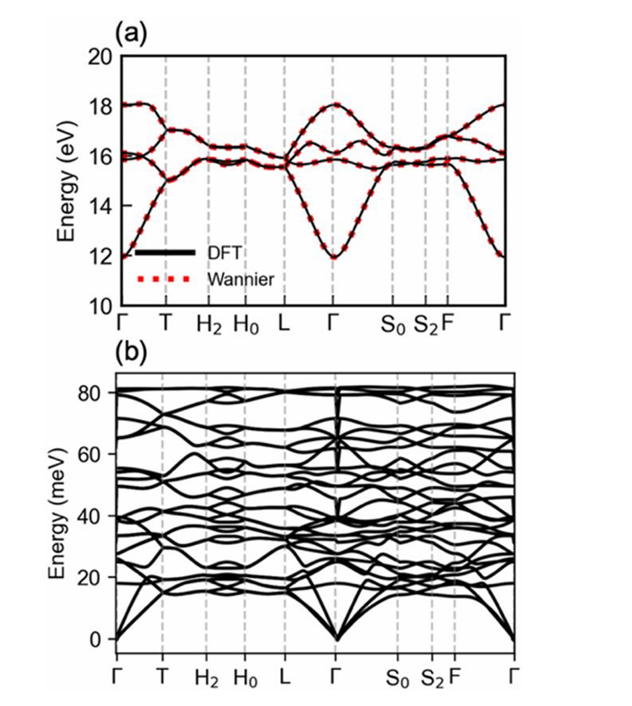
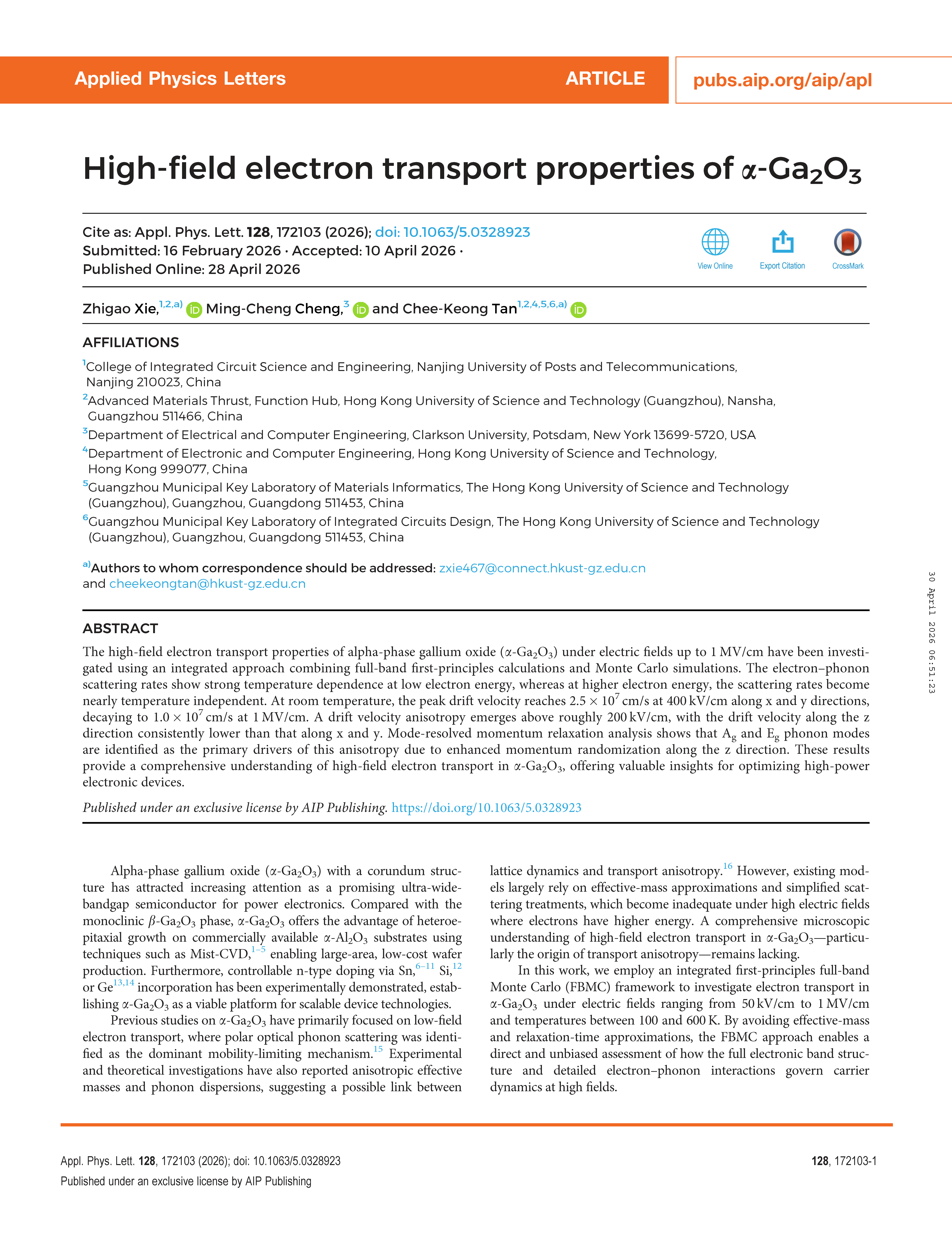
FIG. 1. (a) The electronic band structure of a-Ga2O3 of four lowest conduction band, and the red dash line is the Wannier-interpolated band structure. (b) Phonon dispersion calculated form DFPT.
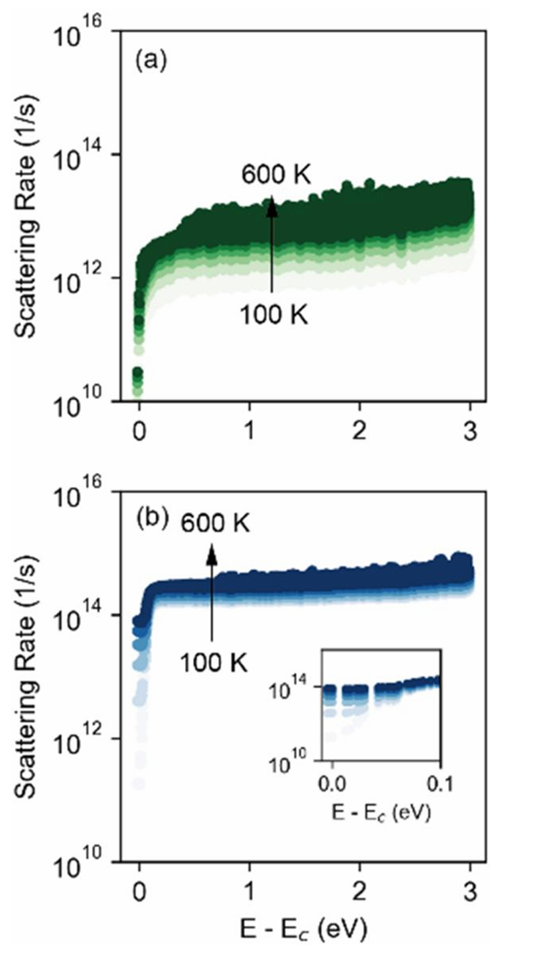
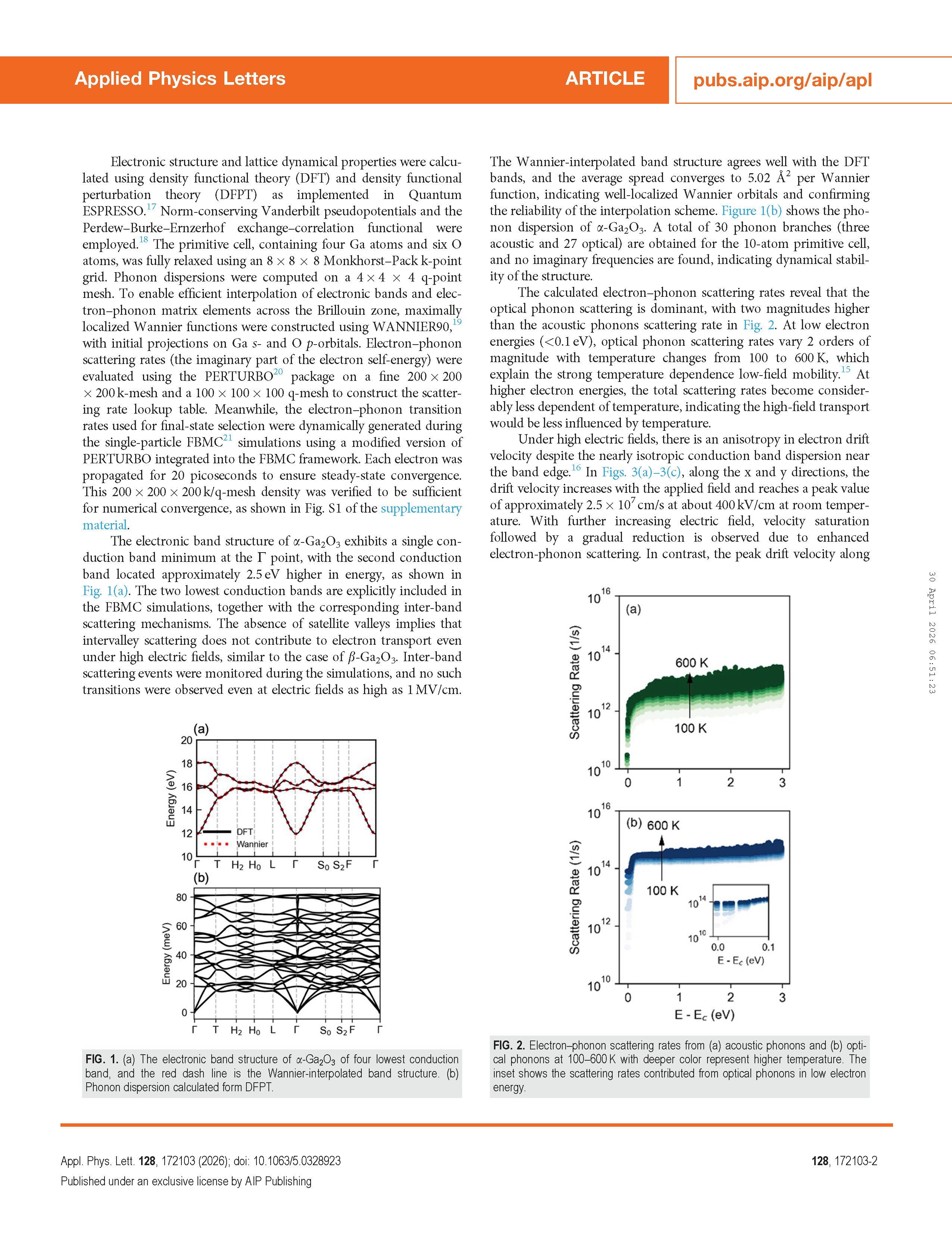
FIG. 2. Electron–phonon scattering rates from (a) acoustic phonons and (b) optical phonons at 100–600K with deeper color represent higher temperature. The inset shows the scattering rates contributed from optical phonons in low electron energy.
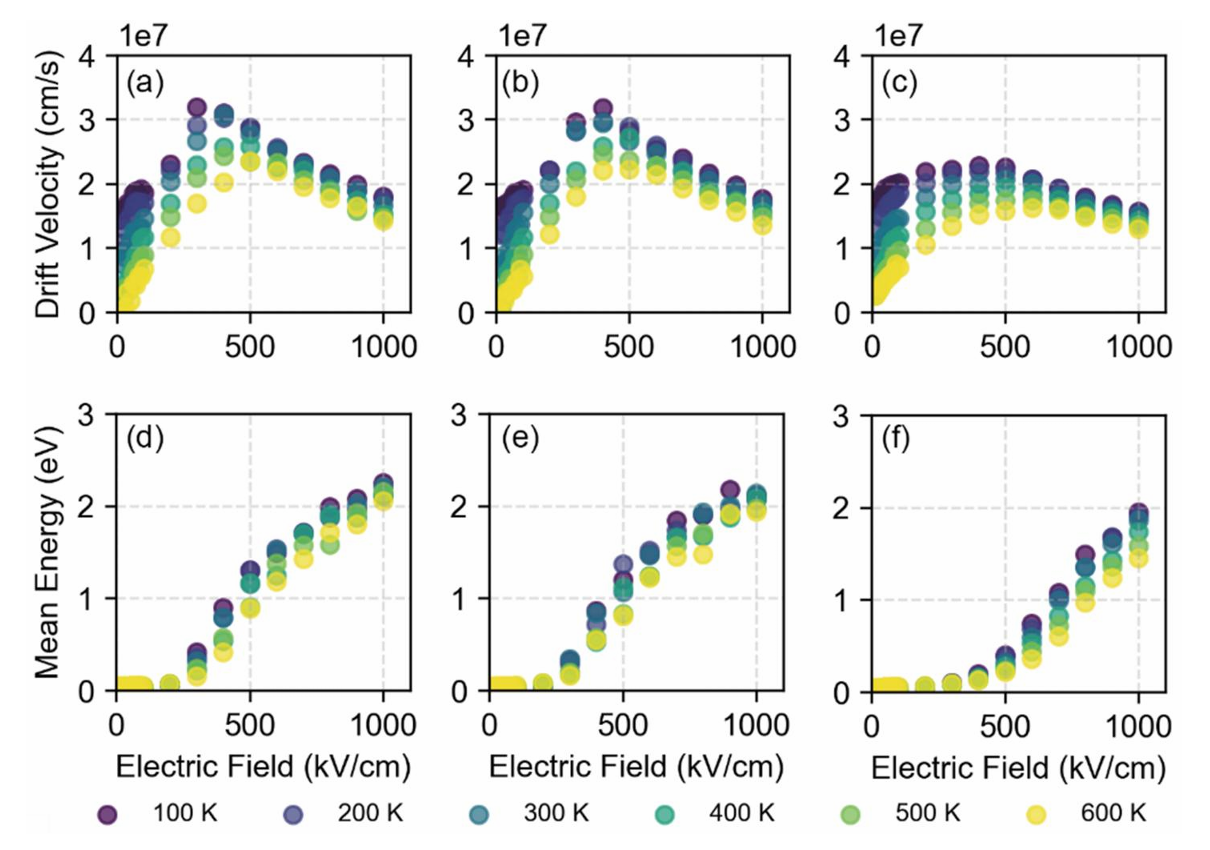
FIG. 3. The steady drift velocity along (a) x, (b) y, and (c) z directions, and the corresponding converged electron energy (d)–(f).
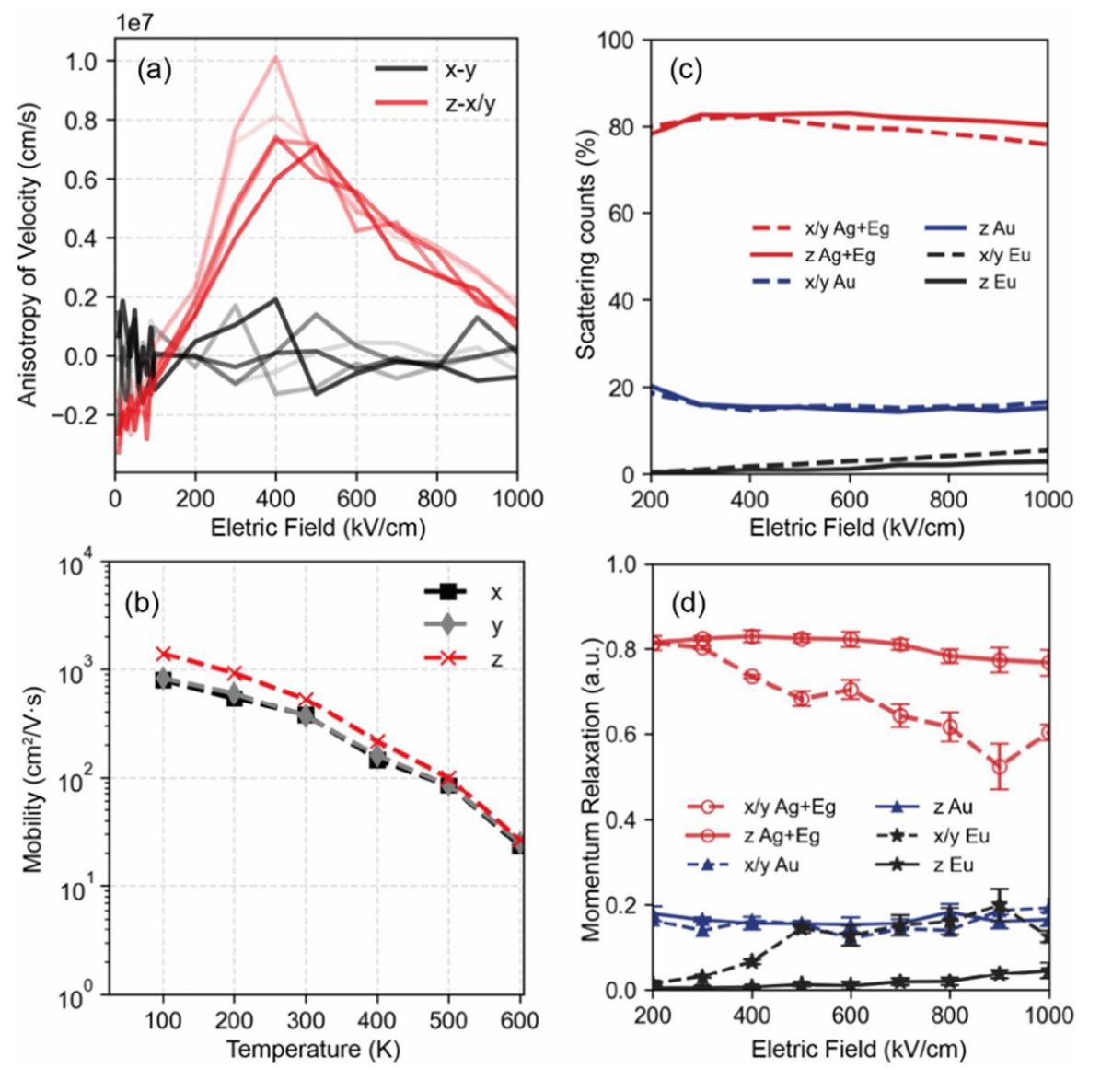
FIG. 4. (a) Electric-field dependence of the drift velocity along x/y (black) and z (red). Darker shades indicate higher temperatures. (b) Low-field electron mobility extracted from the linear regime, showing strong temperature dependence but negligible anisotropy. (c) Electric-field dependence of the phonon-mode-resolved scattering event fractions for Ag + Eg, Au and Eu modes. (d) Corresponding cumulative momentum relaxation ratios for the same phonon modes.
DOI:
doi.org/10.1063/5.0328923
Instruction
Official Account

Cooperation
Top