


A research team from Wuhan University recently published a paper titled Anisotropic Irradiation Response and Phase Transition of β-Ga₂O₃ under 10 MeV Electron Irradiation in the academic journal Journal of Materials Science & Technology. Doctoral student Liu Taiqiao from Wuhan University and Dr. Shao Tian from China University of Geosciences (Wuhan) are the co-first authors of the paper, while Professor Zhang Zhaofu from the academician Liu Sheng research team at the School of Integrated Circuits, Wuhan University, serves as the corresponding author.
Background
As an ultra-wide-bandgap semiconductor material, β-Ga₂O₃ has attracted significant attention for applications in high-power electronic devices, solar-blind ultraviolet photodetectors, and electronics operating in extreme environments due to its high breakdown electric field strength and wide bandgap. With the continuous expansion of its potential applications in radiation-intensive environments such as aerospace, nuclear industries, and deep-space exploration, the structural and performance stability of β-Ga₂O₃ under irradiation has become an important research focus.
Current studies on electron irradiation effects in β-Ga₂O₃ are mainly concentrated in the energy range of 0.5–2.5 MeV. Existing results generally suggest that irradiation within this range primarily introduces point defects, leading to the degradation of the material’s electrical and optical properties. However, when the electron energy increases to the 10 MeV level, the energy deposition and displacement damage induced by high-energy electrons become significantly enhanced. Consequently, the corresponding defect formation mechanisms and structural evolution behaviors may differ fundamentally from those observed under low-energy electron irradiation.
Particularly under high-dose irradiation conditions, several critical scientific questions remain insufficiently understood, including whether the massive accumulation of point defects can trigger lattice reconstruction and irradiation-induced phase transitions, whether different crystallographic orientations exhibit distinct sensitivities to irradiation damage, and what the ultimate damage tolerance and stability mechanisms of the material are under extreme electron irradiation environments. Systematic investigations addressing these issues are still lacking.
Abstract
In this study, β-Ga₂O₃ (100), (010), (001), and (-201) oriented samples provided by Hangzhou Garen Semiconductor Co., Ltd. were subjected to 10 MeV electron irradiation experiments with fluences of 1 × 10¹⁷ cm⁻² and 5 × 10¹⁷ cm⁻². The anisotropic irradiation response behaviors of the four crystal orientations were systematically investigated in terms of their structural, electronic, and optical properties. Combined with electron irradiation capture cross-section calculations and machine-learning molecular dynamics (ML-MD) simulations matched to the experimental conditions, the metastable phase transition mechanism induced by irradiation was further revealed.
The results demonstrate significant orientation-dependent differences under irradiation. For the (100) plane, the collapse of the GaO₄ tetrahedral structure led to severe structural degradation in the near-surface region, accompanied by the disappearance of the Raman characteristic peaks Bg(2), Ag(8), and Ag(9). In contrast, the (010) plane was affected by the channeling effect, which reduced electron scattering and promoted a dispersed distribution of point defects within the bulk phase, resulting in a significant increase in the full width at half maximum (FWHM) of the XRD rocking curve.
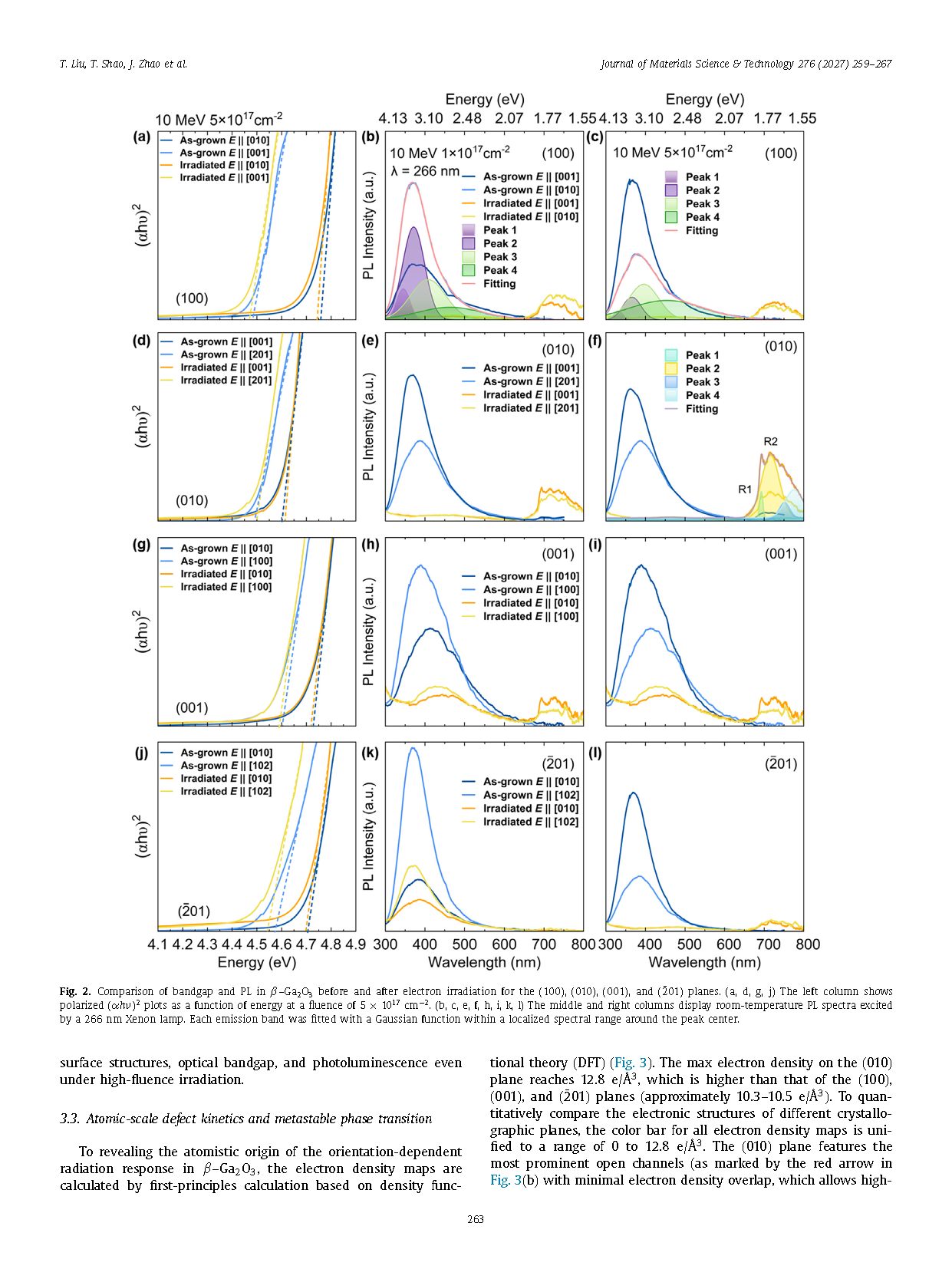
Meanwhile, all crystal orientations exhibited infrared luminescence at approximately 690 nm, along with varying degrees of suppression of the intrinsic blue-violet emission. Among them, the (001) plane showed the best overall irradiation stability. Furthermore, ML-MD results indicate that irradiation-induced point defects can reorganize into a small amount of dispersed γ-phase structures, with metastable γ-Ga₂O₃ ultimately existing as inclusions embedded within defective β-Ga₂O₃.
Highlights
The electron irradiation energy was increased to 10 MeV, enabling a systematic investigation of the structural response and phase transition mechanisms of β-Ga₂O₃ under extreme high-energy irradiation conditions.
A comprehensive comparison of the irradiation responses of the (100), (010), (001), and (-201) crystal orientations was conducted, clearly revealing significant differences in structural tolerance and defect evolution among different crystallographic planes.
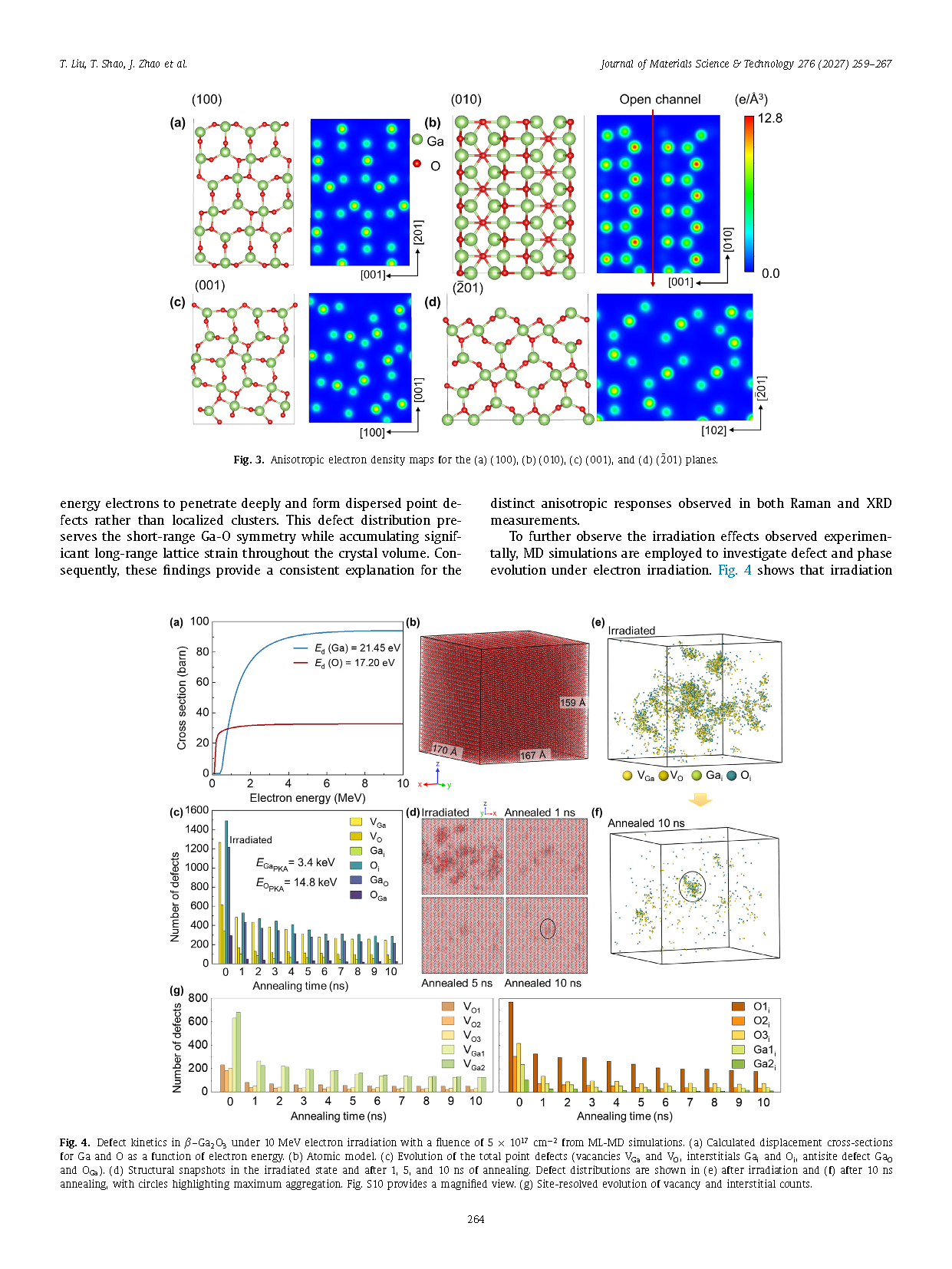
The (010) orientation exhibited a pronounced channeling effect, allowing high-energy electrons to penetrate deeper into the material, thereby intensifying internal irradiation-induced stress accumulation and significantly degrading crystal quality.
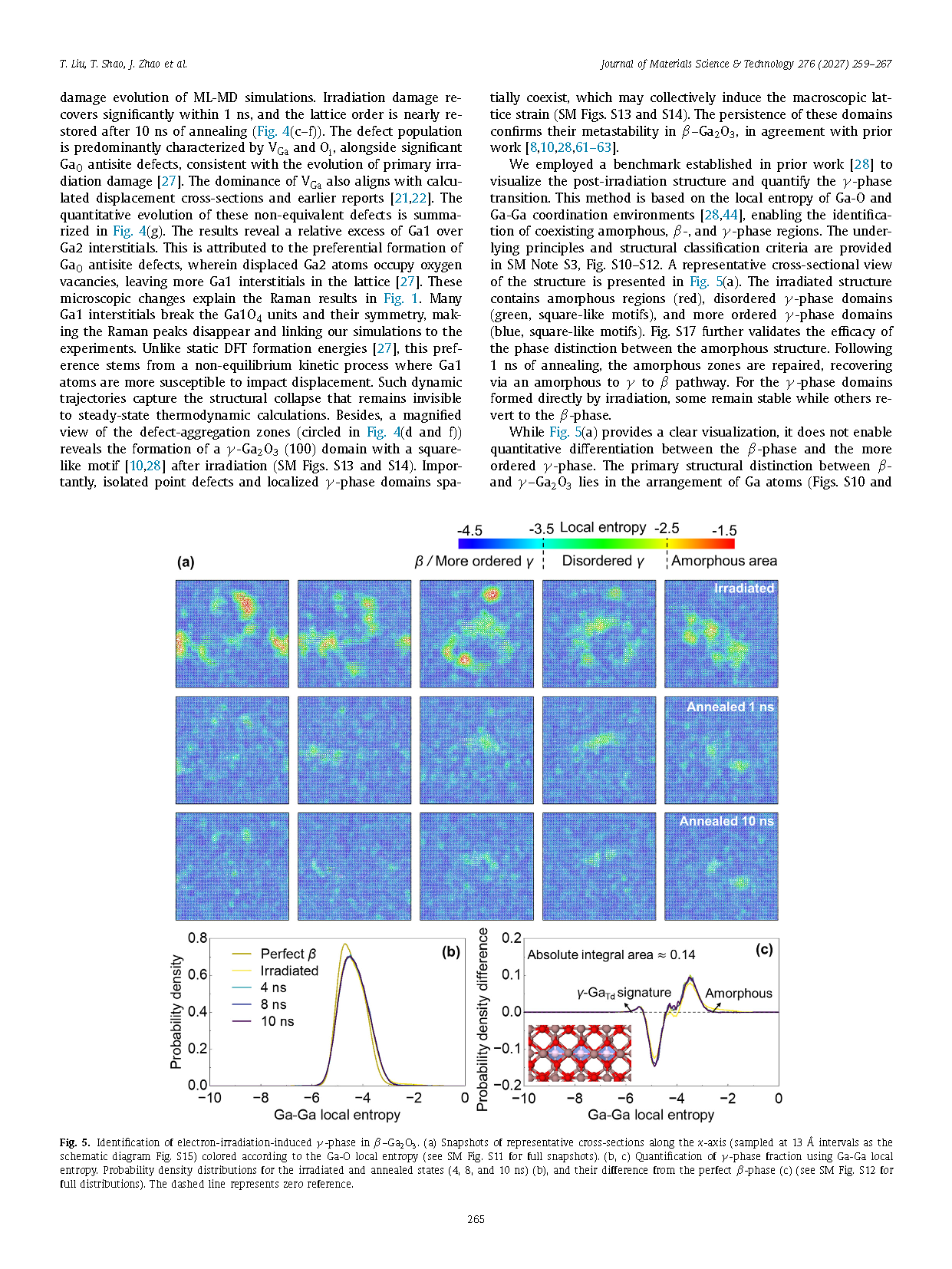
By combining machine-learning molecular dynamics (ML-MD) simulations, the study revealed at the atomic scale that electron irradiation can induce a phase transition from β-Ga₂O₃ to γ-Ga₂O₃. However, due to the limited phase transformation fraction, the resulting γ phase mainly exists as dispersed defect-like inclusions embedded within the defective β-phase matrix.
In this study, 10 MeV high-energy electron irradiation experiments, density functional theory (DFT) calculations, and machine-learning molecular dynamics (ML-MD) simulations were combined to systematically investigate defect formation mechanisms and phase evolution behavior of β-Ga₂O₃ under high-energy and high-fluence electron irradiation conditions.
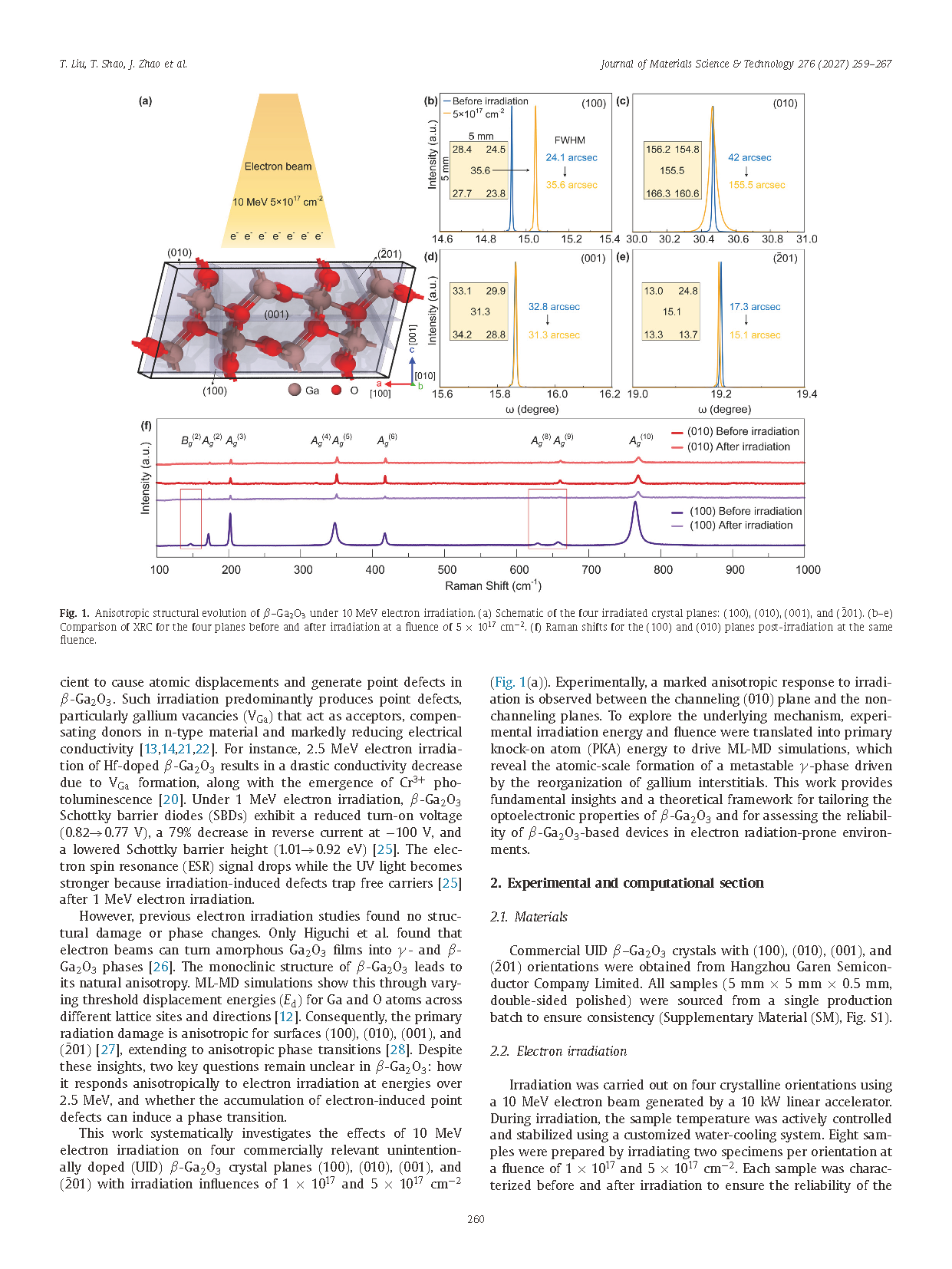
The results demonstrate that β-Ga₂O₃ exhibits pronounced anisotropic irradiation responses across different crystallographic orientations. Among them, the (100) orientation is the most sensitive to irradiation-induced lattice vibrational degradation, as evidenced by the disappearance of the Raman modes Bg(2), Ag(8), and Ag(9).
DFT results further indicate that the channeling effect in the (010) plane can effectively reduce the scattering of incident electrons and partially preserve lattice integrity. However, dispersed point defects within the lattice lead to a significant increase in the full width at half maximum (FWHM) of the X-ray rocking curve (XRC), from approximately 42 arcsec to over 155 arcsec.
In contrast, the (001) orientation exhibits superior resistance to electron irradiation in terms of structural stability as well as electrical and optical performance.
Under the same irradiation conditions, ML-MD simulations reveal that accumulated point defects can further induce localized structural reconstruction, forming local phase regions with γ-Ga₂O₃ characteristics. However, due to the limited fraction of γ-Ga₂O₃ formed, no distinct γ-phase diffraction peaks are observed in XRD measurements. Therefore, the γ phase is more likely to exist as a dispersed defect-like configuration embedded within the highly defected β-phase matrix.
This work not only deepens the understanding of defect evolution and phase transition mechanisms in β-Ga₂O₃ under high-energy electron irradiation, but also provides important theoretical insights and strategic guidance for performance tuning and reliability assessment of gallium oxide materials in extreme irradiation environments.

Figure 1 (a) Schematic illustrations of the four irradiated crystal orientations: (100), (010), (001), and (-201); (b–e) Comparison of the XRC full width at half maximum (FWHM) of the four crystal orientations under an irradiation fluence of 5 × 10¹⁷ cm⁻²; (f) Raman spectra of the (100) and (010) orientations under the same irradiation fluence.
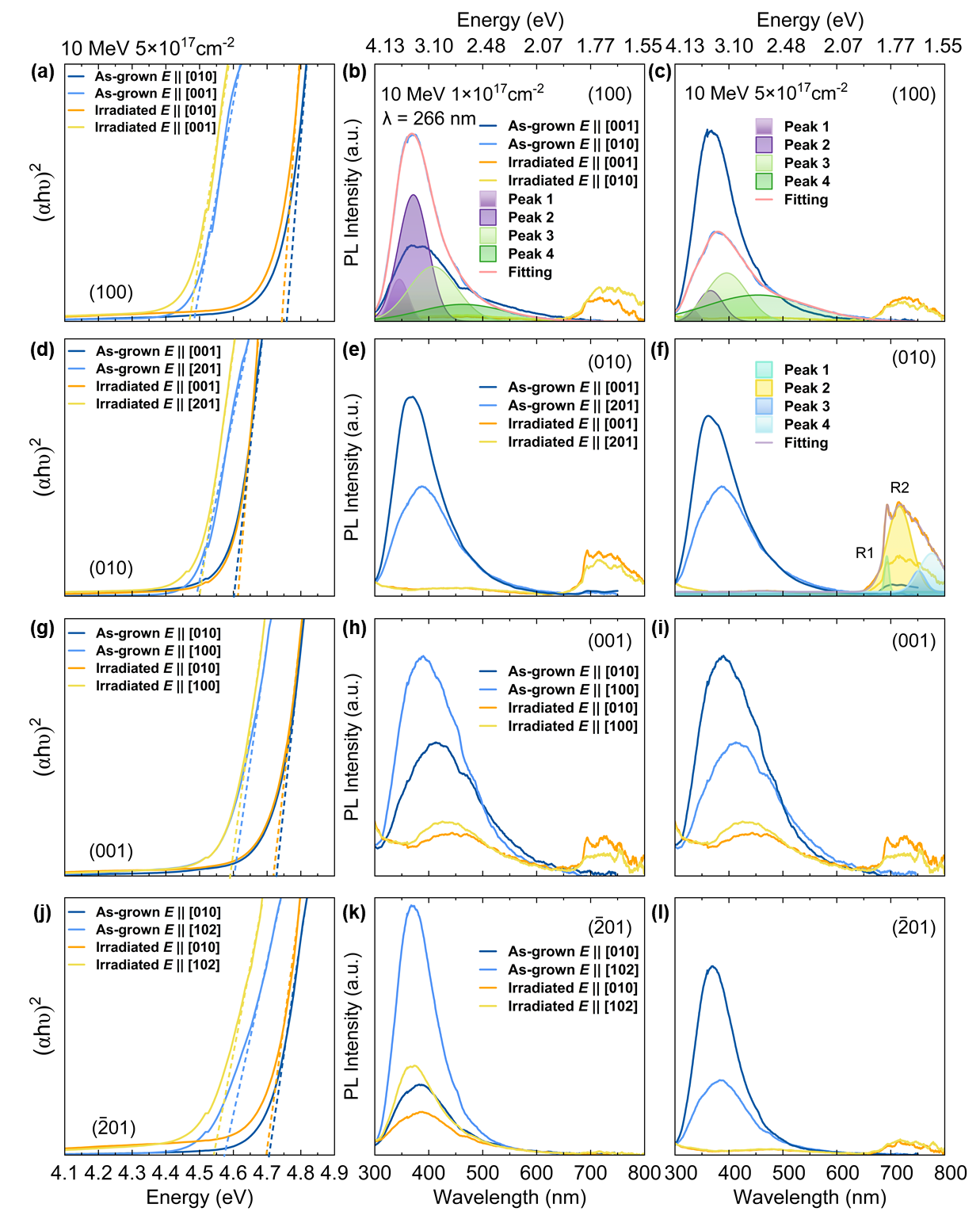
Figure 2 Comparison of the bandgap and photoluminescence (PL) characteristics of β-Ga₂O₃ crystal orientations (100), (010), (001), and (-201) before and after electron irradiation. The left column shows the polarized (αhν)²–energy relationship curves obtained under a fluence of 5 × 10¹⁷ cm⁻². The middle and right columns present the room-temperature PL spectra under different irradiation fluences, excited using a 266 nm xenon lamp.
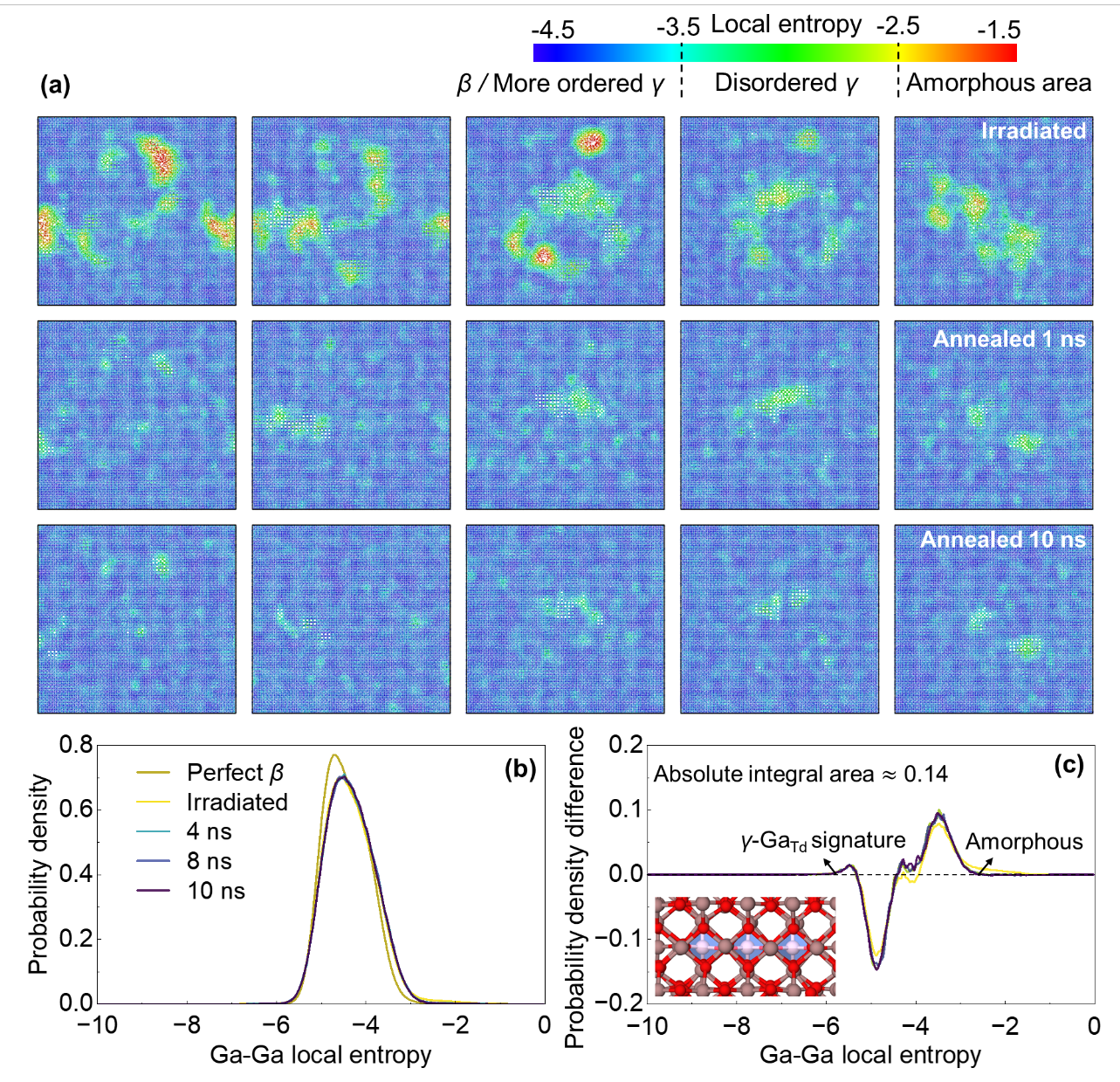
Figure 3 (a) Representative cross-sectional snapshots selected along the x-axis direction; (b) Probability density distributions of Ga–Ga local entropy after irradiation and during annealing states (4 ns, 8 ns, and 10 ns); (c) Differential probability density distributions of Ga–Ga local entropy relative to the initial β phase after irradiation and annealing.
DOI:
10.1016/j.jmst.2026.04.032
Instruction
Official Account

Cooperation
Top