



Personal Profile
Xu Xiaodong is an Associate Professor at the School of Materials Science and Engineering, Harbin Institute of Technology (HIT), serving as Deputy Director of the Department of Space Materials and Devices and a PhD supervisor. Leveraging research platforms such as the National Key Laboratory of Space Environment and Material Effects at HIT and the Technology Innovation Center for Materials and Devices in Extreme Environments, he has long been engaged in the development of radiation-hardened electronic devices, simulation and design software, and the study of radiation damage mechanisms and hardening of wide-bandgap materials and devices such as gallium oxide.
Over the past five years, he has led or participated in a total of 15 major engineering projects, youth foundation projects, and preliminary research programs. He has published 50 SCI papers in authoritative journals including Nature Electronics, Advanced Materials, and IEEE Transactions on Nuclear Science. As the first or main contributor, he holds 19 authorized Chinese invention patents, 1 U.S. invention patent, 20 software copyrights, has contributed to the formulation of 2 aerospace and group standards, and has published 1 monograph (three-quarters completed). He has received the First Prize of Scientific and Technological Progress from national ministries (ranked 6/15).
Focusing on the independent development of core architectures, algorithms, and models, Xu has led the development of extreme-environment EDA simulation software, which was included in the first batch of national industrial software product catalogs. Its functionality and performance meet or exceed those of counterparts, supporting reliability assessment for multiple space missions, and facilitating the development of various domestic radiation-hardened products, generating significant economic benefits.
Achievements Showcase
The HIT team has successfully developed a space environment effect simulation software platform (ERETCAD), integrating 12 CAE/EDA software tools. These include four CAE tools: spacecraft operational state and environment simulation software, space atomic oxygen and UV effect software, space surface charging and discharging effect software, and space radiation environment effect software; and eight EDA tools: materials design and simulation analysis software, radiation-induced defect evolution simulation software, semiconductor defect property simulation and analysis software, device process simulation software, device performance simulation software, device model parameter extraction software, device radiation effect simulation software, and database software.
The platform supports real-time, integrated simulation of spacecraft, materials, and device space environment effects. It achieves cross-scale coupled simulation using first-principles methods, molecular dynamics, Monte Carlo, and kinetic Monte Carlo methods. Key capabilities include large-scale electronic structure efficient computation, radiation-induced defect evolution dynamics simulation, precise defect property simulation, and device performance degradation simulation, forming a complete multi-level simulation chain from environment → materials → process → device → spacecraft.
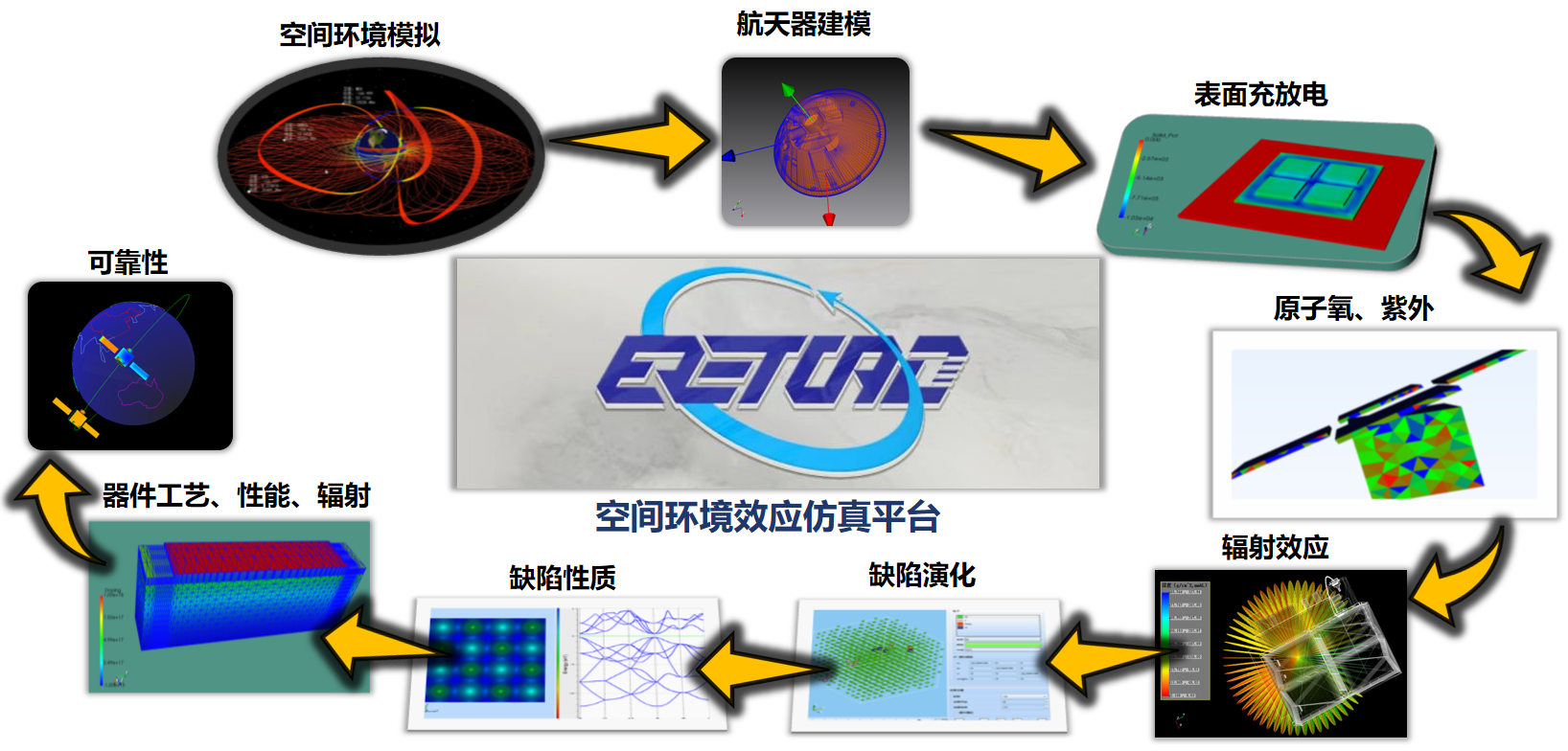
Figure 1: Integrated Space Environment Effect Simulation Software Platform
Expert Message
Gallium oxide has been incorporated into the national “15th Five-Year Plan,” a strategic move that not only signifies the highest-level recognition and elevation of Gallium Oxide wide-bandgap semiconductor materials within the country’s future science, technology, and industrial blueprint, but also heralds a new, accelerated development golden era for China in the field of wide-bandgap semiconductors. With the favorable momentum provided by this plan, the task ahead represents both a lofty mission entrusted by the times and a weighty responsibility. We sincerely hope that the Alliance will seize this opportunity to further consolidate the foundation for collaborative innovation, deepen cross-domain and cross-industry integration, accelerate the transition from fundamental research to engineering and industrialization, tackle a series of core technical and process challenges, and jointly build an independent, controllable, safe, reliable, and internationally competitive Gallium Oxide industrial and supply chain system.
Instruction
Official Account

Cooperation
Top