


Researchers from the Guilin University of Electronic Technology, The 34th Research Institute of China Electronics Technology Group Corporation and Ningbo University have published a dissertation titled "Structural evolution and photoluminescence modulation by Gd³⁺ in Tb³⁺-doped Ga₂O₃" in Materialia.
Project Support
This research was funded by Guangxi Science and Technology Plan Project (AD24010060, AD25069103), National Natural Science Foundation of China (NO.52262022, 62205080, 62174041, 62361022), Guangxi Key Laboratory of Precision Navigation and Application (NO.DH202202), Project of Guangxi Graduate Education (NO.YCBZ2025153), Innovation Project of GUET Graduate Education(NO.2025YCXS037).
Background
Semiconductor-based phosphor materials have garnered growing interest in recent years owing to their wide-ranging applications in fluorescent anti-counterfeiting, ultraviolet photodetectors, semiconductor lasers, and biomedical imaging technologies Among numerous semiconductor materials, gallium oxide (Ga2O3) stands out due to its ultrawide bandgap (∼4.9 eV), high thermal stability, and suitability as a host lattice for rare-earth (RE) activators such as Ce3+, Dy3+, and Eu3+. These characteristics have expanded the application of Ga2O3 in power electronics, electroluminescent devices, and bio-imaging platforms.
RE ions are known for their sharp 4f–4f transitions, high color purity, long lifetimes, and exceptional chemical stability, making them highly suitable dopants for luminescent applications such as solid-state lasers, optical storage, and full-color displays. When trivalent RE ions are introduced into oxide matrices, their partially filled 4f orbitals interact with the matrix's d- or p-orbitals, enabling efficient f–f transitions and thereby enhancing the host's optical performance. The incorporation of RE ions endows the Ga2O3 host with efficient 4f–4f transitions originating from the dopants, thereby significantly enhancing the luminescence efficiency of the material.
Abstract
A series of (GdxGa1-x)2O3: Tb3+phosphors (x = 0, 0.1, 0.3, 0.5, 0.7) were synthesized via a co-precipitation method to explore the dual role of Gd3+ ions in modulating the crystal phase, band structure, and luminescent performance. The results reveal that Gd3+ ions significantly enhances the green emission intensity of Tb3+, and this enhancement effect exhibits a clear dependence on the concentration of Gd3+ ions. As the Gd3+ content increases, the dominant phase transitions from α-Ga2O3 to Gd3Ga5O12 and Gd3GaO6, reflecting effective regulation of crystal structure. Photoluminescence and energy transfer analyses suggest that Gd3+ acts not only as an efficient sensitizer to facilitate energy transfer to Tb3+, but also as a structural modulator that widens the bandgap and suppresses non-radiative losses. These results demonstrate the dual function of Gd3+ as both an optical sensitizer and a structural stabilizer, offering a viable strategy for optimizing the design and performance of rare-earth-doped oxide phosphors.
Conclusion
This study systematically investigated the effect of Gd3+ concentration on the structural evolution and photoluminescent properties of (GdxGa1-x)2O3: Tb3+ phosphors. With increasing Gd3+ content, the host lattice underwent a distinct phase transition from α-Ga2O3 to cubic Gd3Ga5O12 and then to orthorhombic Gd3Ga1O6. Among these, the garnet-type Gd3Ga5O12 phase obtained at x = 0.3 provided the most favorable host environment for Tb3+ activation, yielding the strongest green luminescence.
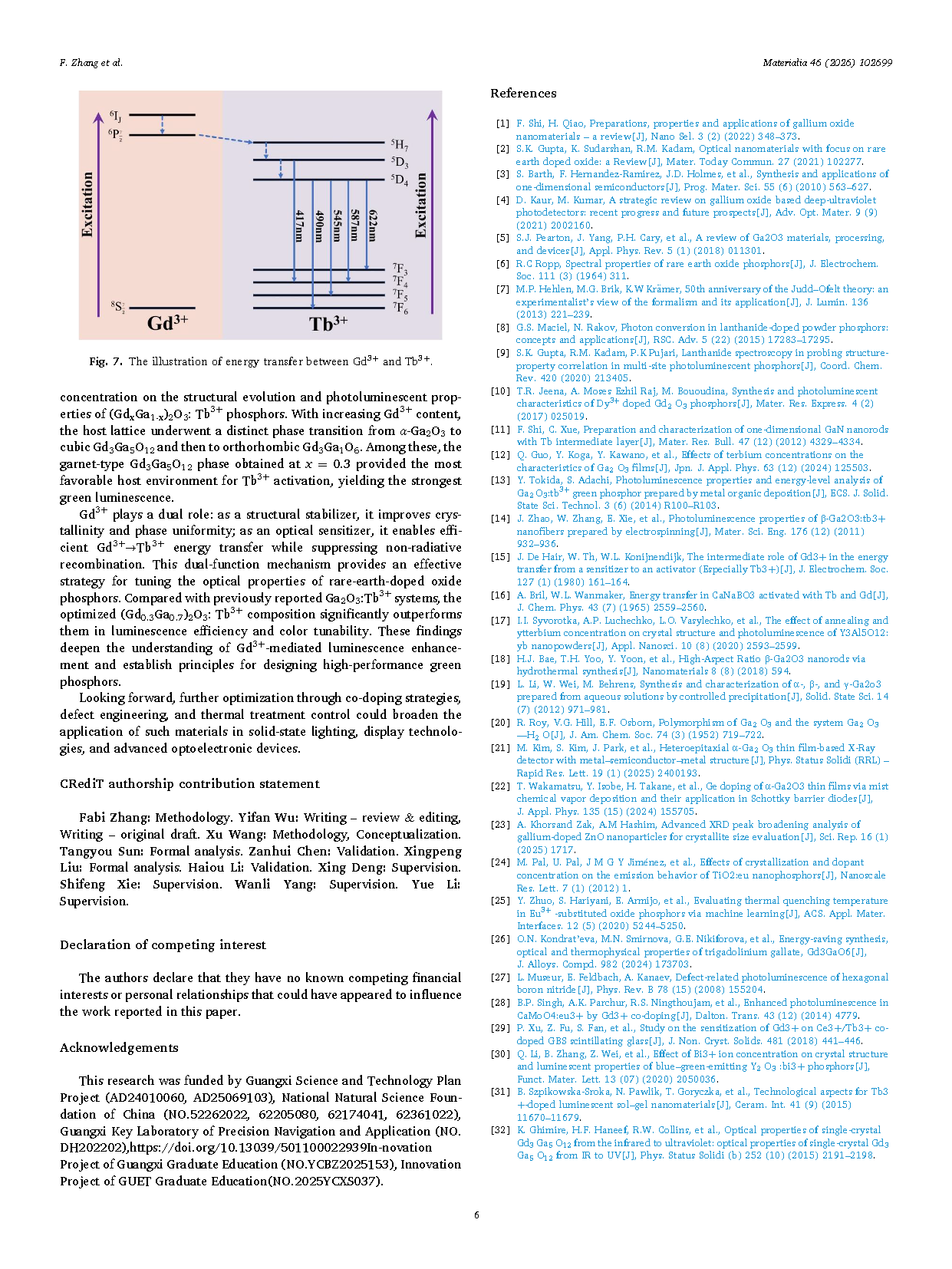
Gd3+ plays a dual role: as a structural stabilizer, it improves crystallinity and phase uniformity; as an optical sensitizer, it enables efficient Gd3+→Tb3+ energy transfer while suppressing non-radiative recombination. This dual-function mechanism provides an effective strategy for tuning the optical properties of rare-earth-doped oxide phosphors. Compared with previously reported Ga2O3:Tb3+ systems, the optimized (Gd0.3Ga0.7)2O3: Tb3+ composition significantly outperforms them in luminescence efficiency and color tunability. These findings deepen the understanding of Gd3+-mediated luminescence enhancement and establish principles for designing high-performance green phosphors.
Looking forward, further optimization through co-doping strategies, defect engineering, and thermal treatment control could broaden the application of such materials in solid-state lighting, display technologies, and advanced optoelectronic devices.
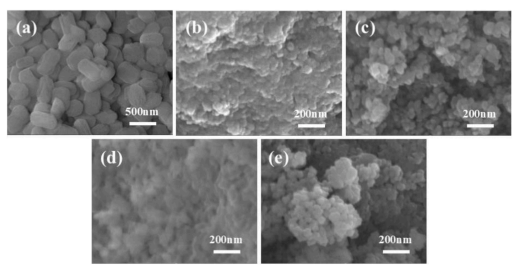
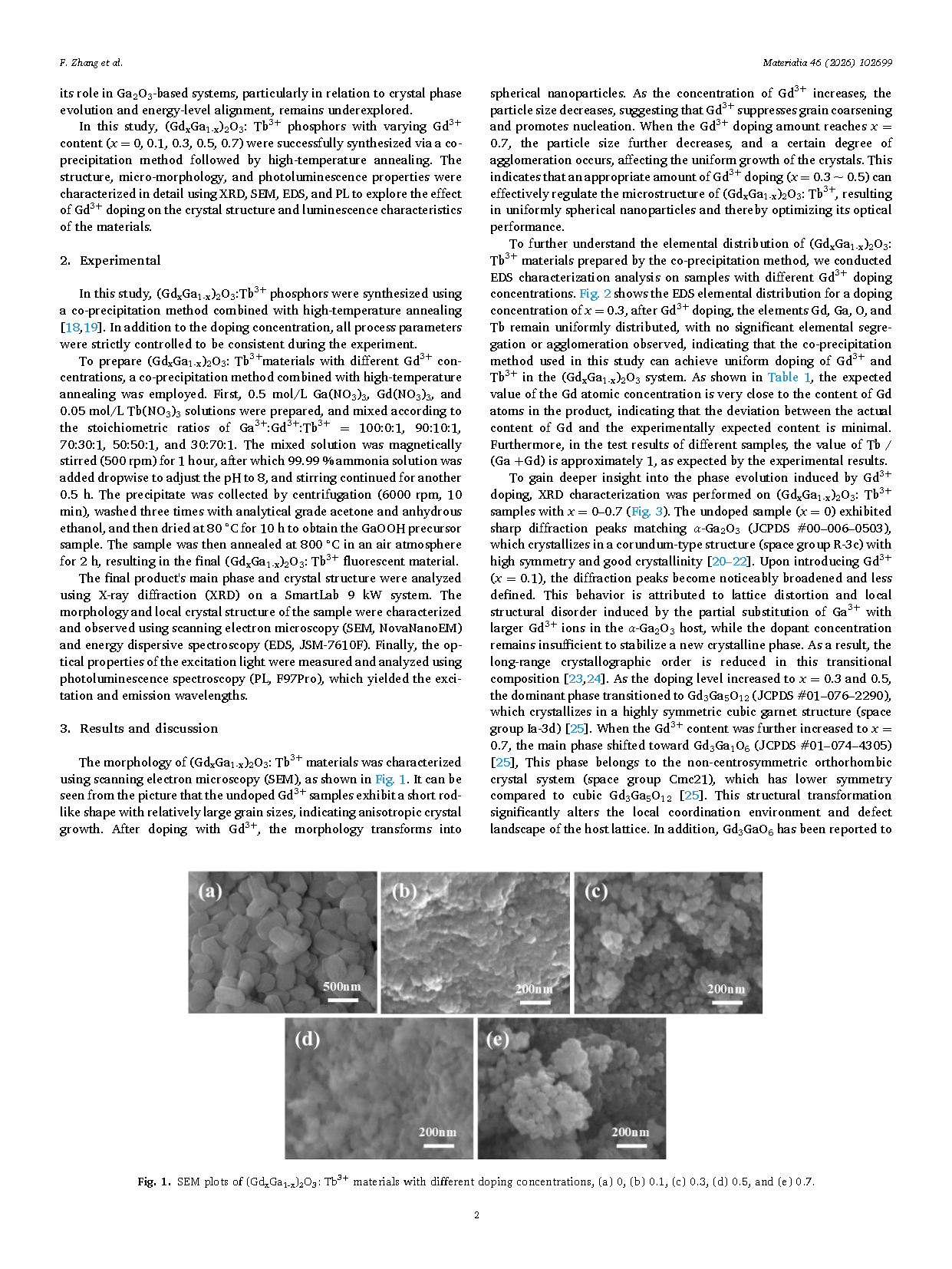
Fig. 1. SEM plots of (GdxGa1-x)2O3: Tb3+ materials with different doping concentrations, (a) 0, (b) 0.1, (c) 0.3, (d) 0.5, and (e) 0.7.
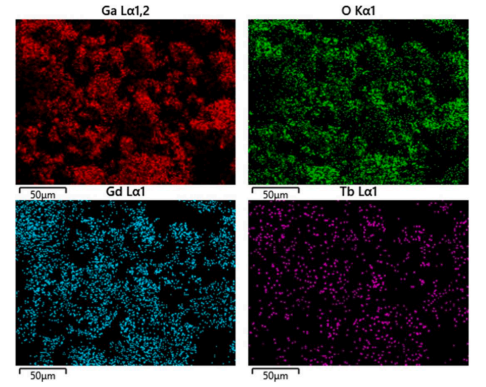
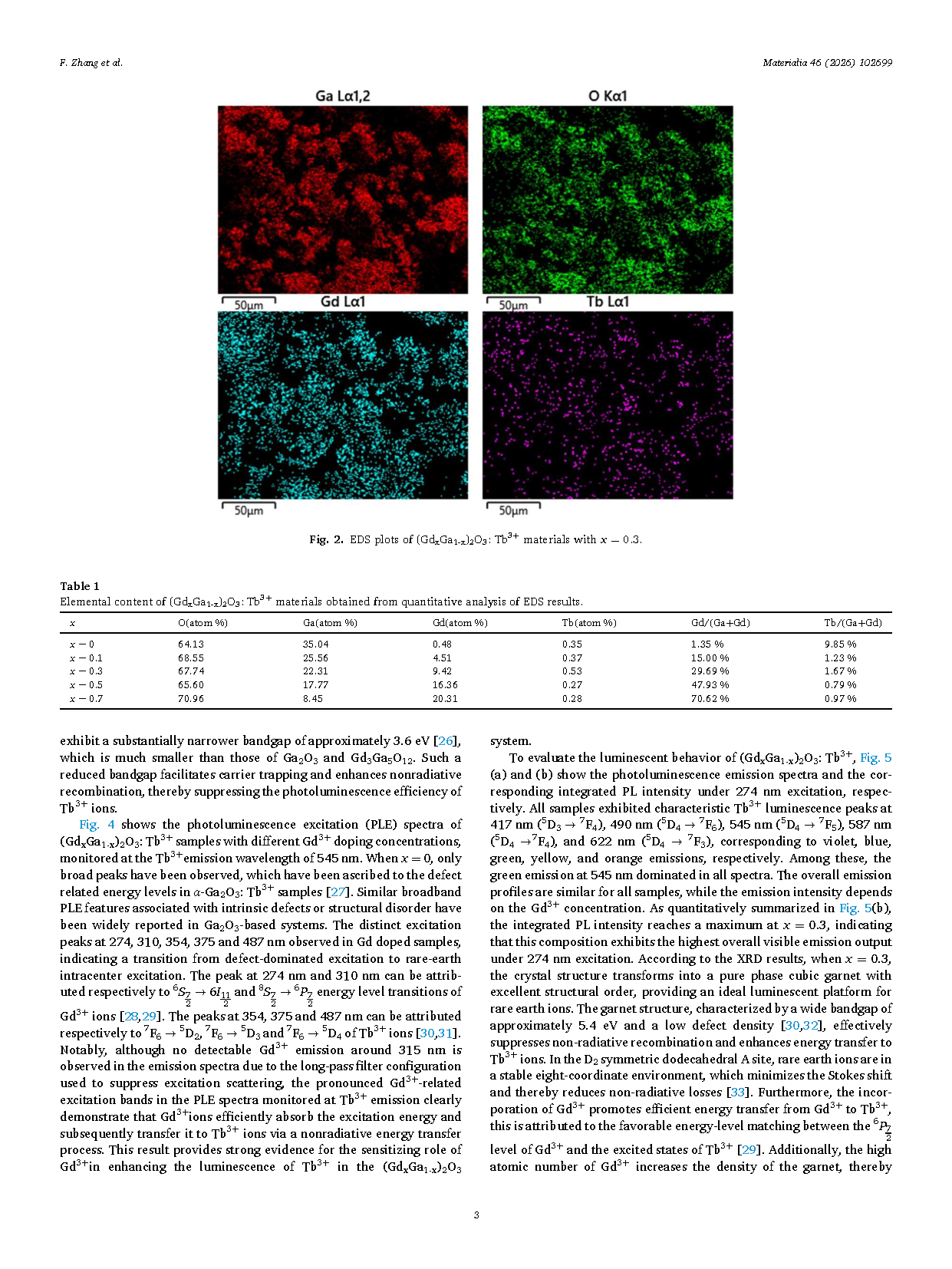
Fig. 2. EDS plots of (GdxGa1-x)2O3: Tb3+ materials with x = 0.3.
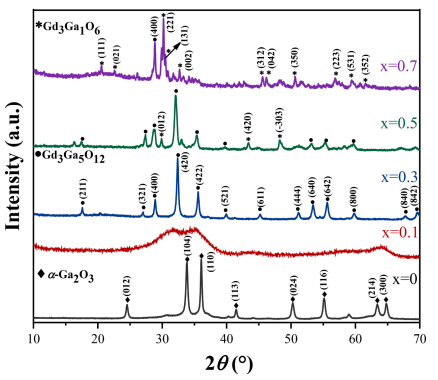
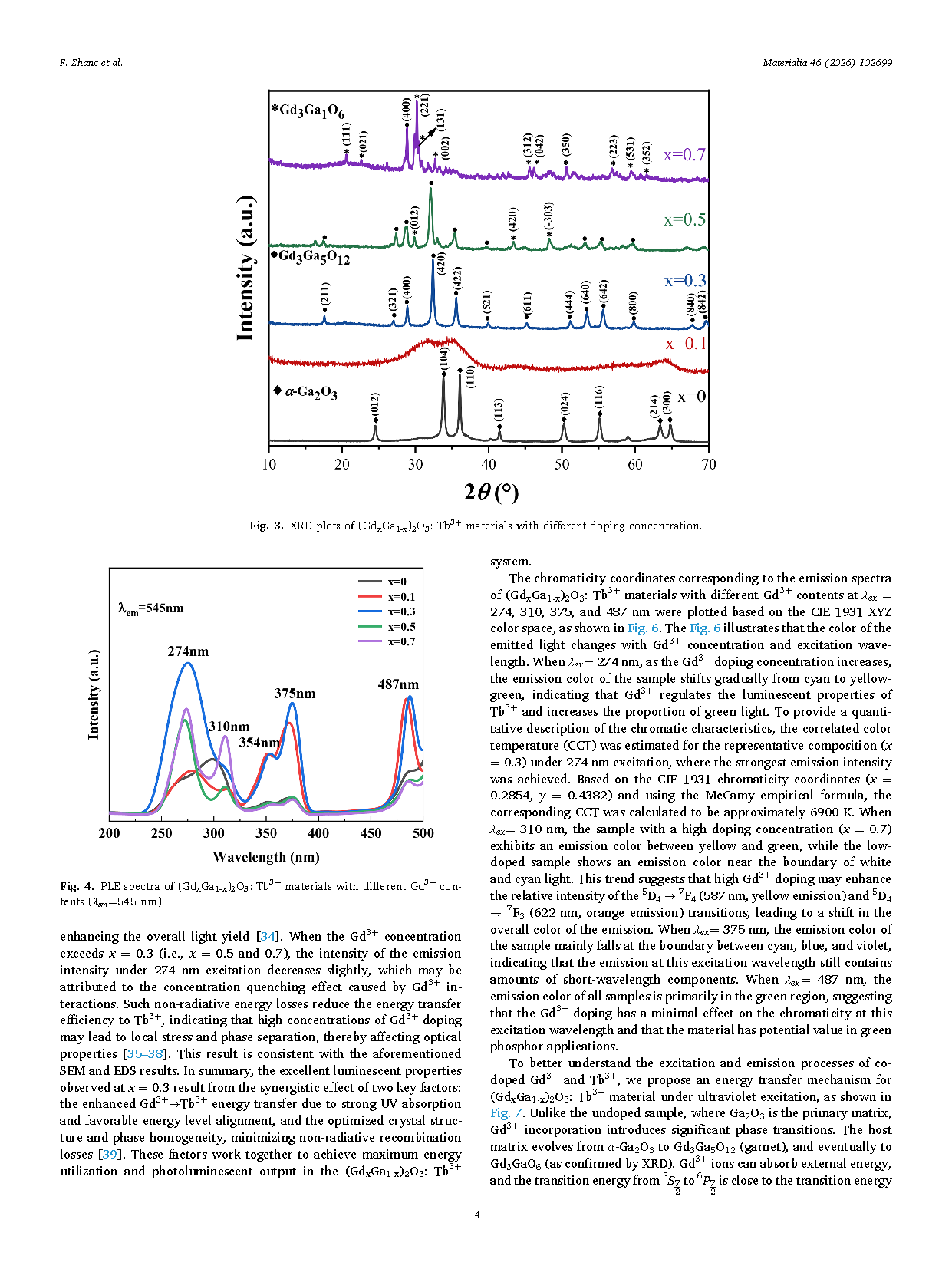
Fig. 3. XRD plots of (GdxGa1-x)2O3: Tb3+ materials with different doping concentration.
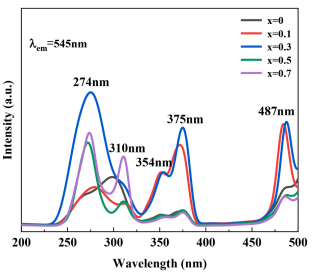
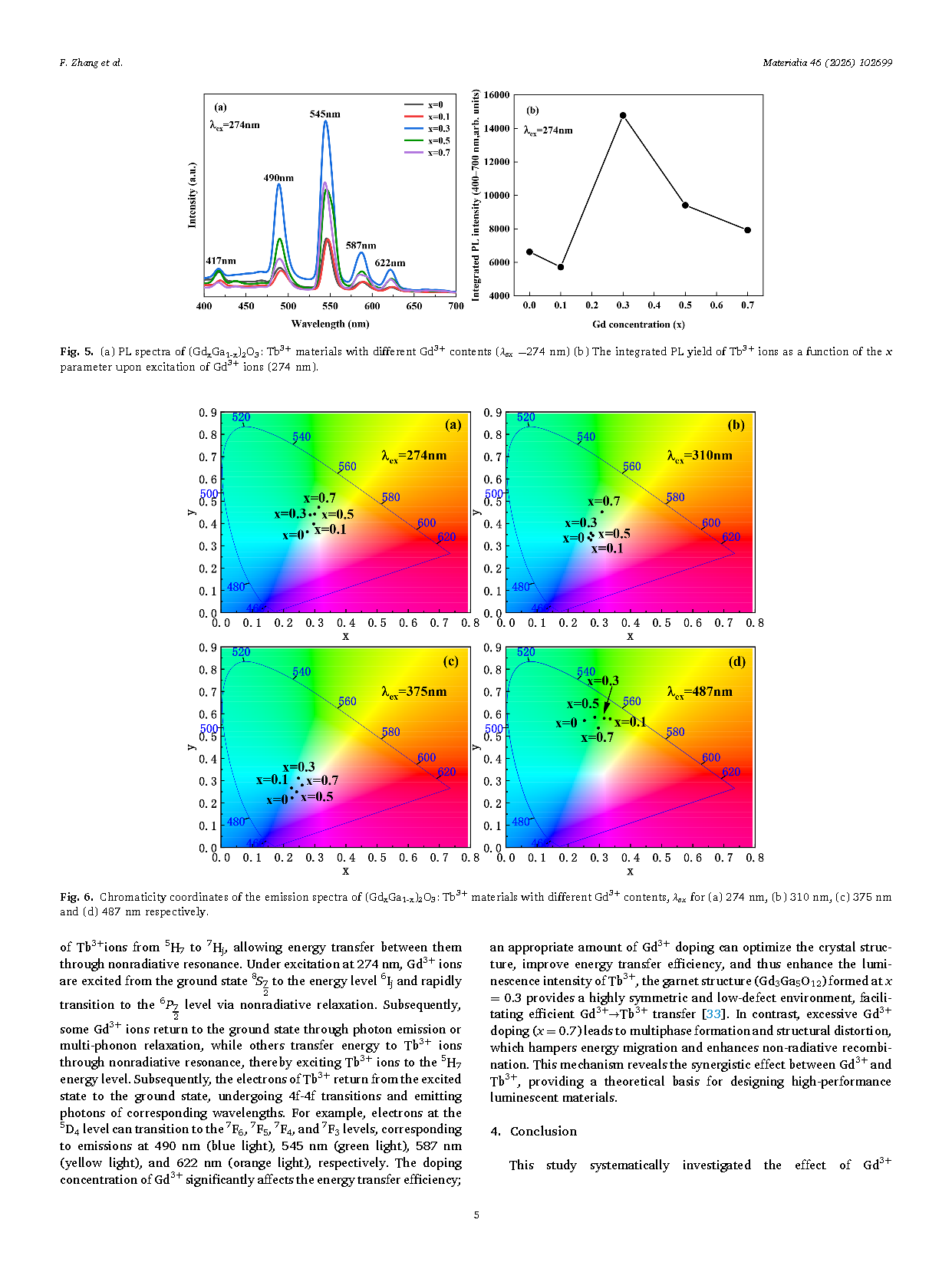
Fig. 4. PLE spectra of (GdxGa1-x)2O3: Tb3+ materials with different Gd3+ contents (λem=545 nm).
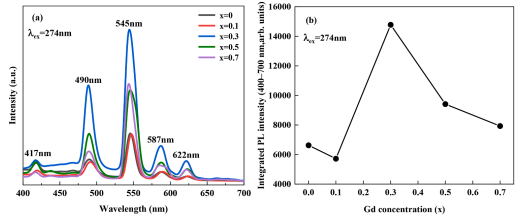
Fig. 5. (a) PL spectra of (GdxGa1-x)2O3: Tb3+ materials with different Gd3+ contents (λex =274 nm) (b) The integrated PL yield of Tb3+ ions as a function of the x parameter upon excitation of Gd3+ ions (274 nm).
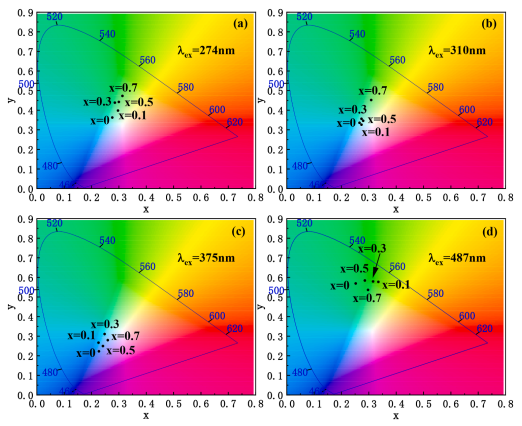
Fig. 6. Chromaticity coordinates of the emission spectra of (GdxGa1-x)2O3: Tb3+ materials with different Gd3+ contents, λex for (a) 274 nm, (b) 310 nm, (c) 375 nm and (d) 487 nm respectively.
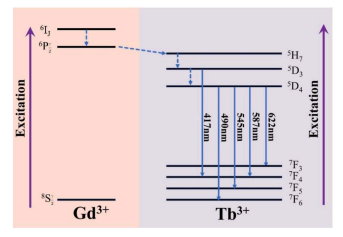
Fig. 7. The illustration of energy transfer between Gd3+ and Tb3+.
DOI:
doi.org/10.1016/j.mtla.2026.102699
Instruction
Official Account

Cooperation
Top