


Researchers from the The Hong Kong University of Science and Technology have published a dissertation titled " Strain-Gradient-Driven Decoupling of Thermal Suppression from Anisotropy in β-Ga2O3" in Acta Materialia.
Project Support
We would like to acknowledge funding support from the National Key R&D Program of China (2024YFB4405700), the Nano & Material Technology Development Program through the National Research Foundation of Korea (NRF) funded by Ministry of Science and ICT (RS-2024-00444574), the Guangdong Basic and Applied Basic Research Foundation (2025A1515012898), the National Natural Science Foundation of China (No. 52576077), the Natural Science Foundation of Shandong Province (No. ZR2025MS874), the Youth Innovation Technology Support Program of Higher Education Institutions of Shandong Province (No. 2023KJ003), and the Qilu Youth Scholars Program of Shandong University. The authors thank the HPC Cloud Platform of Shandong University and HKUST Fok Ying Tung Research Institute and National Supercomputing Center in Guangzhou Nansha Sub-center for providing high performance computational resources. The authors would also like to thank the fund from Frontier Technology Research for Joint Institutes with Industry Scheme sponsored by the Center on Smart Sensors and Environmental Technologies at HKUST.
Background
Ultra-wide bandgap semiconductors (UWBGS) have emerged as key enablers for next-generation power electronics and optoelectronic systems operating at high voltages, high frequencies, and extreme power densities. Among them, β-Ga₂O₃ has attracted considerable attention owing to its ultrawide bandgap, exceptionally high breakdown electric field, and superior Baliga figure of merit, positioning it as a strong candidate for high-power devices, solar-blind ultraviolet photodetectors, and emerging flexible nanoelectronics. In addition, its relatively low Young’s modulus and reported room-temperature plasticity at submicron thicknesses suggest an unusual combination of electronic robustness and mechanical compliance.
Despite these advantages, the practical deployment of β-Ga₂O₃ devices is severely constrained by its intrinsically low thermal conductivity, which is substantially lower than that of established wide-bandgap semiconductors such as SiC and GaN. Inefficient heat dissipation leads to elevated operating temperatures, degraded reliability, and limited power and frequency performance. This challenge is further exacerbated by the ubiquitous presence of strain introduced during heteroepitaxial growth, device fabrication, and operation. In realistic device configurations, such strains are often nonuniform, giving rise to pronounced strain gradients across thin films and nanoscale structures.
Previous studies on strain-dependent thermal transport in Ga₂O₃ polymorphs have largely focused on idealized bulk systems under uniform strain, providing limited insight into the behavior of real devices. However, recent experimental and theoretical investigations in other semiconductor nanostructures have demonstrated that strain gradients can suppress thermal conductivity far more effectively than equivalent uniform strain by strongly modifying phonon spectra and scattering pathways. These findings suggest that neglecting strain gradients may lead to substantial inaccuracies in thermal modeling and device design.
This issue is particularly critical for β-Ga₂O₃, which crystallizes in a low-symmetry monoclinic structure with multiple nonequivalent atomic sites, inherently anisotropic phonon anharmonicity, and strong coupling between acoustic and low-lying optical phonon modes. Such features are expected to amplify the sensitivity of thermal transport to structural inhomogeneities. Nevertheless, a systematic, mode-resolved understanding of how nonuniform strain influences phonon transport, thermal conductivity, and thermal anisotropy in β-Ga₂O₃ remains lacking.
Addressing this gap requires a computational framework that combines first-principles accuracy with the ability to resolve phonon transport under spatially varying strain. A detailed investigation of strain-gradient-induced phonon scattering and thermal transport degradation is therefore essential for establishing physically sound thermal management strategies and for guiding the design of reliable β-Ga₂O₃-based UWBGS devices.
Abstract
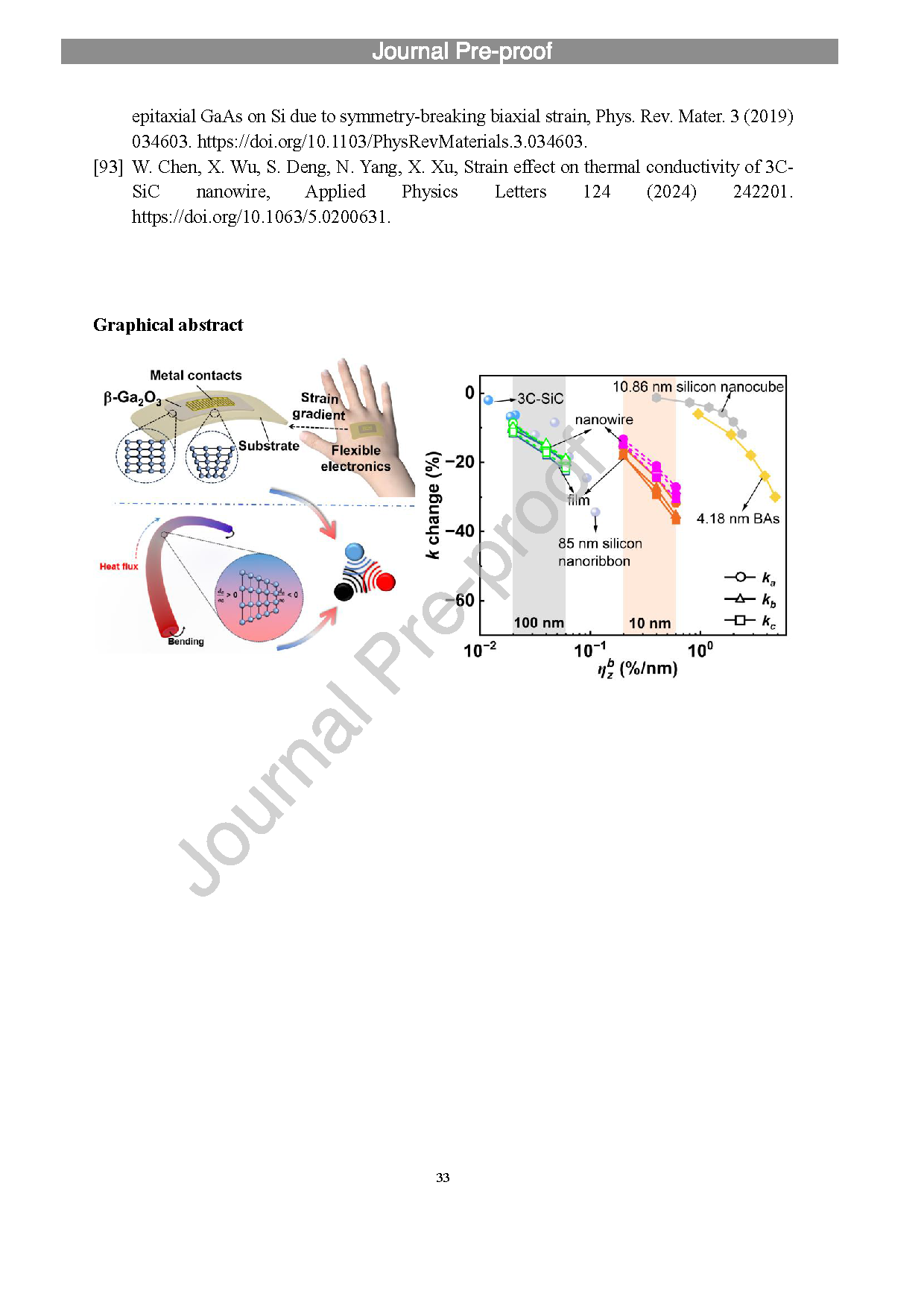
β-Ga2O3 is an emerging ultra‑wide‑bandgap semiconductor (UWBGS) for efficient, high‑frequency power electronics, solar‑blind/UV photodetectors, and wearable/flexible devices, with scalable manufacturing. However, its intrinsically low thermal conductivity (k)—compounded by ubiquitous, nonuniform strains introduced during fabrication and operation—creates a stringent thermal‑management bottleneck that degrades heat dissipation, reliability, and performance. Consequently, understanding how uniform and non-uniform strains affect thermal transport in this UWBG material is essential for thermal management design. Yet, strain gradients (η), pervasive in flexible devices and epitaxial nanostructures, remain a major blind spot in β-Ga2O3 thermal transport studies. By integrating the first-principles-based machine learning interatomic potential with Boltzmann transport equation, we establish that η unlocks a k suppression mechanism fundamentally more potent than uniform strain (ε): moderate uniaxial gradients (0.6%/nm) suppress k by 32–37% (27–30%) in thin films (nanowires), intensifying to 43.3% with biaxial gradients. This reduction far exceeds that from equivalent ε and surpasses benchmark materials like silicon and BAs. Notably, β-Ga2O3 exhibits a unique magnitude-anisotropy decoupling under η: whereas uniform (±3%) modifies thermal anisotropy ratios by ∼25%, η strongly suppresses the absolute k while leaving these ratios nearly unchanged. This pronounced suppression originates from gradient-induced symmetry breaking and enhanced mode coupling, which activate otherwise forbidden phonon-scattering channels and make gradient-driven scattering dominant below 6.25 THz. Unlike cubic crystals (e.g., Si) under bending—where a through-thickness strain gradient predominantly suppresses heat flow along the bending direction while leaving the orthogonal in-plane component comparatively intact, thereby tuning anisotropy—monoclinic β-Ga2O3 exhibits stronger cross-direction coupling due to its non-orthogonal crystallographic framework, so the same gradient suppresses multiple k components. Consequently, phonon lifetimes are reduced broadly across transport directions, while concurrent changes in phonon group velocities partially compensate, yielding an approximately invariant anisotropy ratio even as collapses. By contrast, κ-Ga2O3 shows a weaker k reduction and pronounced anisotropy suppression under , confirming that the decoupling is unique in β-Ga2O3. These findings redefine non-uniform strain from a parasitic flaw into a powerful design tool for engineering thermal isolation and heat flux in next-generation flexible and high-power β-Ga2O3 electronics.
Conclusion
In summary, by combining the first-principles-based machine learning potential with the Boltzmann transport equation (BTE) and a strain gradient model, this work reveals that strain gradients (η) in β-Ga₂O₃ produce fundamentally different and far more potent thermal suppression than uniform strain (ε). Under moderate uniaxial ηzb = 0.6%/nm, thin films and nanowires (10 nm) exhibit dramatic thermal conductivity (k) reductions of 32–37% and 27–30%, respectively, substantially exceeding the effects of ε and surpassing leading benchmark materials including silicon and BAs. Biaxial gradients amplify this suppression, ~1.5-fold stronger than the corresponding uniform case, achieving peak reductions of 43.3% at ηzab= 0.6%/nm—the strongest gradient-induced thermal suppression reported to date.
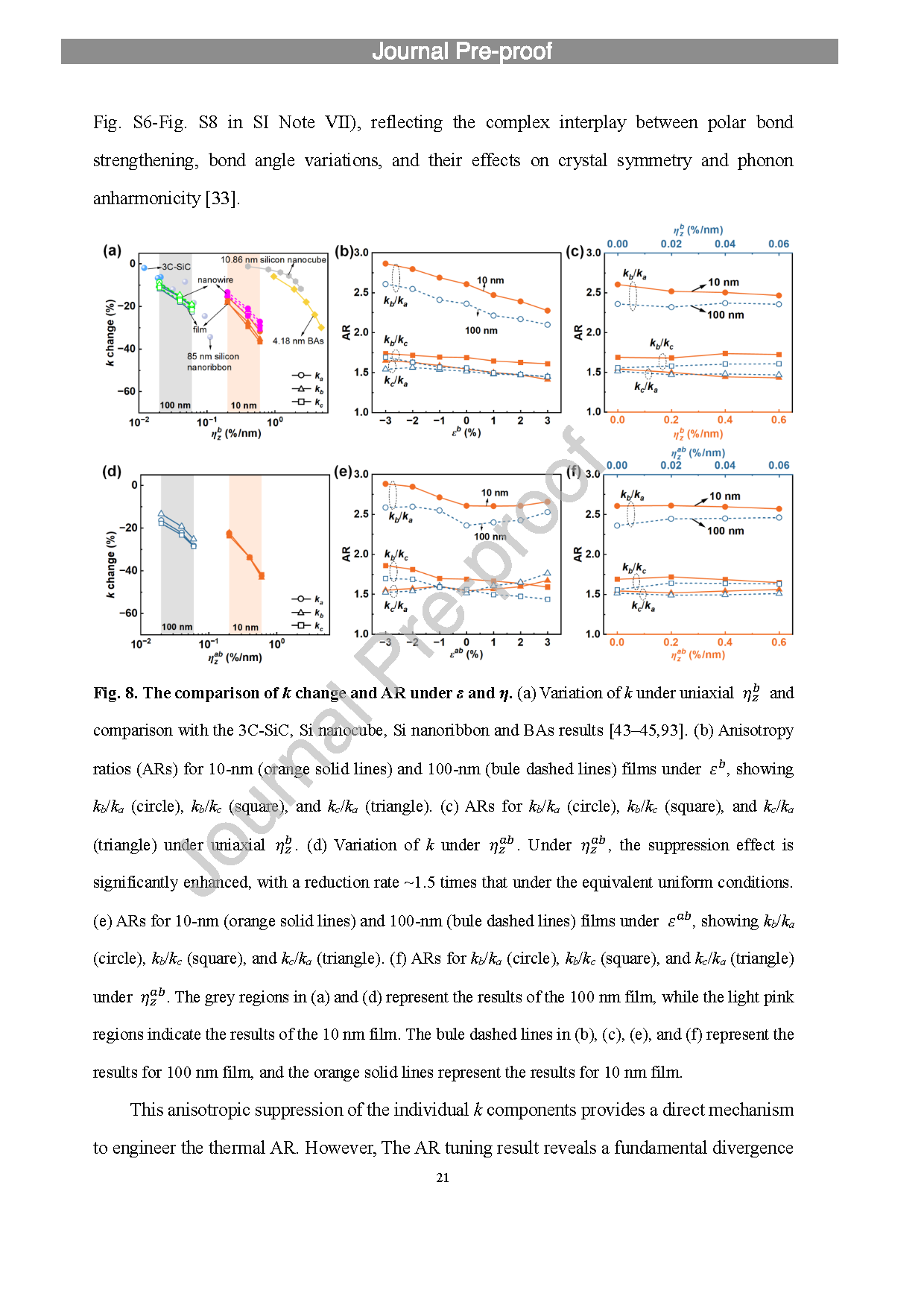
Importantly, unlike ε, which varies thermal anisotropy ratios by ~25% across εb from –3% to 3%, η reduces k without substantially altering thermal anisotropy, decoupling the two effects. This stability ensures that process-induced strains predictably reduce heat flow without altering designed thermal pathways—a critical advantage for robust device optimization.
The underlying physics reflects two synergistic mechanisms—gradient-induced symmetry breaking and enhanced inter-mode coupling—which together activate otherwise forbidden phonon-scattering channels and substantially expand the scattering phase space. These effects preferentially suppress heat-carrying acoustic and low-lying optical phonons, with gradient-induced scattering becoming dominant over a broad portion of the thermal spectrum (0–10 THz) at moderate η.
Consistent with this picture, applying the same framework to orthorhombic κ-Ga₂O₃ produces a comparable overall reduction in k, yet leads to a pronounced suppression of thermal anisotropy under the same η. This contrast underscores that while gradient-activated phonon scattering—and the resulting k suppression—is broadly transferable, the decoupling between k magnitude suppression and anisotropy evolution is material-specific, with low-symmetry β-Ga₂O₃ representing an especially sensitive case.
These findings establish η as both a design challenge and an untapped opportunity in ultra-wide-bandgap semiconductor (UWBGS) thermal engineering, necessitating proper treatment in β-Ga₂O₃ device modeling while enabling targeted thermal isolation in flexible electronics, where non-uniform strains are ubiquitous.
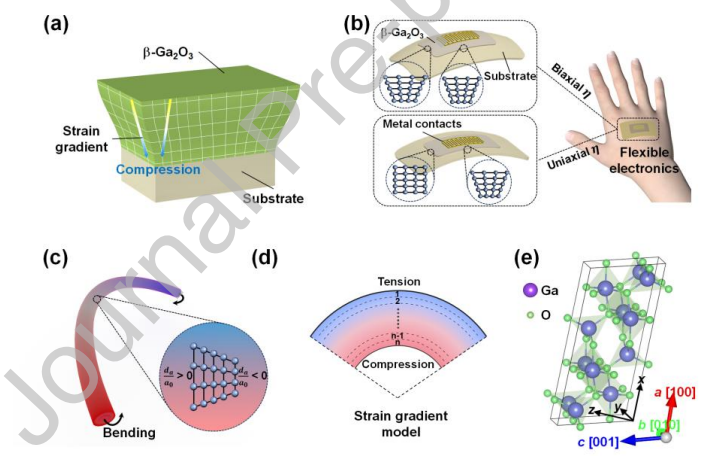
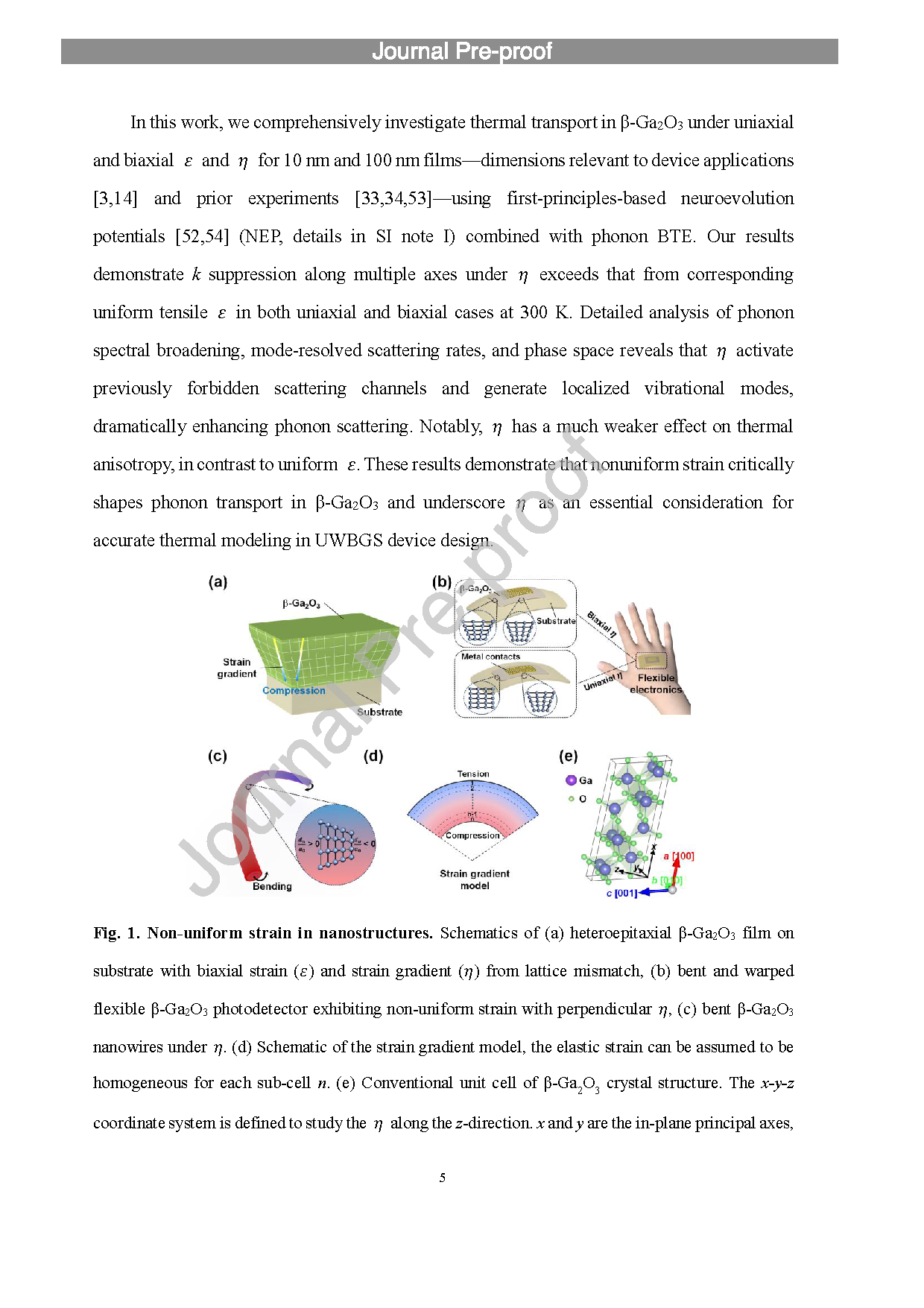
Fig. 1. Non-uniform strain in nanostructures. Schematics of (a) heteroepitaxial β-Ga₂O₃ film on a substrate with biaxial strain (ε) and strain gradient (η) from lattice mismatch, (b) bent and warped flexible β-Ga₂O₃ photodetector exhibiting non-uniform strain with perpendicular η, (c) bent β-Ga₂O₃ nanowires under η. (d) Schematic of the strain gradient model, where the elastic strain can be assumed homogeneous for each sub-cell n. (e) Conventional unit cell of β-Ga₂O₃ crystal structure. The x–y–z coordinate system is defined to study η along the z-direction. x and y are the in-plane principal axes, and z is the direction of the strain gradient.
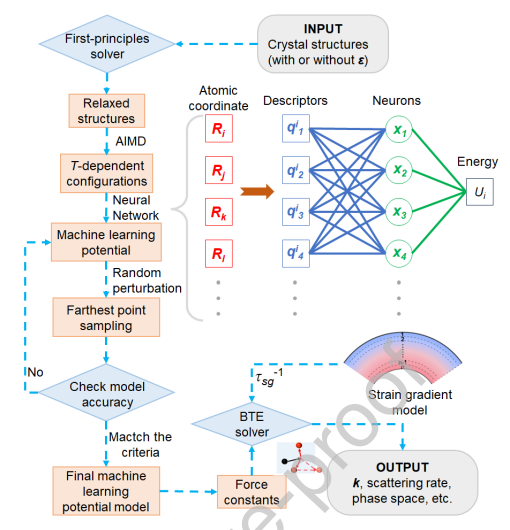
Fig. 2. The entire computational framework. The computational process extensively samples firstprinciples data, employing a separable natural evolution strategy and feedforward neural network [52] to construct the potential model, thereby significantly reducing the computational workload for calculating force constants under varying strains. Combined with strain gradient model, the strain gradient effect on thermal transport can be obtained.
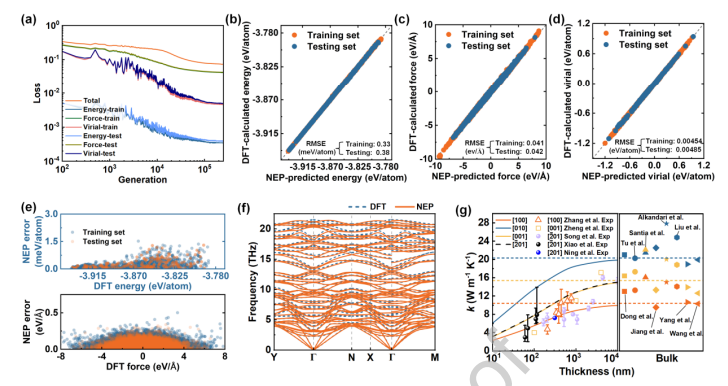
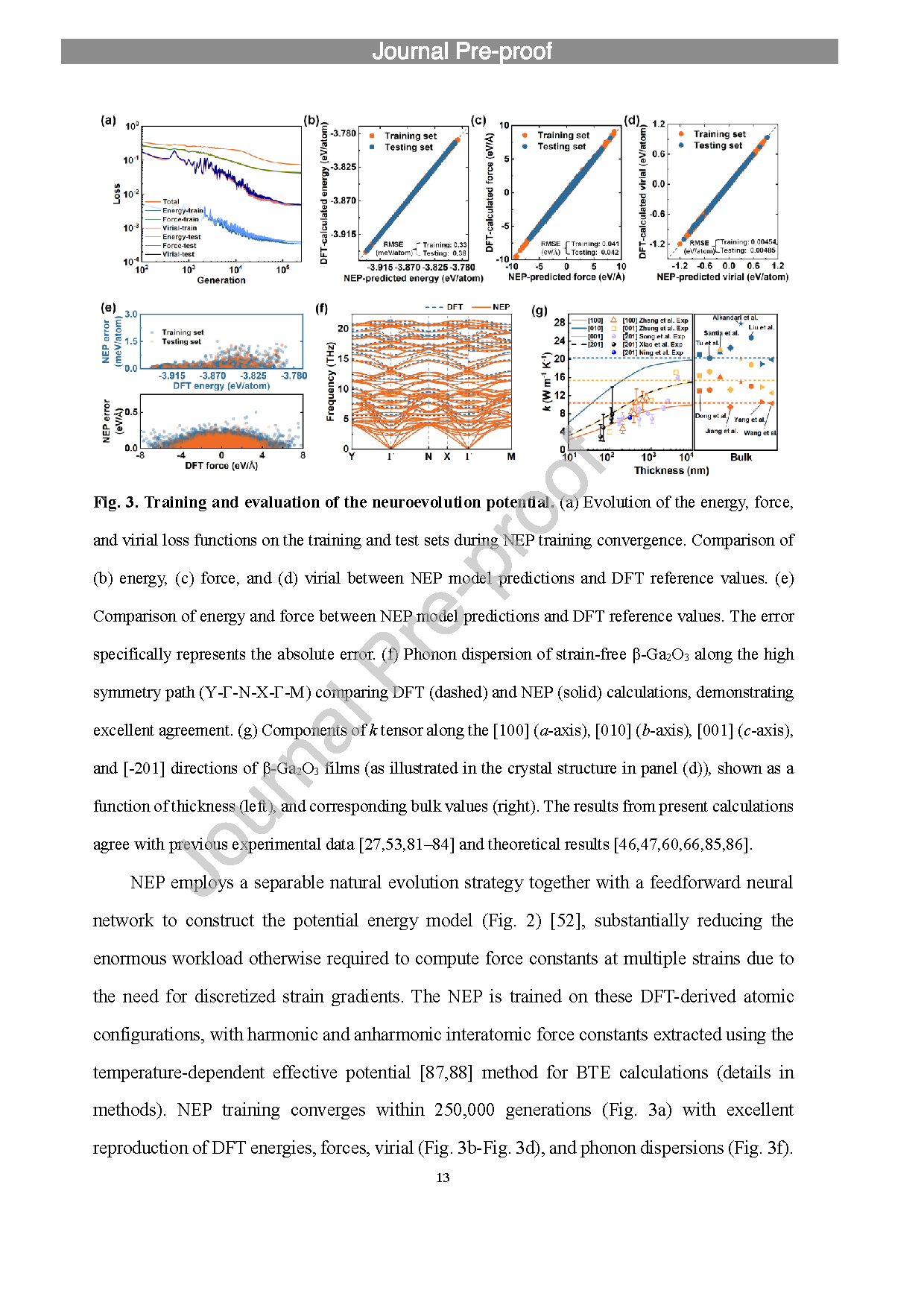
Fig. 3. Training and evaluation of the neuroevolution potential. (a) Evolution of the energy, force, and virial loss functions on the training and test sets during NEP training convergence. Comparison of (b) energy, (c) force, and (d) virial between NEP model predictions and DFT reference values. (e) Comparison of energy and force between NEP model predictions and DFT reference values. The error specifically represents the absolute error. (f) Phonon dispersion of strain-free β-Ga₂O₃ along the high symmetry path (Y–Γ–N–X–Γ–M) comparing DFT (dashed) and NEP (solid) calculations, demonstrating excellent agreement. (g) Components of the k tensor along the [100] (a-axis), [010] (b-axis), [001] (c-axis), and [-201] directions of β-Ga₂O₃ films (as illustrated in the crystal structure in panel (d)), shown as a function of thickness (left), and corresponding bulk values (right).
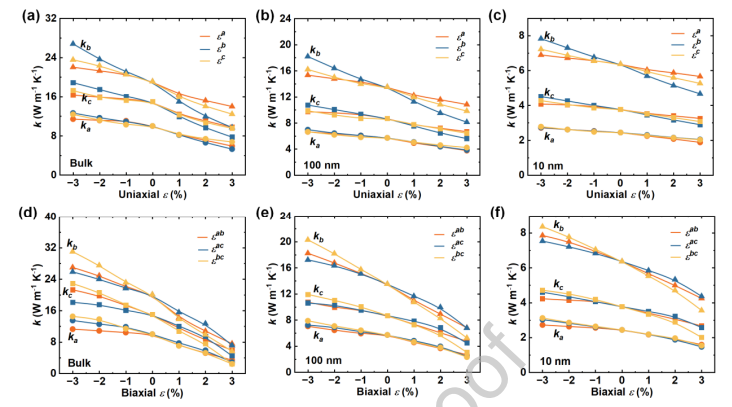
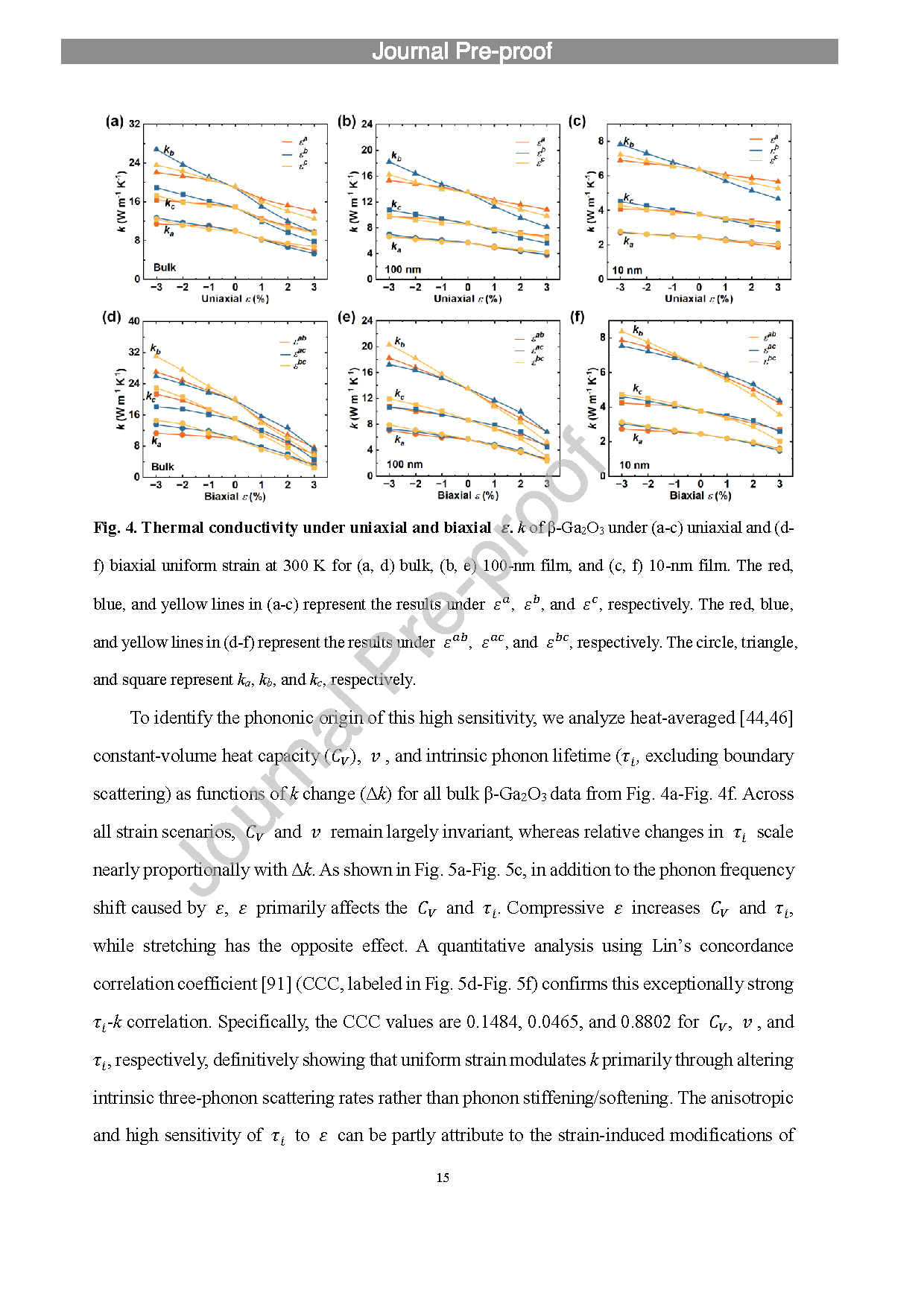
Fig. 4. Thermal conductivity under uniaxial and biaxial ε. k of β-Ga2O3 under (a–c) uniaxial and (d–f) biaxial uniform strain at 300 K for: (a, d) bulk, (b, e) 100-nm film, and (c, f) 10-nm film. The red, blue, and yellow lines in (a–c) represent the results under εa, εb, and εc, respectively. The red, blue, and yellow lines in (d–f) represent the results under εab, εac, and εbc, respectively. The circle, triangle, and square represent ka, kb, and kc, respectively.
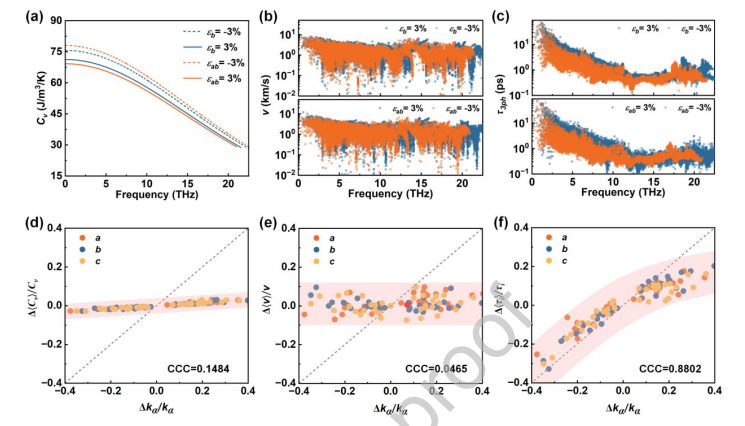
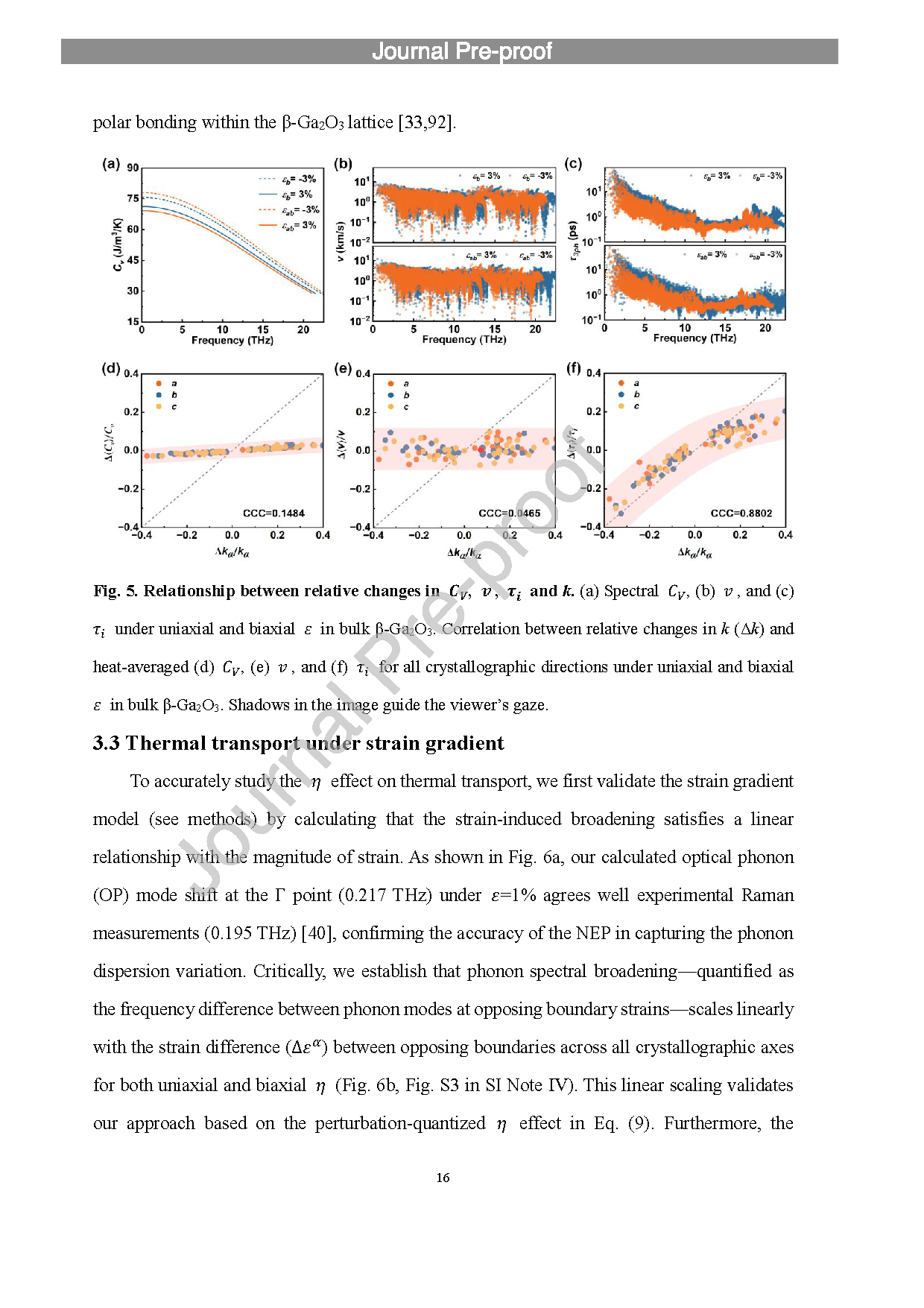
Fig. 5. Relationship between relative changes in CV, v, τi and thermal conductivity k. (a) Spectral CV, (b) v, and (c) τi under uniaxial and biaxial strain in bulk β-Ga2O3. (d–f) Correlation between relative changes in thermal conductivity (Δk) and heat-averaged CV, v, and τi for all crystallographic directions under uniaxial and biaxial strain in bulk β-Ga2O3. Shaded areas in the figures guide the viewer’s attention.
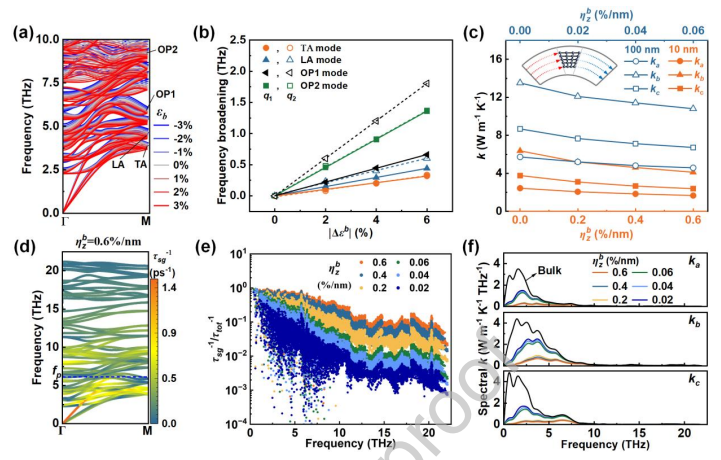
Fig. 6. Thermal transport properties under η_zb. (a) Phonon dispersions of β-Ga2O3 under different εb. The selected TA (transverse acoustic), LA (longitudinal acoustic), and OP modes at q1 point corresponding to the data in (b) are labeled. (b) Phonon frequency difference broadening for TA, LA, and OP modes at selected q1 (0.0, 0.5, 0.5) and q2 (-0.5, 0.5, 0.0) under |Δεb|. The solid and dashed lines represent linear fitting results for q1 and q2, respectively. (c) Variation of k in two kinds of β-Ga2O3 thin films under different values of ηzb. The blue lines represent the results for 100 nm film, and the orange lines represent the results for 10 nm film. The reductions in ka (circle), kb (square), and kc (triangle) are 20%, 20.1%, and 22.5% at ηzb = 0.06%/nm in the 100-nm film, and 31.8%, 35.3%, and 36.6% in the 10-nm film under ηzb = 0.6%/nm, respectively. (d) Phonon dispersion mapped of τsg-1 under ηzb = 0.6%/nm. (e) Ratio of frequency-dependent τsg-1 to τtot-1 under different ηzb. (f) Spectral kb at different ηzb. All calculations are carried out at 300 K.
Fig. 7. Thermal transport properties under ηzab.
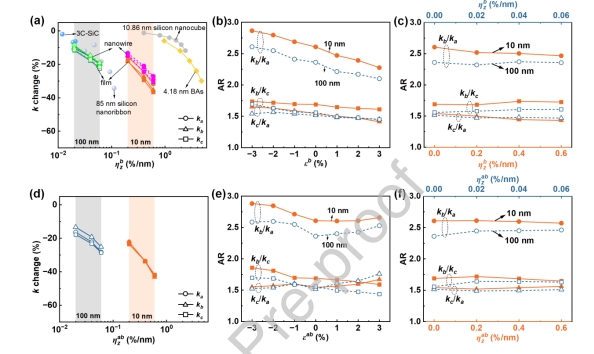
Fig. 8. The comparison of k change and AR under ε and η.
DOI:
doi.org/10.1016/j.actamat.2026.121973
Instruction
Official Account

Cooperation
Top