


Researchers from the Inner Mongolia University of Technology have published a dissertation titled "First-Principles Study on the Regulation of Photocatalytic Performance in Monolayer β-Ga2O3 with Mo Doping and Point Defects (Hi, VO) under an External Electric Field" in Journal of Physics and Chemistry of Solids.
Project Support
This work was supported by the Natural Science Foundation of Inner Mongolia Autonomous Region (Grant Nos. 2024LHMS01011, 2025QN01024); the first-class discipline scientific research project of the Inner Mongolia Autonomous Region (Grant No. PZ2024000561); the scientific research startup fund of Inner Mongolia University of Technology; (Grant No. DC2400003099).
Background
Owing to depleting fossil fuels, transforming renewable energy into clean energy is a crucial practical approach. The use of solar energy to split water and produce hydrogen is gradually attracting interest, and developing innovative photocatalyst materials for efficient water splitting is crucial. For instance, two-dimensional (2D) materials possess high specific surface areas and pronounced quantum effects, which can substantially enhance photocatalytic efficiency. 2D β-Ga2O3 has been successfully synthesized in experiments, and thin 2D β-Ga2O3 films exhibit enhanced thermodynamic, kinetic stability, mobility, and absorption coefficients. Thus, 2D β-Ga2O3 holds significant potential for applications in photodetectors, flexible electronics, and other electronic devices. However, an ideal 2D β-Ga2O3 only absorbs ultraviolet light, and doping can modify the absorption spectrum range and can thereby influence photocatalytic performance.
Abstract
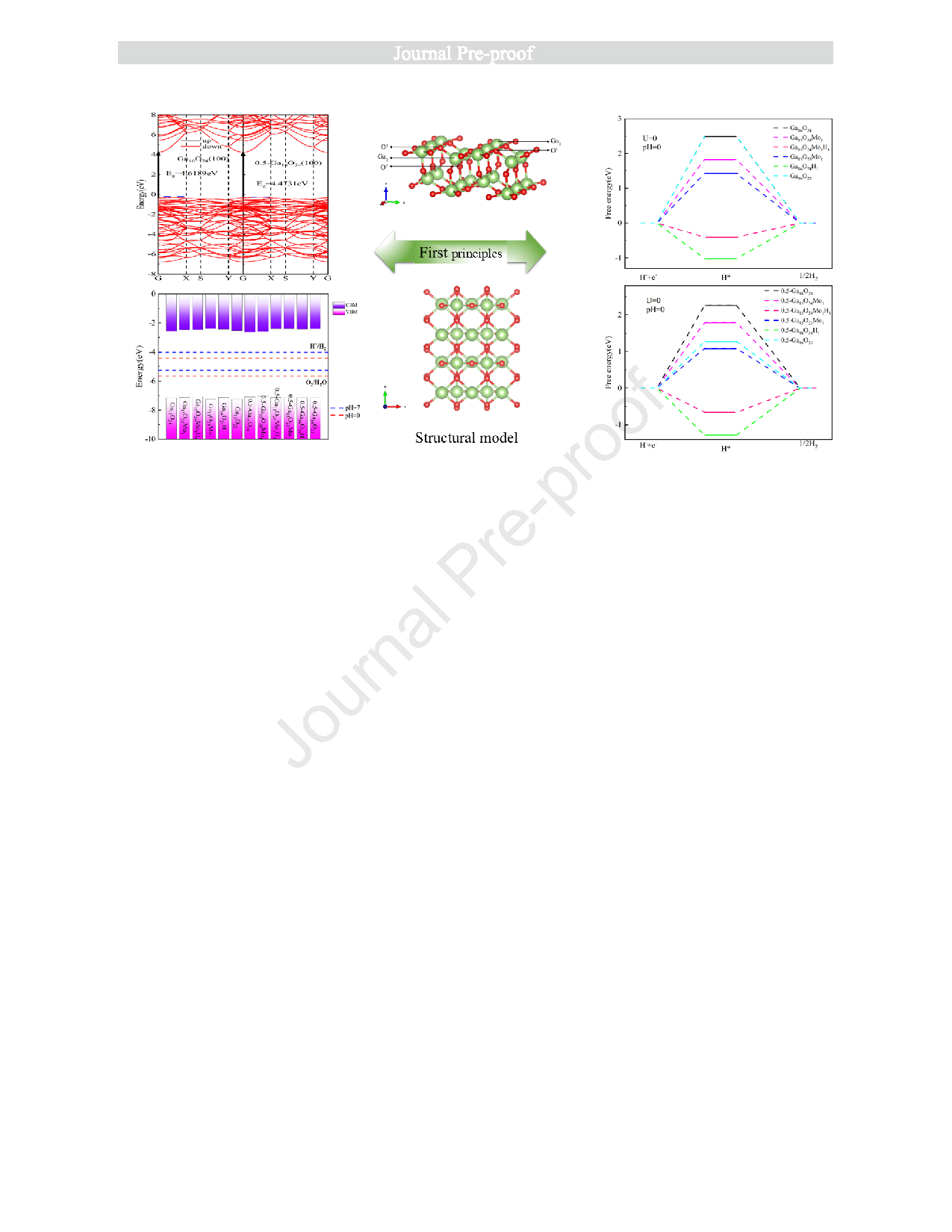
Photocatalytic water splitting for H2 production is an important approach to addressing energy and environmental issues, with the key being the development of stable photocatalysts. In this study, we investigate the effects of Mo doping and the coexistence of interstitials H with O vacancies on the photocatalytic performance of monolayer β-Ga2O3 using the first-principles GGA + U approach based on the framework of density functional theory. Additionally, the modulation of photocatalytic performance under an external electric field of 0.5 V/Å is explored. Visible-light response, carrier lifetime, band edge positions, work function, and free energy were calculated and analyzed. Results demonstrate that both interstitial H and the applied electric field can significantly prolong carrier lifetimes. Mo doping combined with interstitial H remarkably enhances UV absorption in monolayer β-Ga2O3, accompanied by a distinct red-shift in the absorption spectrum. This configuration also exhibits extended carrier lifetimes, higher carrier mobility, and superior reducibility, making it a promising candidate for photocatalytic hydrogen production. Meanwhile, systems containing O vacancies show enhanced visible-light absorption with a maximum coefficient of 105 cm−1, indicating efficient visible-light utilization. Among these, the system with simultaneous Mo doping and O vacancies exhibits the strongest oxidizing capability and optimal photocatalytic activity, suggesting its potential as an efficient oxygen evolution photocatalyst.
Highlights
● Mo-doped monolayer β-Ga2O3 photocatalytic performance were studied under external electric field using first-principles methods.
● Systems with oxygen vacancies show enhanced visible-light absorption, reaching up to 105 cm-1 absorption coefficient.
● The incorporation of interstitial H can increase the electron drift velocity of the system.
● The Ga2O3: Mo, H system shows obvious red-shift of absorption spectrum and stronger reduction ability under 0.5 V/Å field.
Conclusion
This study employed the first-principles GGA + U method to explore the effects of Mo doping, simultaneous presence of Hi and VO, and electric field on the photocatalytic properties of ML β-Ga2O3. The results indicate that the Mo-doped system is more stable under Ga-rich conditions, while the incorporation of Hi further improves structural stability. In all doped systems, the effective mass of holes is greater than that of electrons, and electrons are easy to move but holes are not easy to move, which is beneficial to the separation of electrons and holes. The Hi increases the electron mobility and the effective mass ratio of hole to electron, and improves the carrier separation rate; Both Hi and the applied electric field can prolong the carrier lifetime of the system. Mo doping and Hi significantly enhance the UV light absorption of ML β-Ga2O3, exhibiting a significant red shift in the absorption spectrum, and improve the light utilization rate; The system with Mo doping and Hi also exhibits longer carrier lifetimes, higher carrier activity, and better reducibility properties; And the free energy of hydrogen evolution of this system is closer to 0, which is relatively most beneficial to hydrogen production by electrolysis of water. Therefore, Mo doping combined with Hi can enable ML β-Ga2O3 to act as a catalyst for photocatalytic hydrogen production. The systems containing VO exhibit enhanced visible-light absorption with a maximum absorption coefficient of 105 cm−1, indicating high utilization efficiency of visible light. Among these, the system with coexistence of Mo doping and VO has the strongest oxidizing ability and the best photocatalytic activity. When a voltage of 6.56 V is applied, the OER of this system can be driven by photogenerated holes, which is beneficial for photocatalytic water splitting, so doping Mo and introducing VO can make ML β-Ga2O3 a catalyst for photocatalytic oxygen production. Mo doping in ML β-Ga2O3 effectively narrows the band gap and introduces an impurity energy level. These modifications promote electron transitions from the valence band to the impurity level, inducing a significant redshift in the absorption edge. As a result, the doped material demonstrates markedly improved visible-light absorption and enhanced reduction capability, thereby boosting its photocatalytic efficiency. This study provides some theoretical reference value for the design and preparation of new photocatalytic materials.
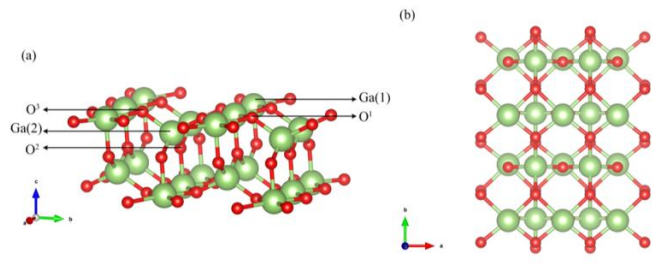
Fig. 1. β-Ga16O24 model: (a). Front view; (b). Top view.
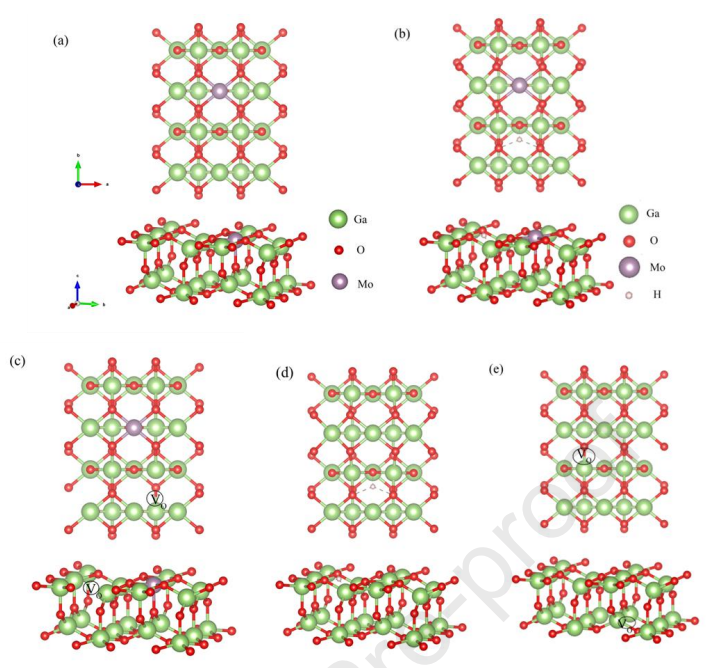
Fig. 2. Top view and front view of the doped system: (a). Ga15O24Mo1; (b). Ga15O24Mo1H1; (c). Ga15O23Mo1; (d) Ga16O24H1; (e). Ga16O23.
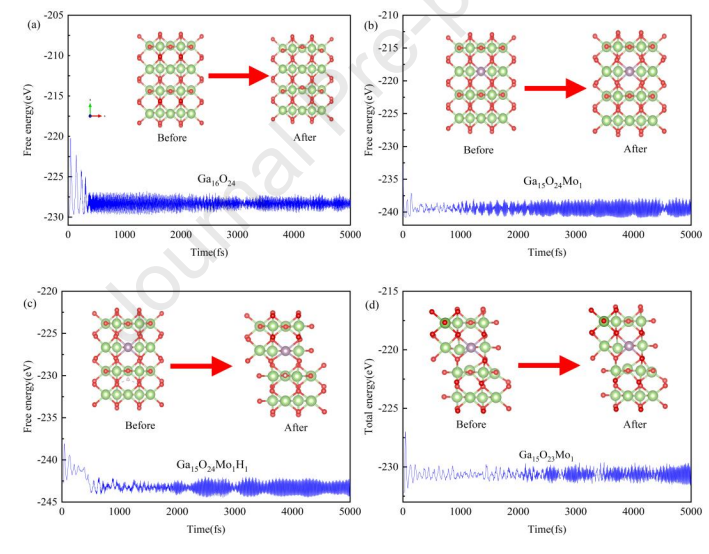
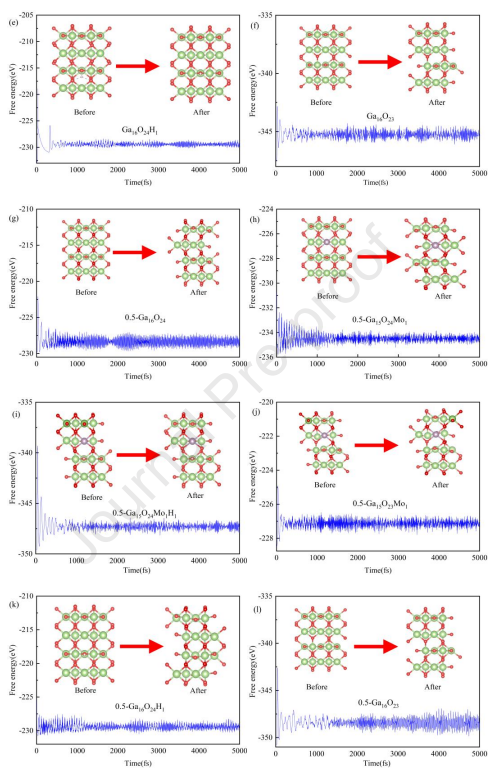
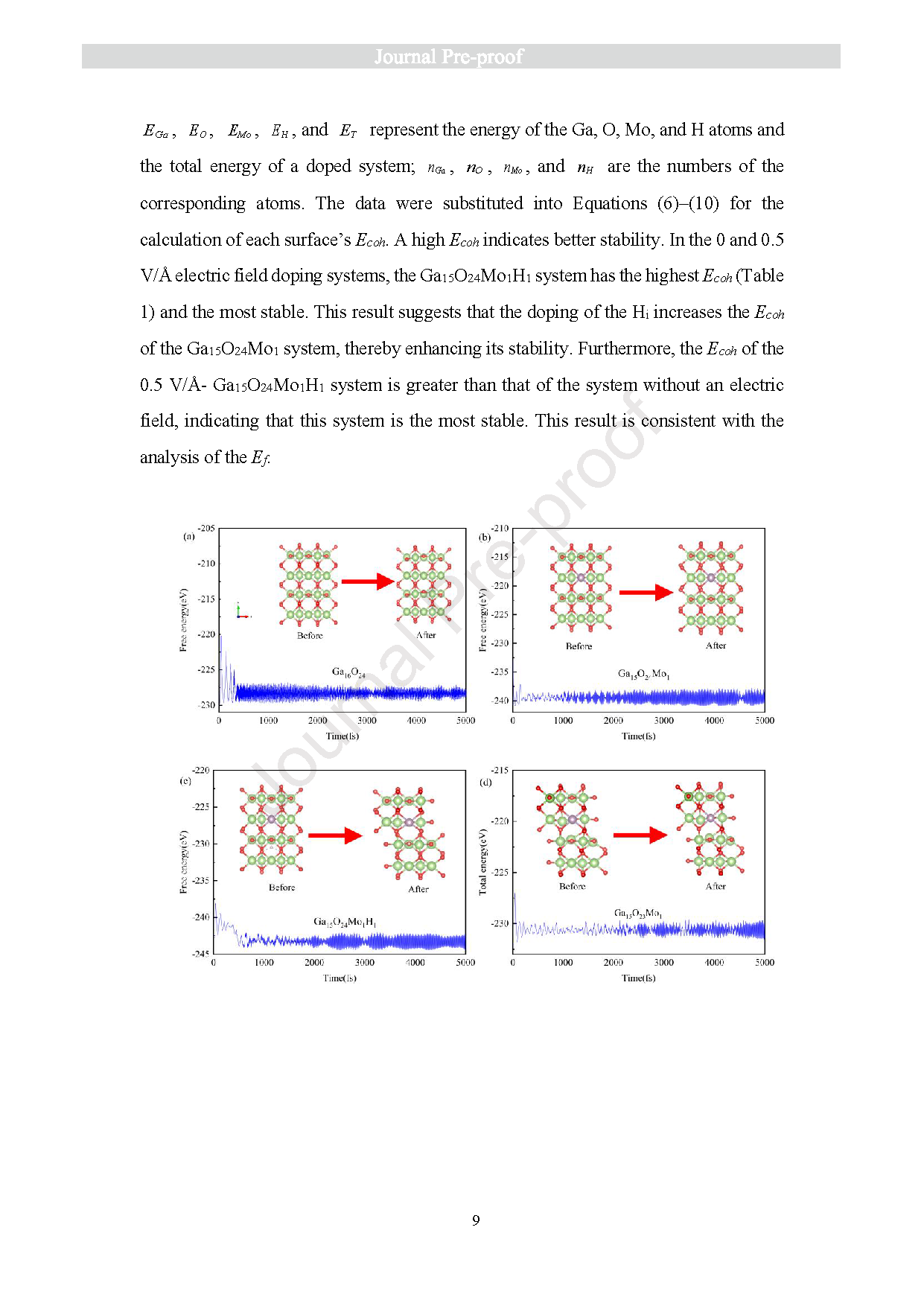
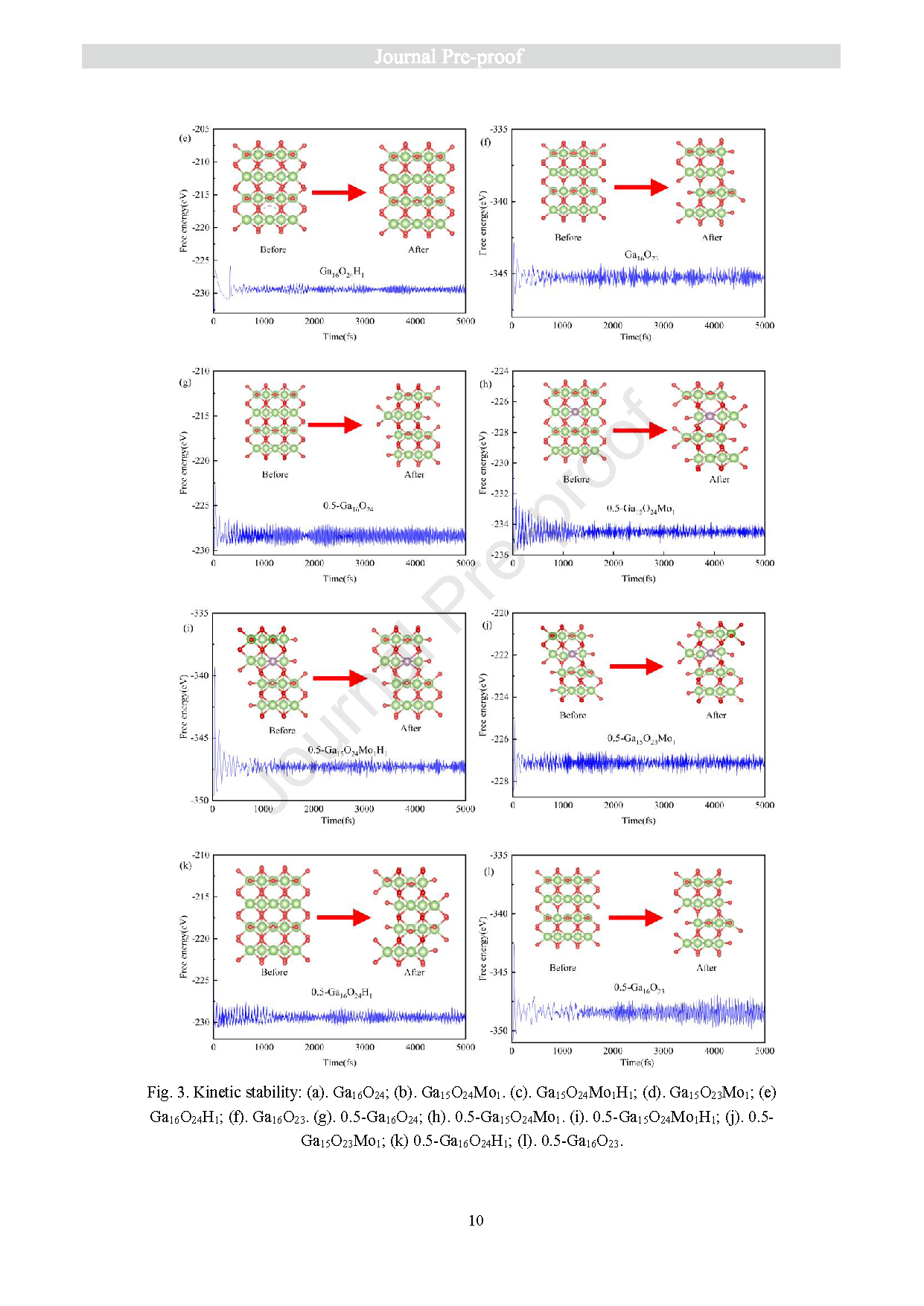
Fig. 3. Kinetic stability: (a). Ga16O24; (b). Ga15O24Mo1. (c). Ga15O24Mo1H1; (d). Ga15O23Mo1; (e) Ga16O24H1; (f). Ga16O23. (g). 0.5-Ga16O24; (h). 0.5-Ga15O24Mo1. (i). 0.5-Ga15O24Mo1H1; (j). 0.5- Ga15O23Mo1; (k) 0.5-Ga16O24H1; (l). 0.5-Ga16O23.
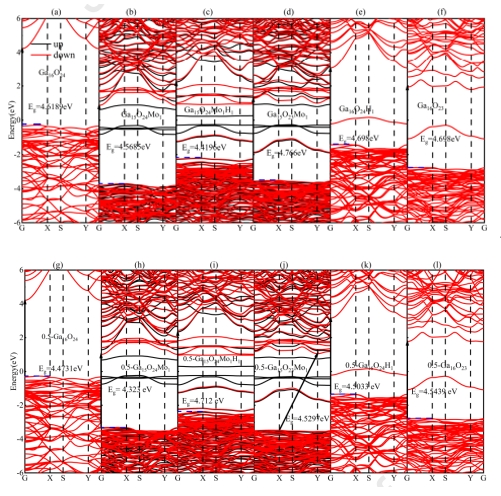
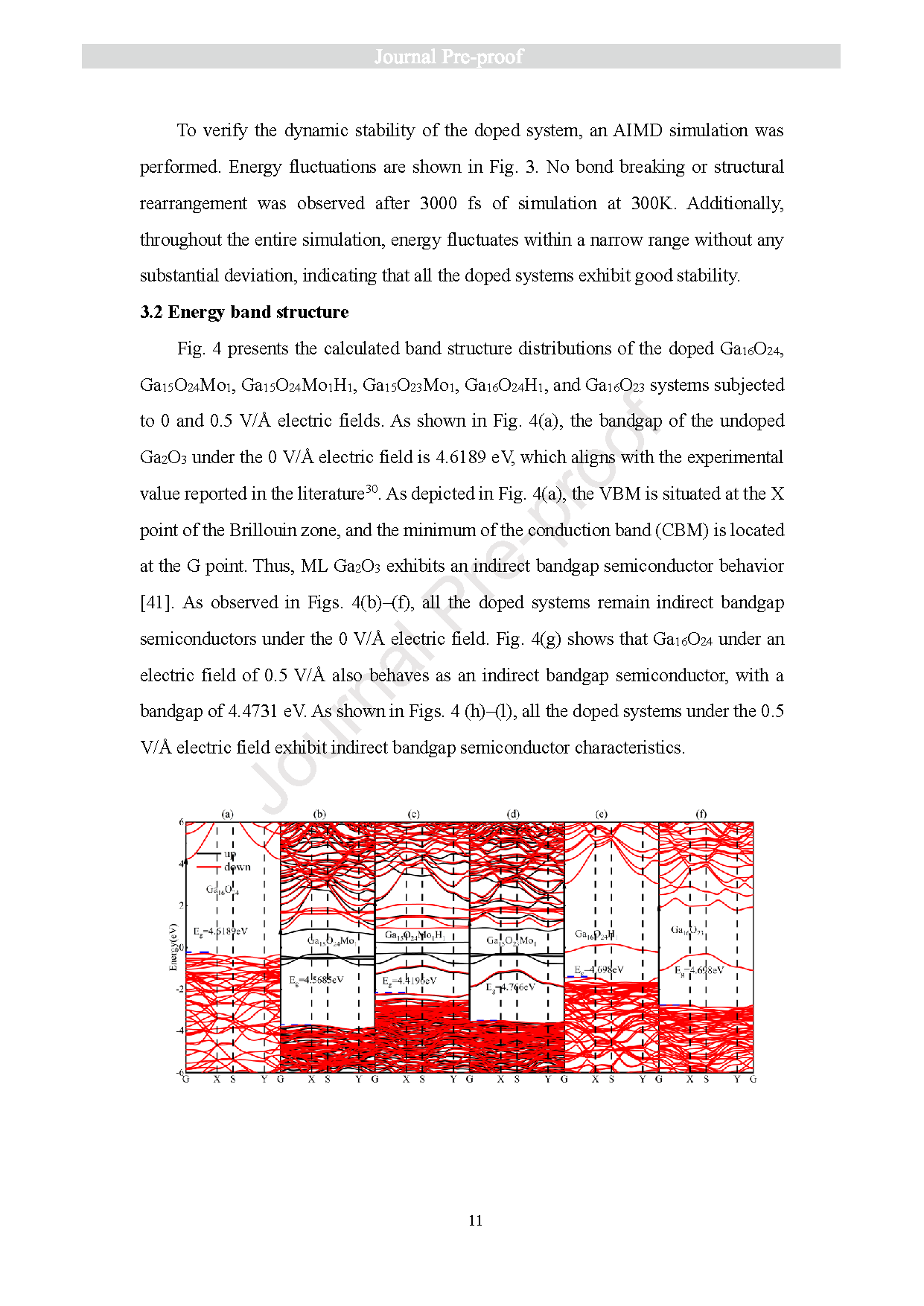
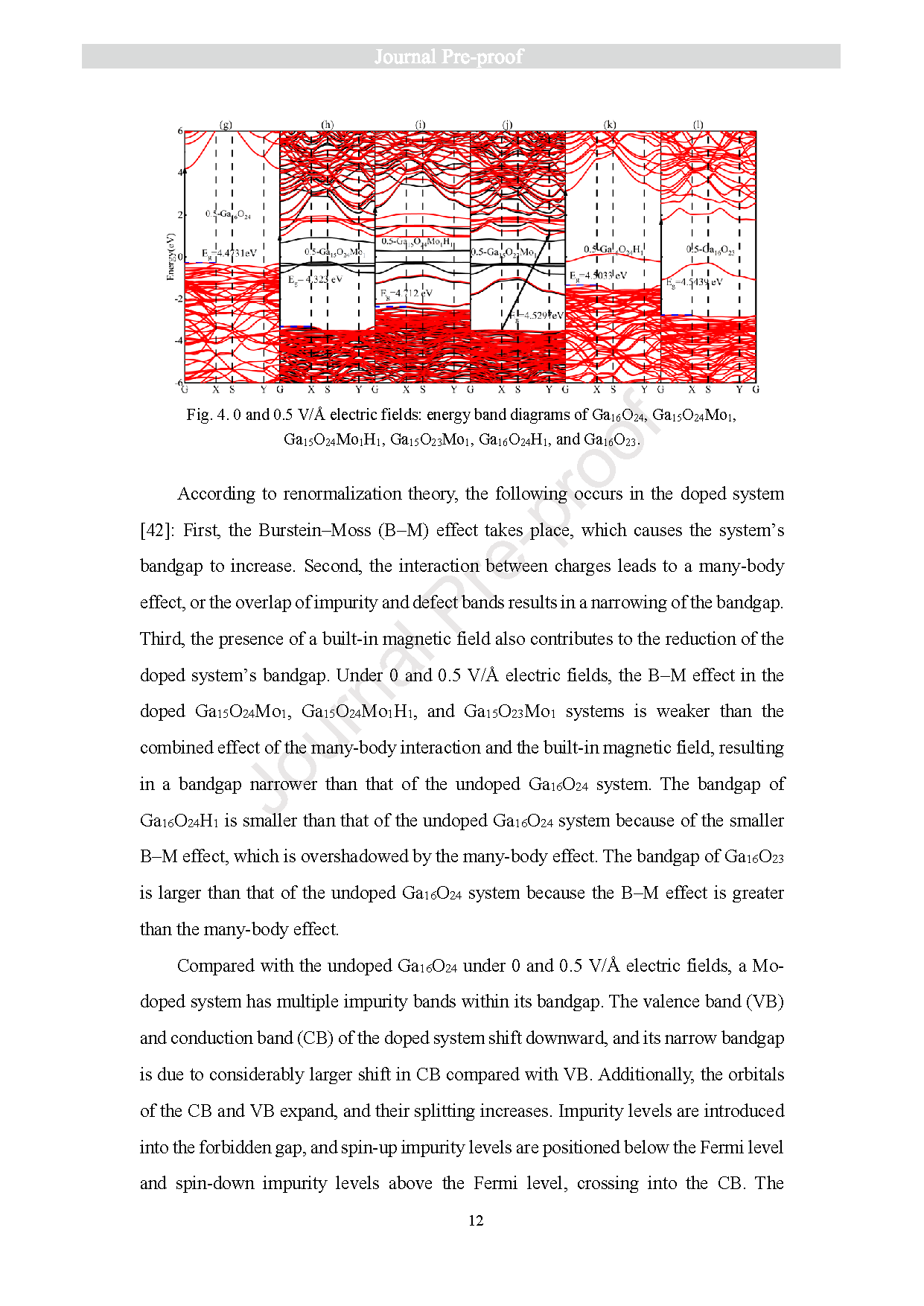
Fig. 4. 0 and 0.5 V/Å electric fields: energy band diagrams of Ga16O24, Ga15O24Mo1, Ga15O24Mo1H1, Ga15O23Mo1, Ga16O24H1, and Ga16O23.
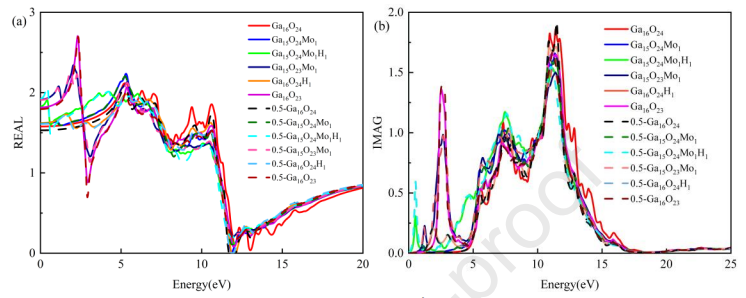
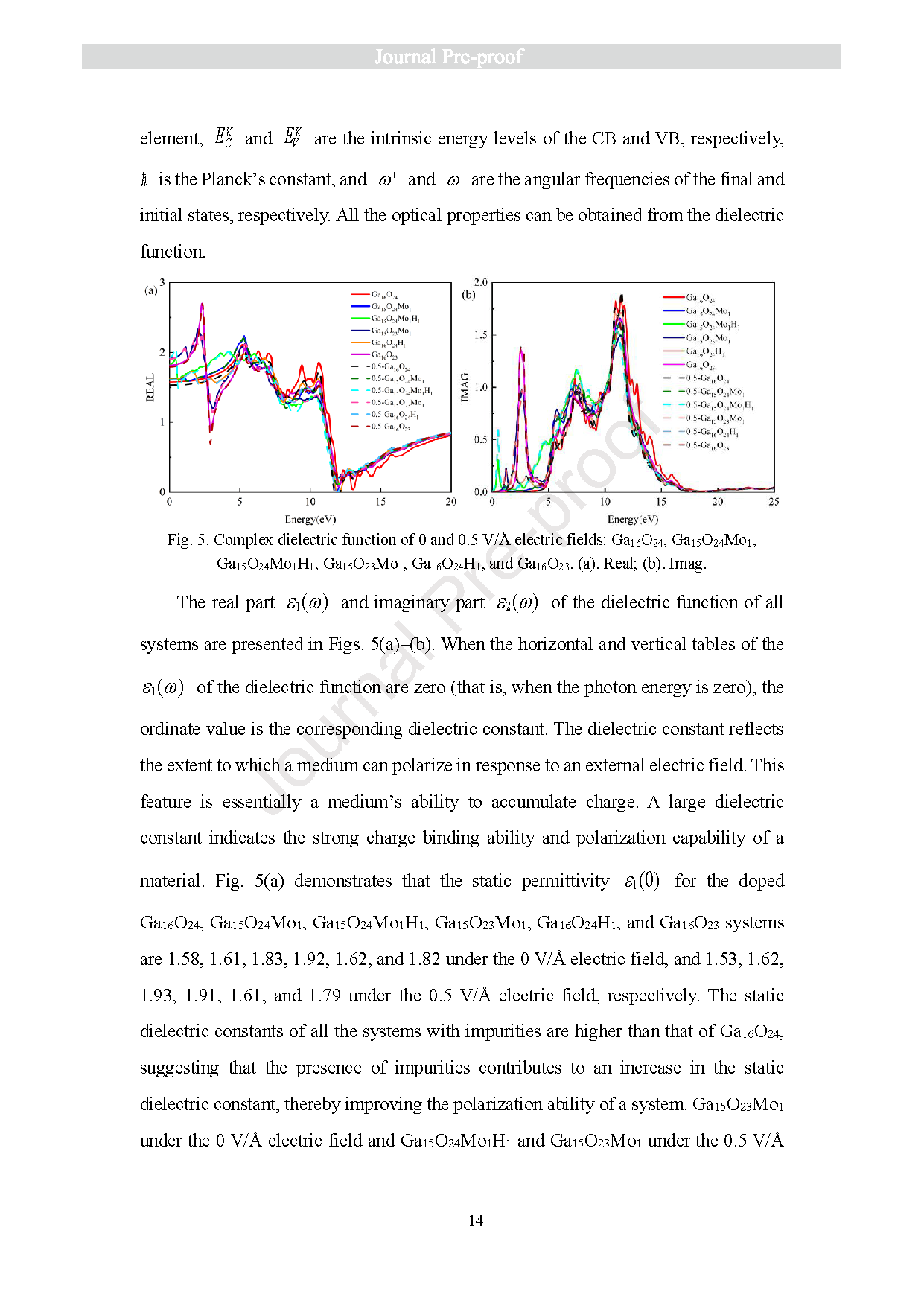
Fig. 5. Complex dielectric function of 0 and 0.5 V/Å electric fields: Ga16O24, Ga15O24Mo1, Ga15O24Mo1H1, Ga15O23Mo1, Ga16O24H1, and Ga16O23. (a). Real; (b). Imag.
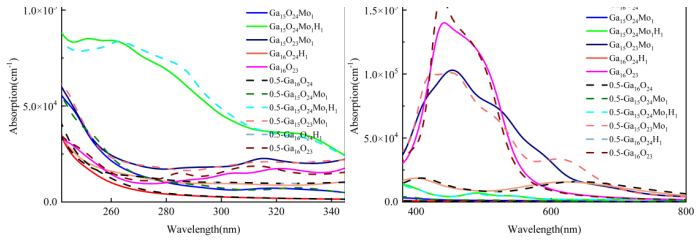
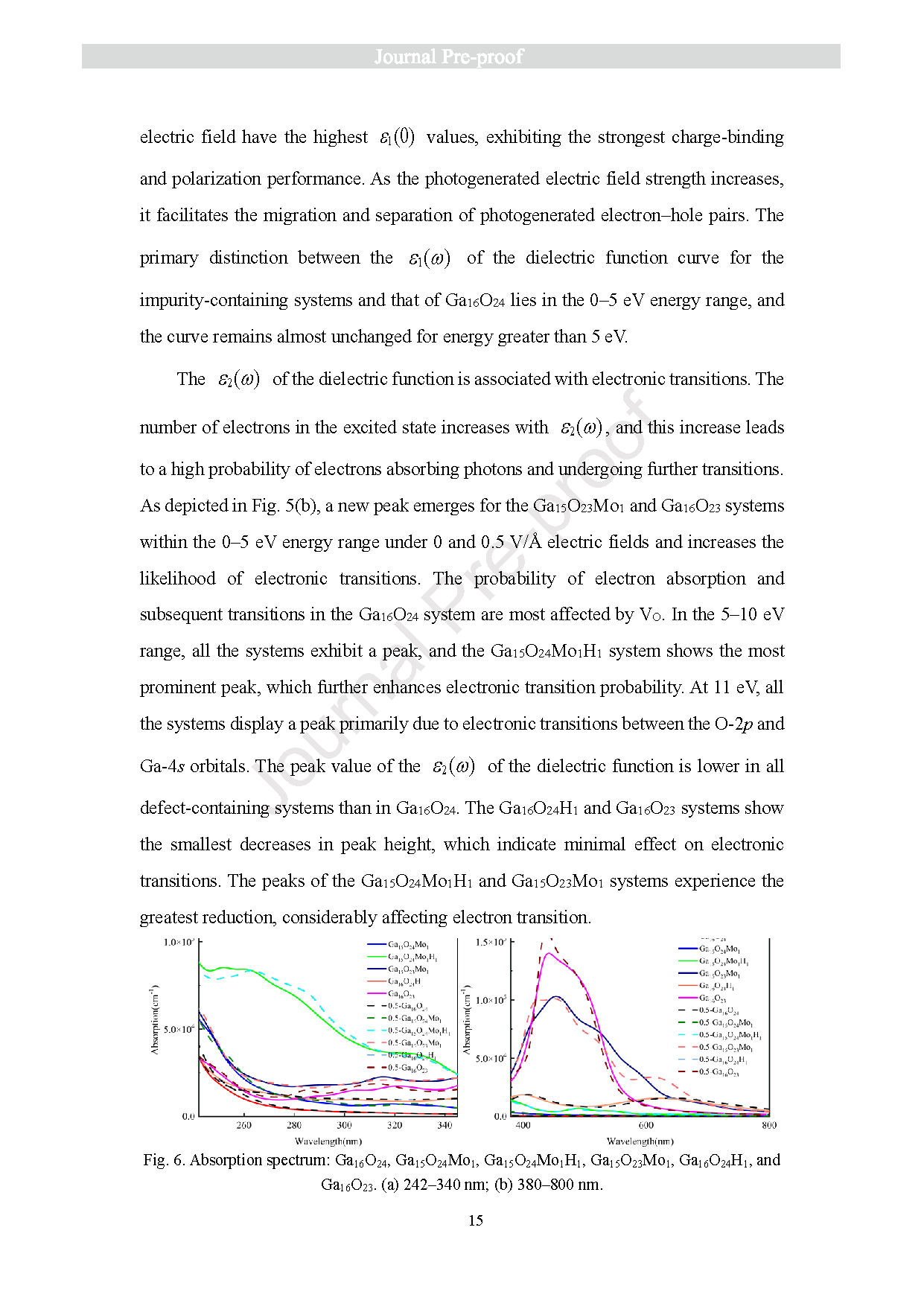
Fig. 6. Absorption spectrum: Ga16O24, Ga15O24Mo1, Ga15O24Mo1H1, Ga15O23Mo1, Ga16O24H1, and Ga16O23. (a) 242–340 nm; (b) 380–800 nm.
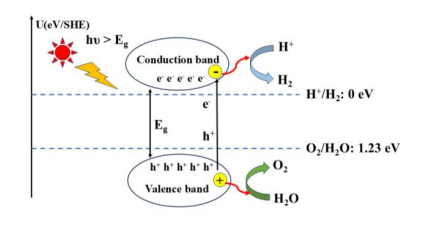
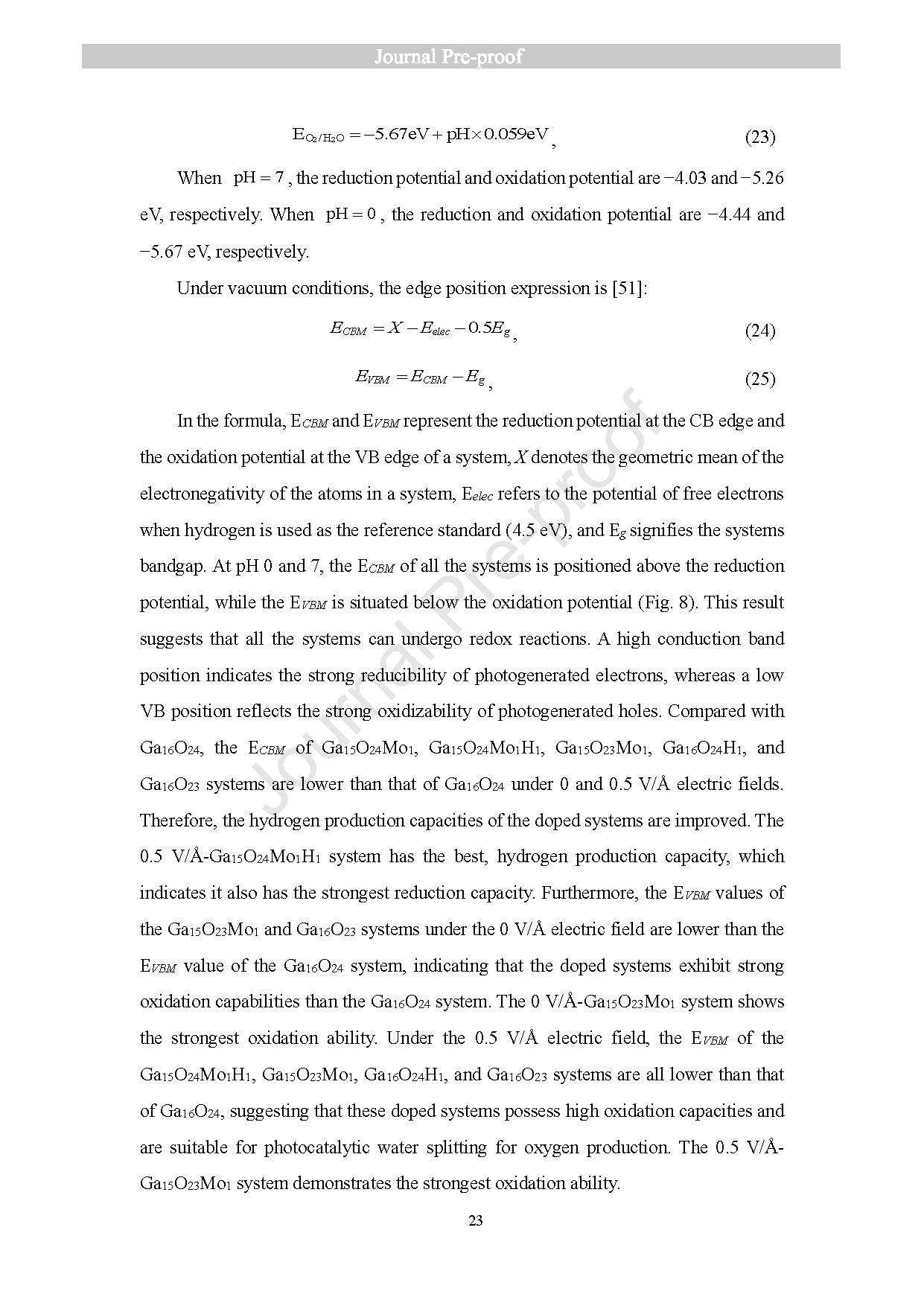
Fig. 7. Schematic of the photocatalytic oxidation-reduction reaction principle.
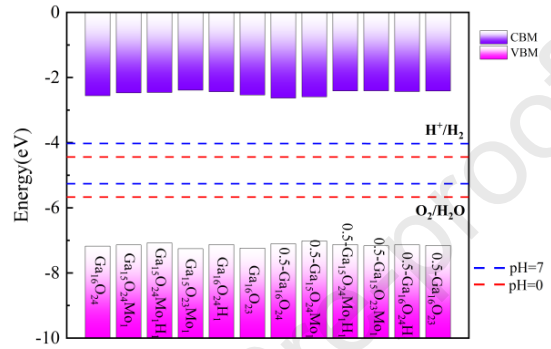
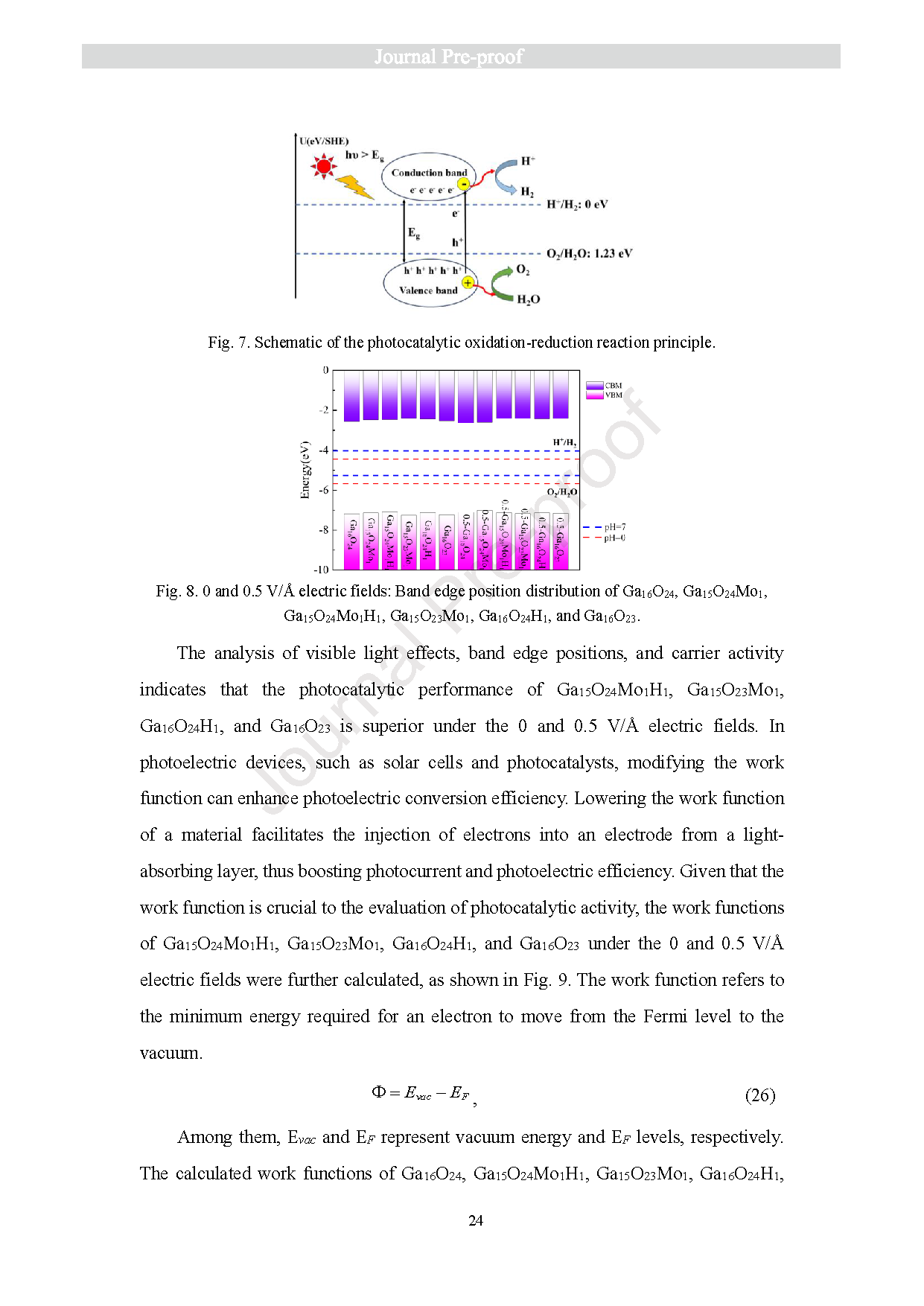
Fig. 8. 0 and 0.5 V/Å electric fields: Band edge position distribution of Ga16O24, Ga15O24Mo1, Ga15O24Mo1H1, Ga15O23Mo1, Ga16O24H1, and Ga16O23.
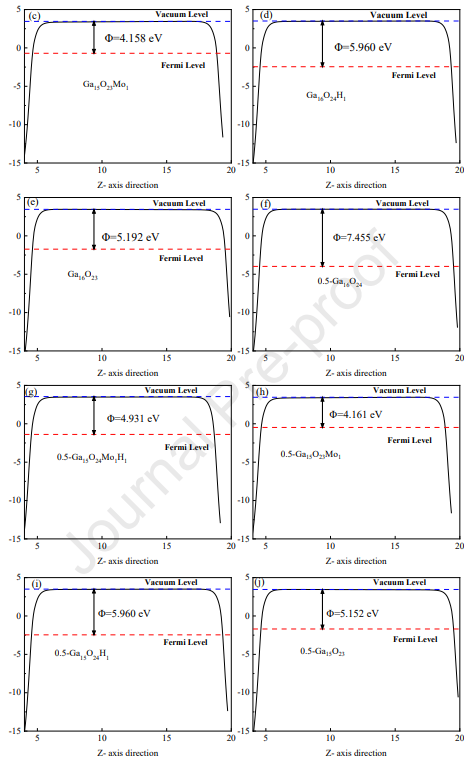
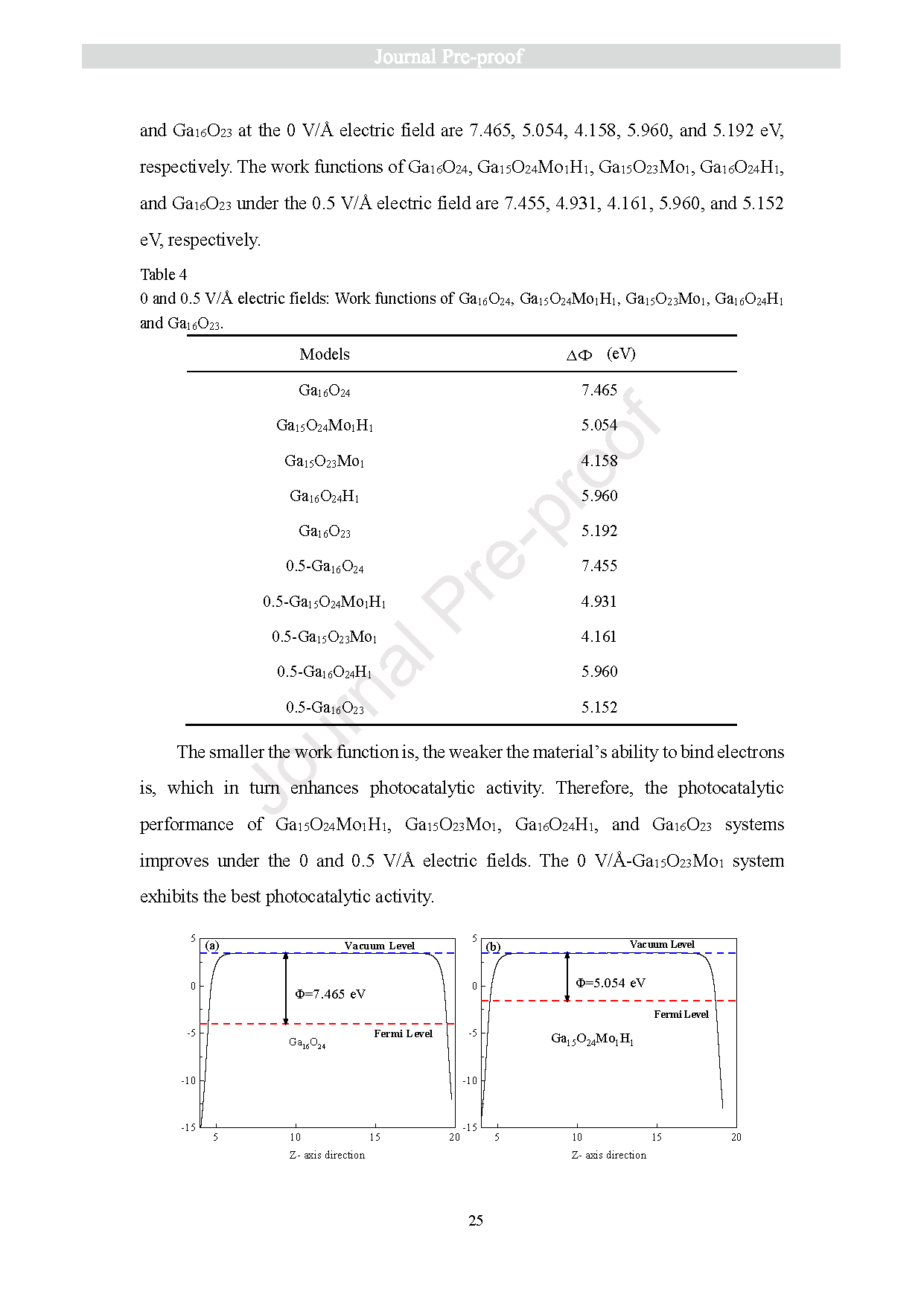
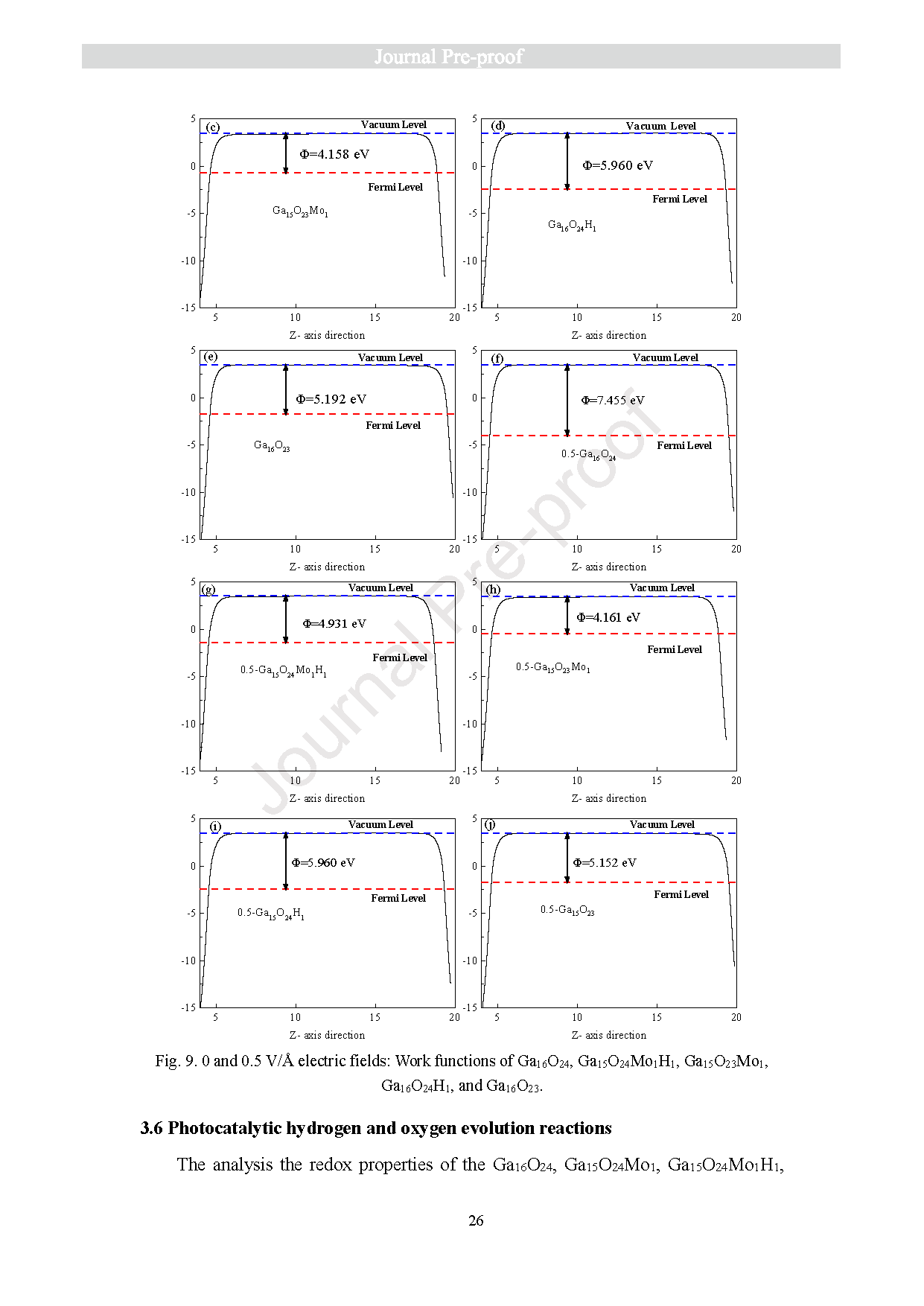
Fig. 9. 0 and 0.5 V/Å electric fields: Work functions of Ga16O24, Ga15O24Mo1H1, Ga15O23Mo1, Ga16O24H1, and Ga16O23.
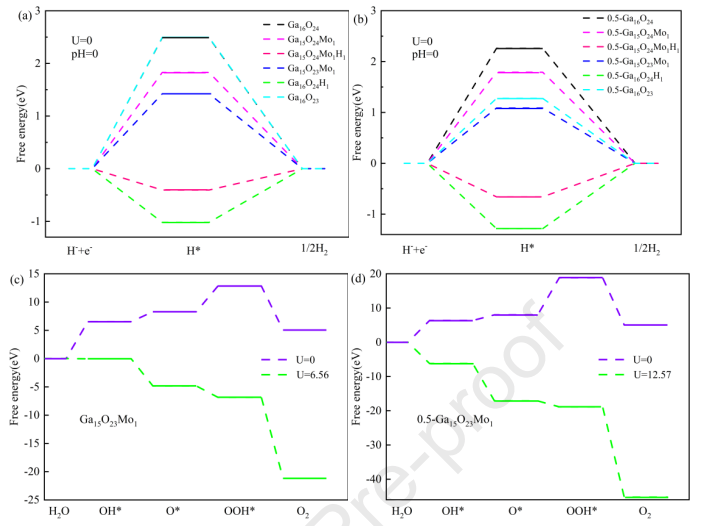
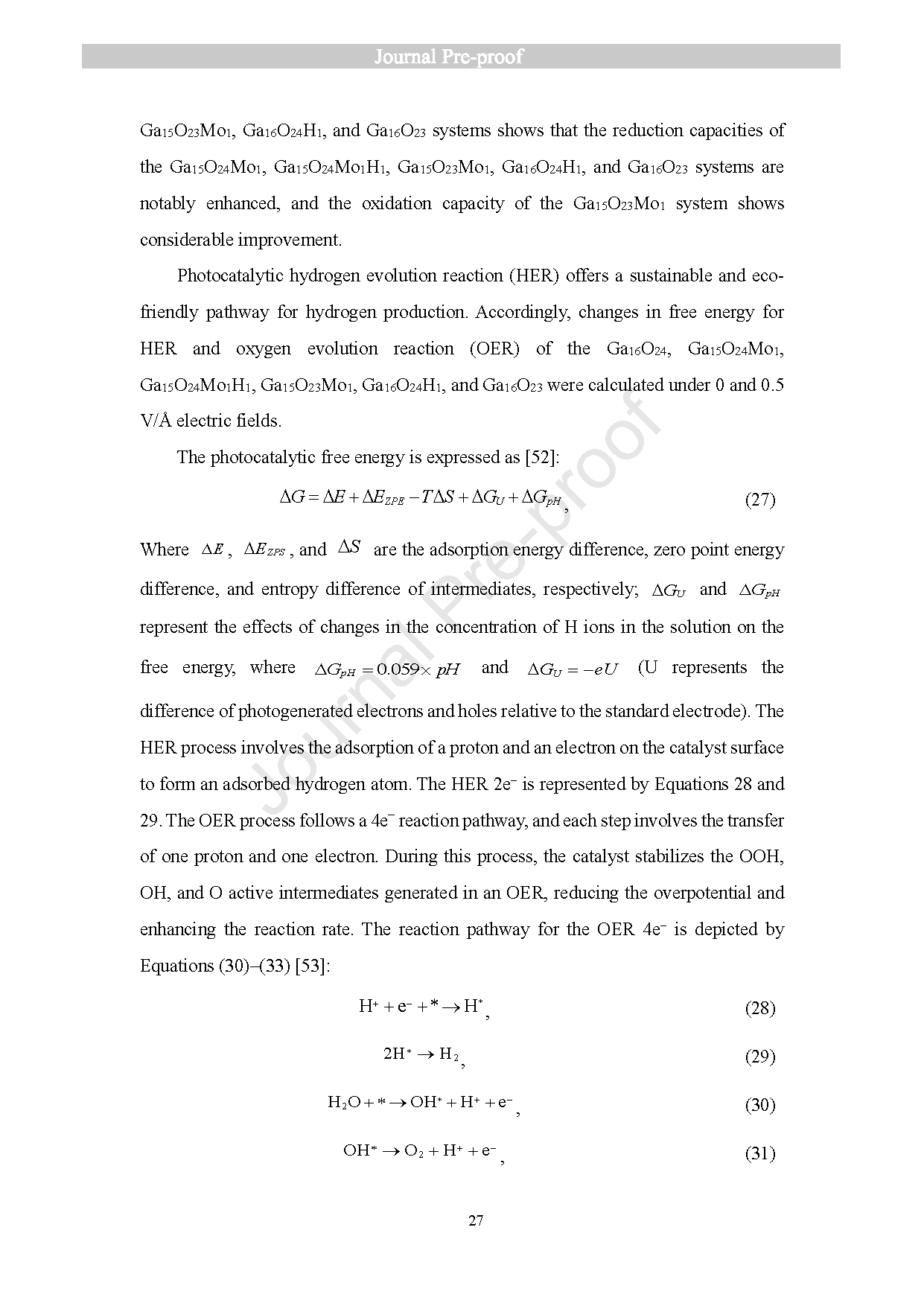
Fig. 10. 0 and 0.5 V/Å electric fields: free energy variation processes of Ga16O24, Ga15O24Mo1, Ga15O24Mo1H1, Ga15O23Mo1, Ga16O24H1, and Ga16O23. (a) 0 V/Å-HER; (b) 0.5 V/Å-HER; (c) 0 V/Å-Ga15O23Mo1 OER reaction; (d) 0.5 V/Å-Ga15O23Mo1 OER reaction.
原文链接:
www.sciencedirect.com/science/article/abs/pii/S0022369725008194


Instruction
Official Account

Cooperation
Top