


Researchers from the Northeast Normal University have published a dissertation titled "A graphene-enhanced PEDOT:PSS/β-Ga2O3 microwire organic–inorganic hybrid heterojunction self-driven photodetector with high light responsivity" in Journal of Materials Chemistry C.
Project Support
This work was supported by the National Natural Science Foundation of China (no. 62274027 and 62404039), the Open Research Fund of Song Shan Lake Materials Laboratory (2023SLABFK03), the 111 Center (B25030), the funding from Jilin Province (no. 20220502002 GH), the Postdoctoral Fellow ship Program of CPSF (GZC20230416), and the Fundamental Research Funds for the Central Universities (2412024QD010).
Background
Deep ultraviolet (DUV) photodetectors have attracted significant attention due to their ability to operate within the 200–280 nm solar-blind range, where solar radiation is absorbed by the atmosphere, eliminating background interference and making them valuable for applications such as flame monitoring, missile detection, ozone studies, and medical diagnostics. Candidate materials include AlGaN, ZnO, and β-Ga2O3, with β-Ga2O3 being particularly promising because of its intrinsic solar-blind bandgap (~4.9 eV). Self-powered photodetectors are of special interest due to their portability, environmental friendliness, and ability to operate without external bias, with performance depending critically on the internal electric field for efficient photocarrier separation and transport. Challenges for β-Ga2O3-based devices include the lack of p-type doping and intrinsic defects such as oxygen vacancies and dislocations, which can significantly degrade device performance. To address this, researchers have explored pn heterojunction photodetectors combining β-Ga2O3 with inorganic p-type semiconductors (e.g., GaN, NiO, Cu2O) or organic semiconductors (e.g., PEDOT:PSS), the latter offering advantages in mechanical flexibility, low cost, and integration into wearable systems. Recent strategies introduce graphene into PEDOT:PSS to enhance conductivity and the built-in electric field, and combine this with high-quality CVD-grown β-Ga2O3 microwires to fabricate self-powered DUV photodetectors, achieving high responsivity and detectivity at zero bias, providing a viable route for the development of high-performance flexible DUV photodetectors.
Abstract
In this study, a PEDOT:PSS@graphene composite structure was engineered by incorporating graphene into PEDOT:PSS, thereby significantly enhancing its electrical conductivity. This composite layer was subsequently integrated with high-crystallinity β-Ga2O3 microwires (MWs), synthesized via chemical vapor deposition (CVD), to fabricate a self-powered deep-ultraviolet (DUV) photodetector. The device exhibited an ultra-low dark current of only 0.13 pA under a bias of 10 V, highlighting its superior noise suppression capability. More importantly, under 245 nm illumination at a bias of 0 V, the photodetector demonstrated a remarkable responsivity of 65 mA W−1, which represents enhancements by factors of 48 and 4 compared with PEDOT:PSS/β-Ga2O3 MW and graphene/β-Ga2O3 MW heterostructures, respectively. In addition, the device achieved a high specific detectivity of ∼1012 Jones. These outstanding photoresponse characteristics can be primarily attributed to the incorporation of graphene, which improves the conductivity of the PEDOT:PSS layer while simultaneously strengthening the built-in electric field at the heterojunction interface, thereby facilitating more efficient separation and transport of photogenerated carriers. Overall, this work demonstrates a promising strategy for designing organic–inorganic hybrid heterostructures and offers new insights into the development of high-performance, self-driven solar-blind photodetectors.
Conclusion
In summary, the incorporation of graphene into PEDOT:PSS successfully yielded a PEDOT:PSS@graphene composite structure, which enhanced the conductivity of the PEDOT:PSS film by two orders of magnitude. Based on this material, a high performance self-powered solar-blind DUV photodetector was constructed using the PEDOT:PSS@graphene/β-Ga2O3 MW organic–inorganic hybrid p–n heterojunction. The introduction of graphene effectively improved the conductivity of PEDOT: PSS, reinforced the built-in electric field at the heterojunction interface, and consequently enhanced the overall device per formance. Under a bias of 0 V and 245 nm illumination, the photodetector demonstrated a notable photo-to-dark current ratio of 103, an ultrahigh responsivity of 65 mA W-1, and a specific detectivity of 9×10¹¹ Jones. These results underscore the efficacy of the proposed strategy. This study offers valuable insights for future performance optimization of self-powered solar-blind DUV photodetectors based on organic–inorganic hybrid heterojunctions and provides a useful reference for further research toward developing more efficient and sensitive photodetection devices.
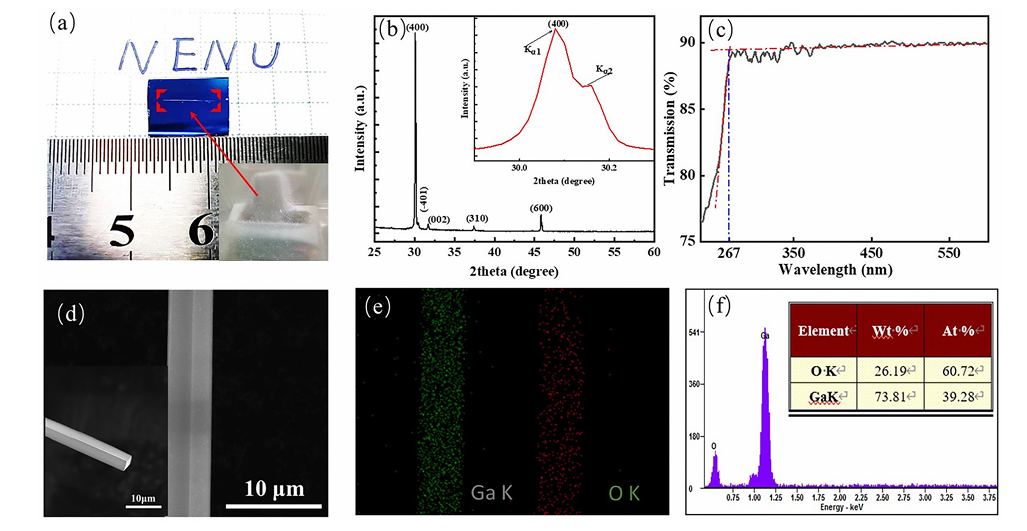
Fig. 1 (a) Optical image of a single β-Ga₂O₃ on a SiO₂/Si substrate, and the inset shows a photograph of β-Ga₂O₃ in a corundum boat; (b) the XRD pattern of β-Ga₂O₃, the inset shows an enlarged view of the (400) peak; (c) transmission spectrum of β-Ga₂O₃ MWs; (d) the SEM image of β-Ga₂O₃ MW and the inset shows the cross-sectional view of β-Ga₂O₃ MW; (e) mapping of Ga and O elements in a single β-Ga₂O₃ MW; (f) EDAX of a single β-Ga₂O₃ MW.
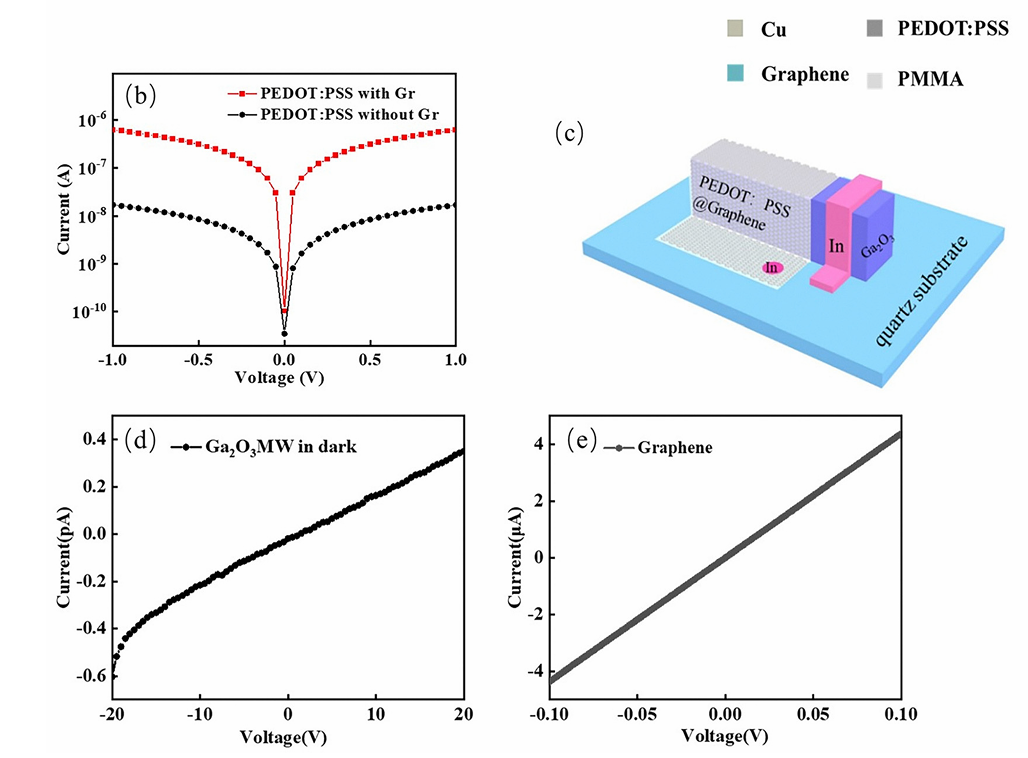
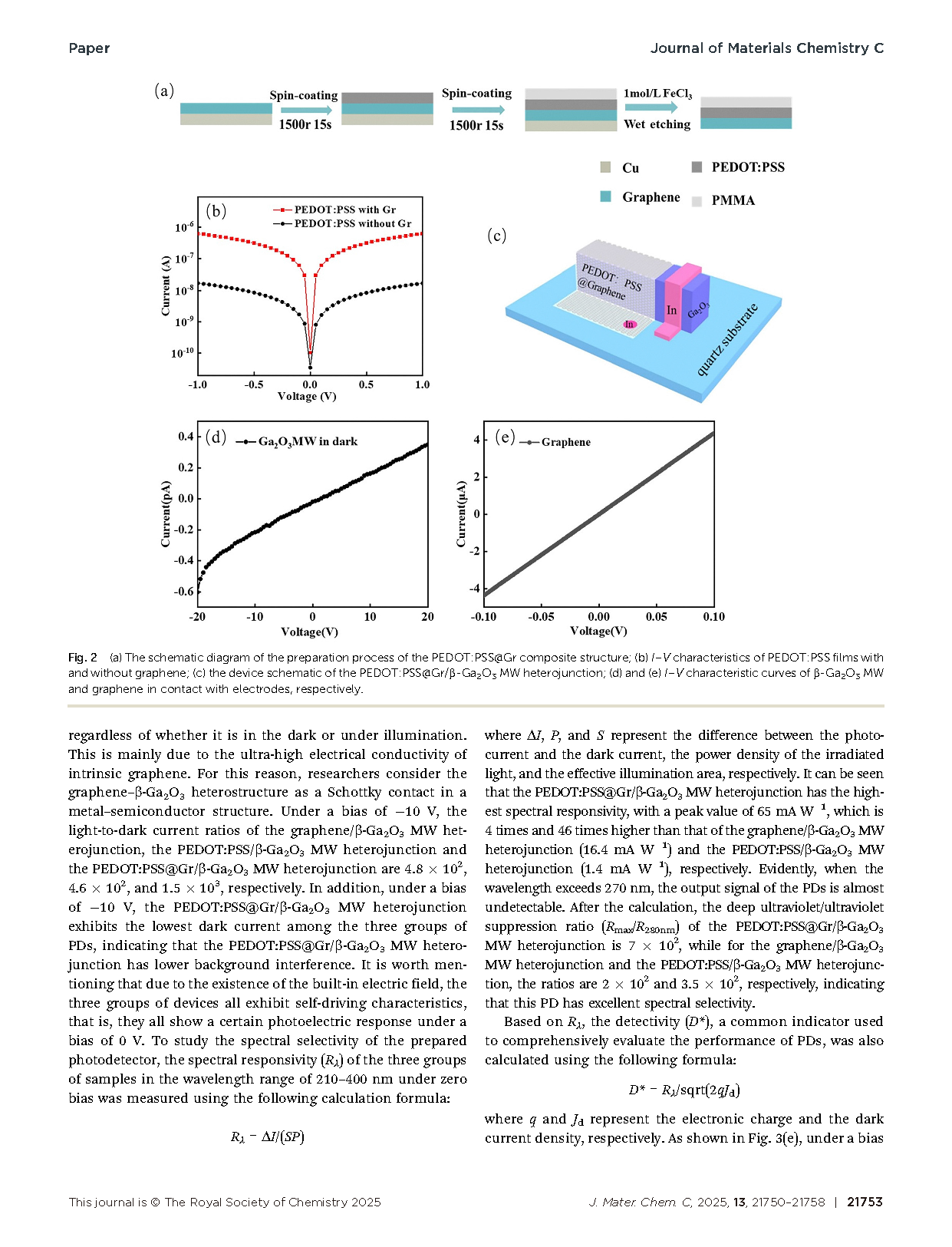
Fig. 2 (a) Schematic diagram of the preparation process of the PEDOT:PSS@Grcomposite structure;(b) I–V characteristics of PEDOT:PSS films with and without graphene;(c) Device schematic of the PEDOT:PSS@Gr/β-Ga₂O₃ MW heterojunction;(d) and (e) I–V characteristic curves of β-Ga₂O₃ MW and graphene in contact with electrodes, respectively.
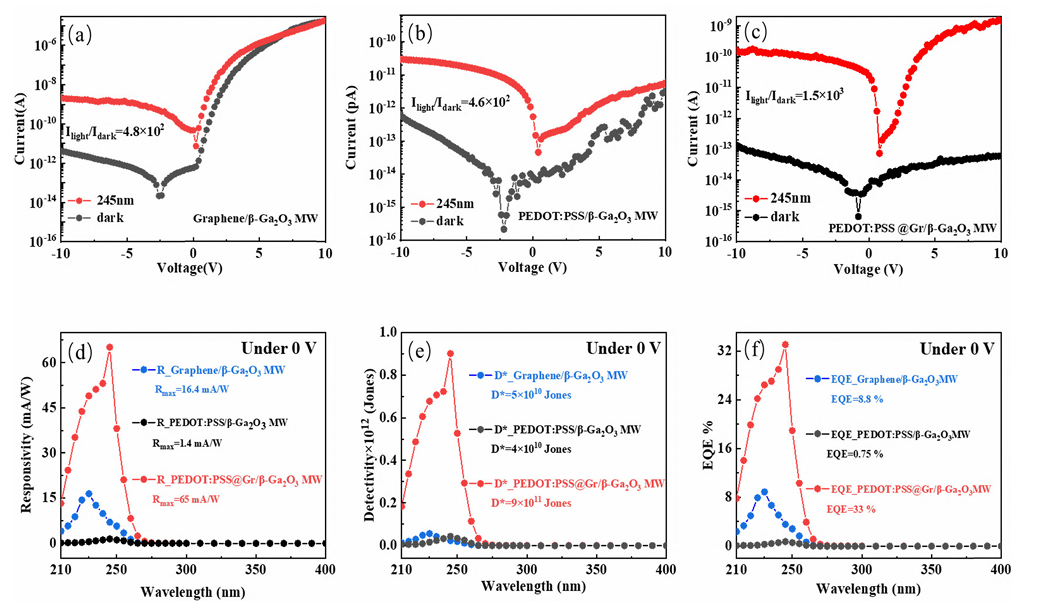
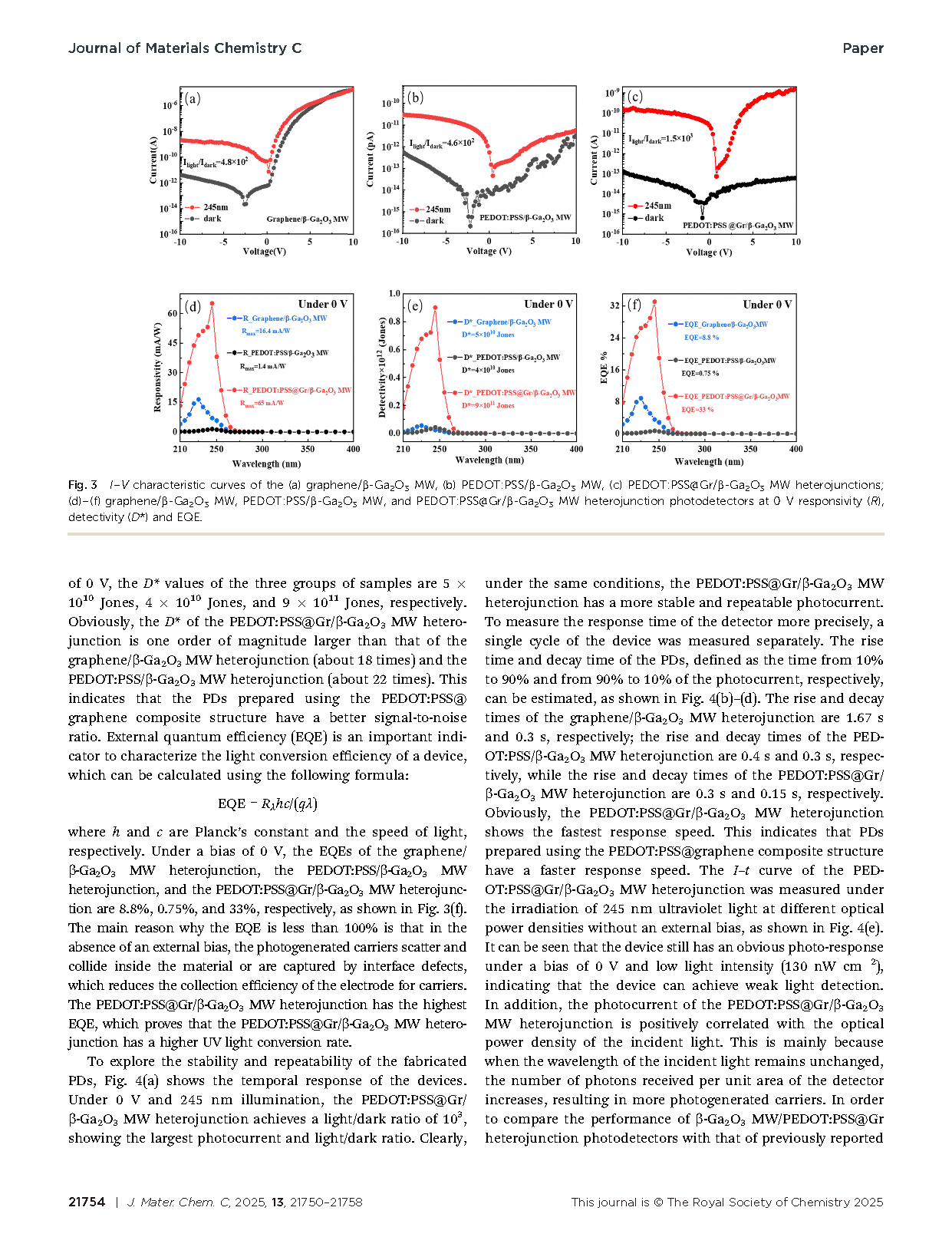
Fig. 3 I–V characteristic curves of the (a) graphene/β-Ga₂O₃ MW, (b) PEDOT:PSS/β-Ga₂O₃ MW, (c) PEDOT:PSS@Gr/β-Ga₂O₃ MW heterojunctions; (d)–(f) graphene/β-Ga₂O₃ MW, PEDOT:PSS/β-Ga₂O₃ MW, and PEDOT:PSS@Gr/β-Ga₂O₃ MW heterojunction photodetectors showing 0 V responsivity (R), detectivity (D), and EQE*.
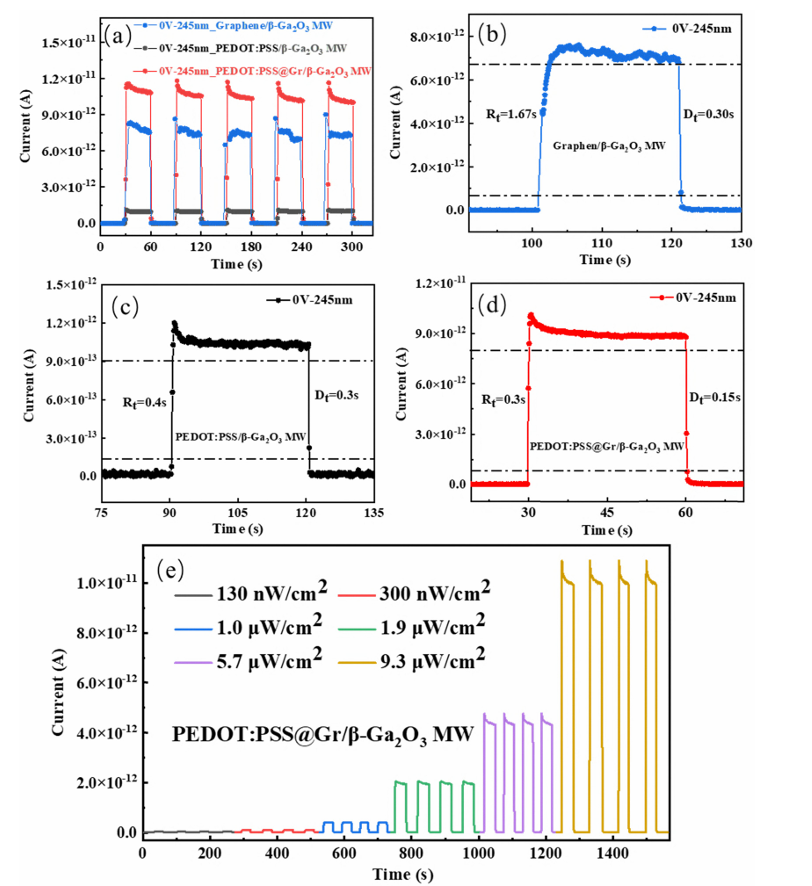
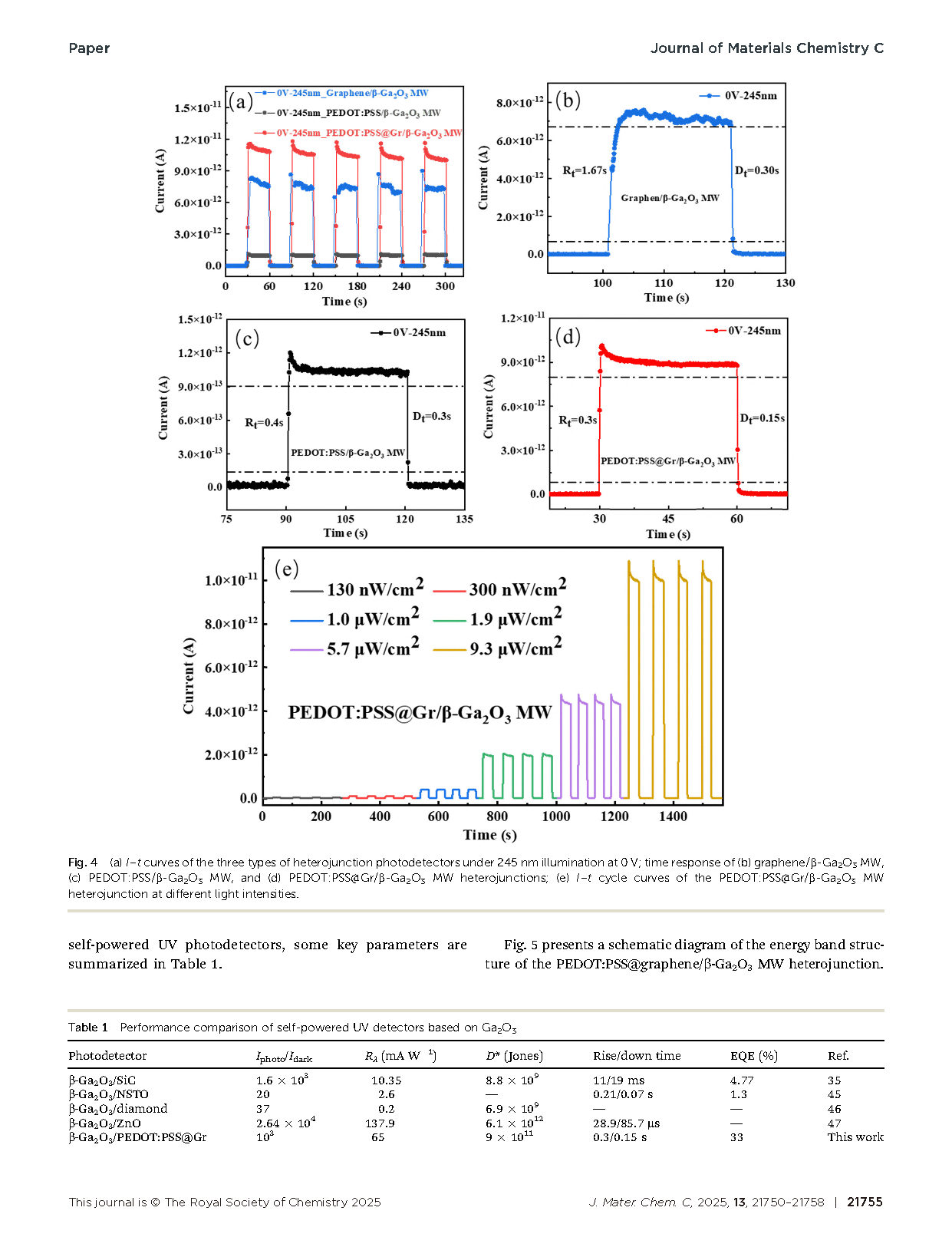
Fig. 4 (a) I–t curves of the three types of heterojunction photodetectors under 245 nm illumination at 0 V; time response of (b) graphene/β-Ga₂O₃ MW, (c) PEDOT:PSS/β-Ga₂O₃ MW, and (d) PEDOT:PSS@Gr/β-Ga₂O₃ MW heterojunctions; (e) I–t cycle curves of the PEDOT:PSS@Gr/β-Ga₂O₃ MW heterojunction at different light intensities.
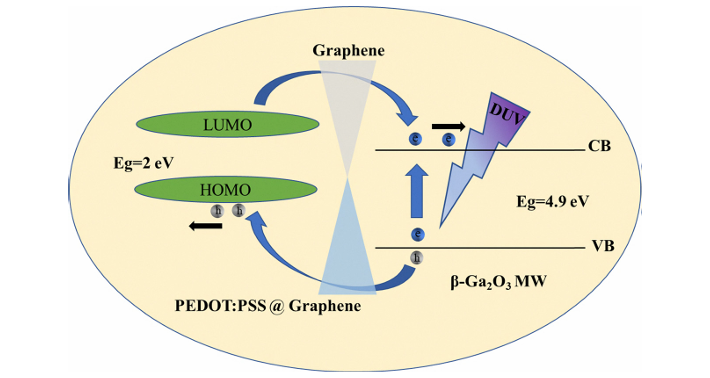
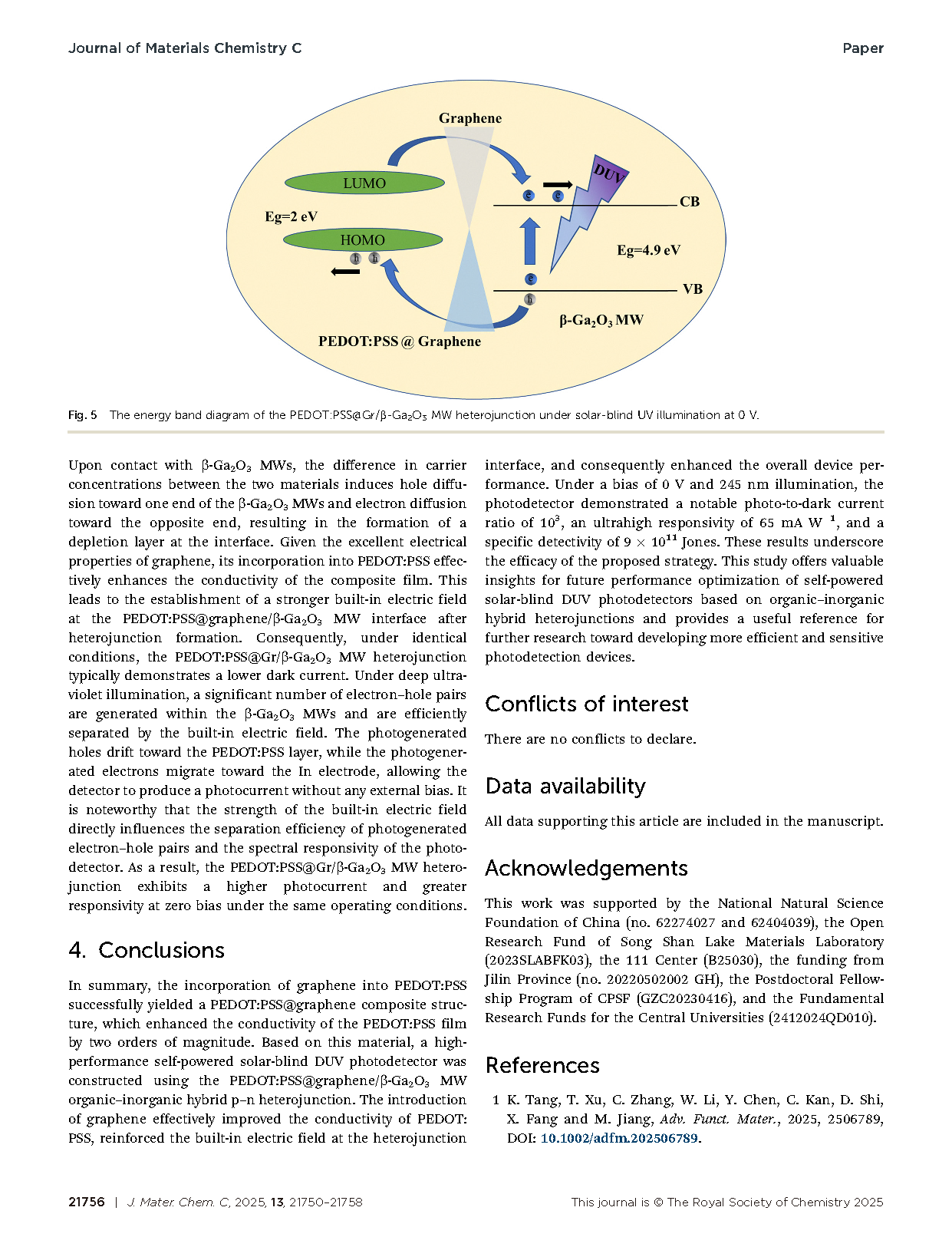
Fig. 5 The energy band diagram of the PEDOT:PSS@Gr/β-Ga₂O₃ MW heterojunction under solar-blind UV illumination at 0 V.
DOI:
doi.org/10.1039/D5TC02594J
Instruction
Official Account

Cooperation
Top