


Researchers from the University of Texas at Dallas and Tyndall National Institute, University College Cork have published a dissertation titled "Ozone Surface Pretreatment for Enhanced β-Ga₂O₃/Dielectric Interface Engineering" in ACS Applied Materials & Interfaces.
Background
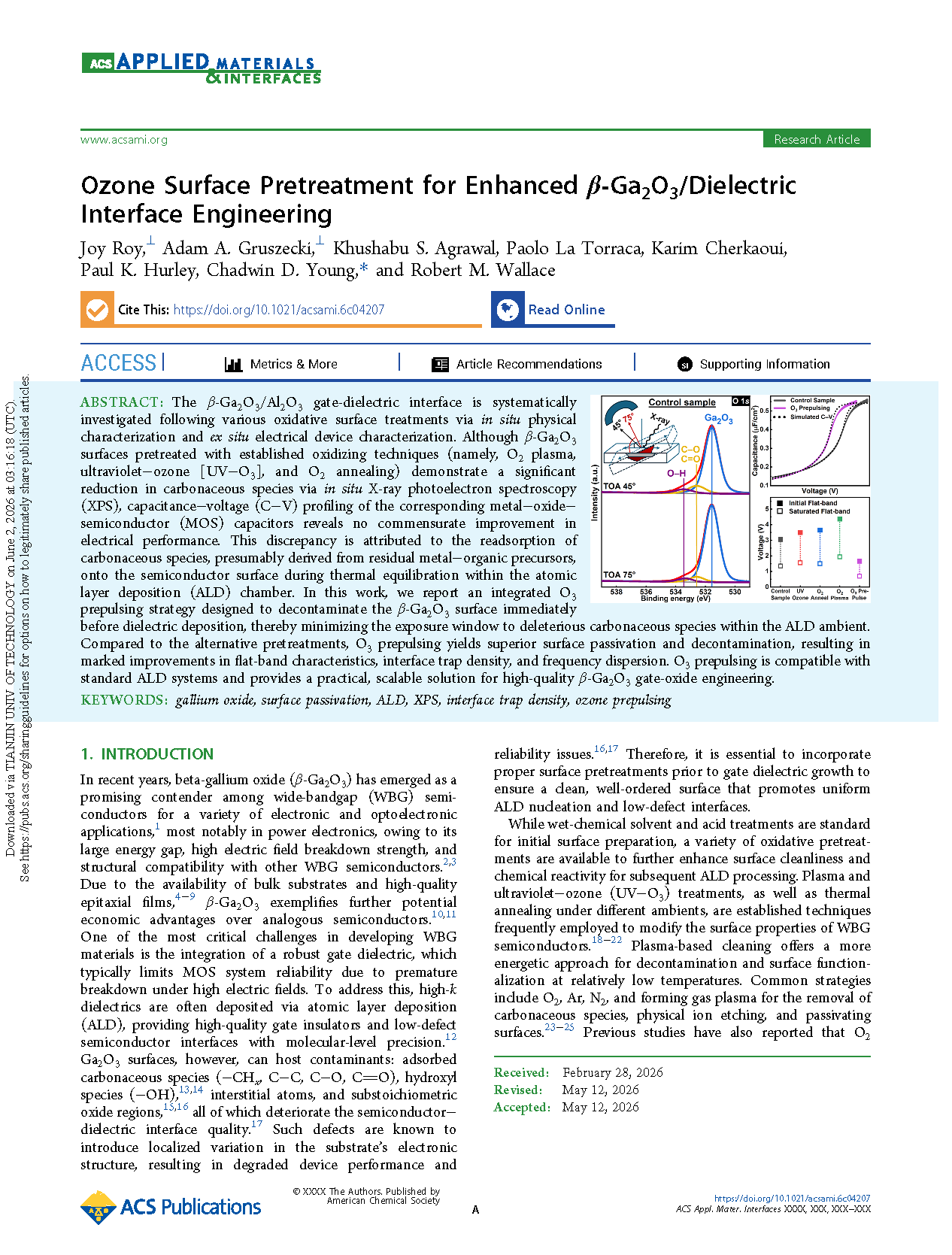
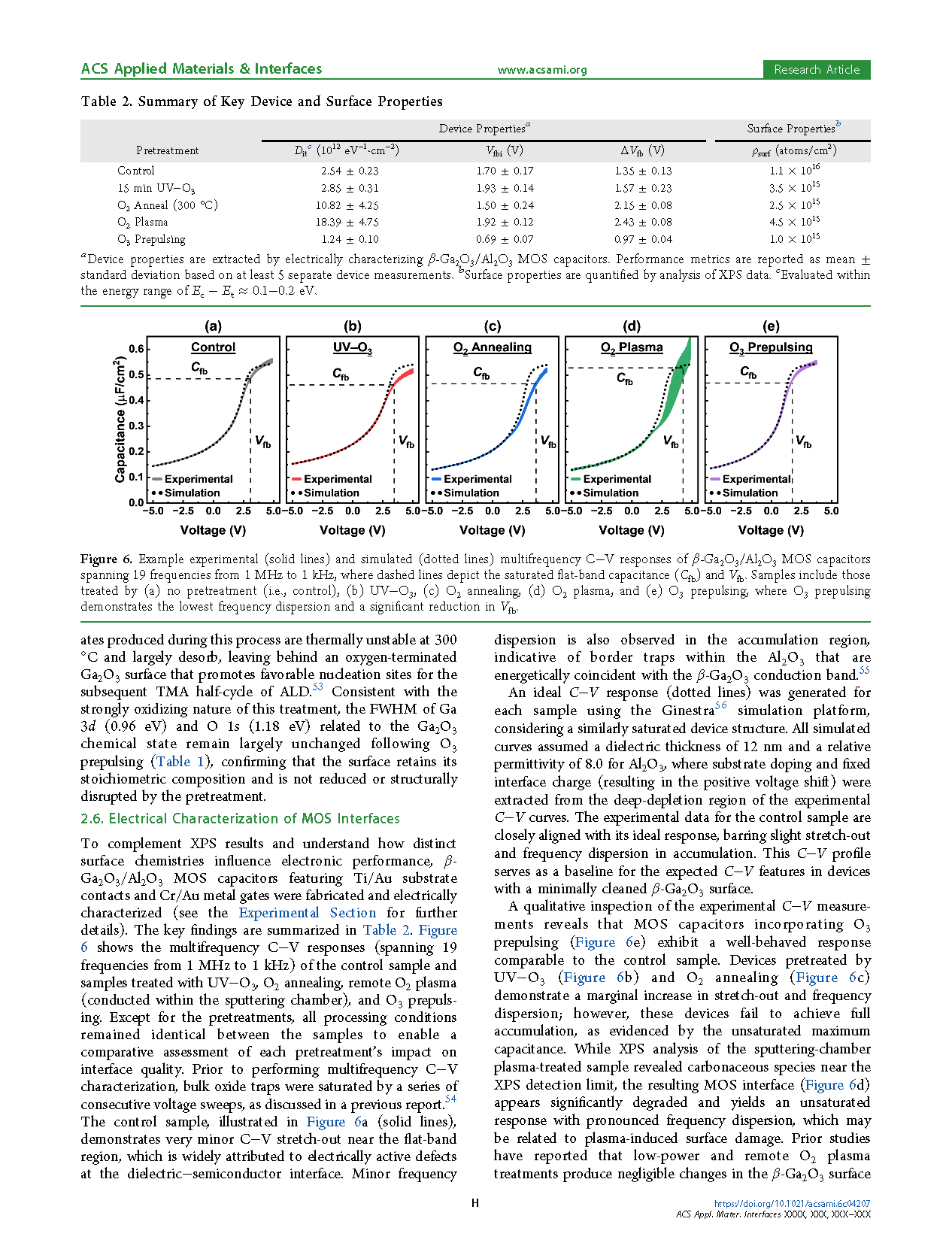
In recent years, β-Ga₂O₃ is a promising ultra-wide bandgap semiconductor for power electronic and optoelectronic devices benefiting from large bandgap and high breakdown electric field. Fabrication of high-performance β-Ga₂O₃ based MOS devices relies on high-quality gate dielectric deposited by ALD technology. Nevertheless, pristine β-Ga₂O₃ surface is easily contaminated by adsorbed carbonaceous impurities, hydroxyl groups, interstitial atoms and substoichiometric gallium oxide, which seriously degrade semiconductor/dielectric interface quality and device electrical reliability. Conventional oxidative pretreatment approaches including UV-O₃ treatment, oxygen thermal annealing and O₂ plasma cleaning can effectively eliminate surface pollutants characterized by XPS, but cannot realize corresponding electrical property improvement of MOS capacitors, which is ascribed to carbon contaminants re-adsorption from ALD chamber residual metal-organic precursors during substrate thermal stabilization before dielectric deposition. It is urgent to develop an innovative in-situ surface treatment strategy to avoid secondary surface pollution and optimize interfacial properties.
Highlights
Revealed the core reason for inconsistent results between XPS surface cleanliness and MOS electrical performance of traditional pretreatment: carbon recontamination from ALD residual precursors during substrate thermal equilibration.
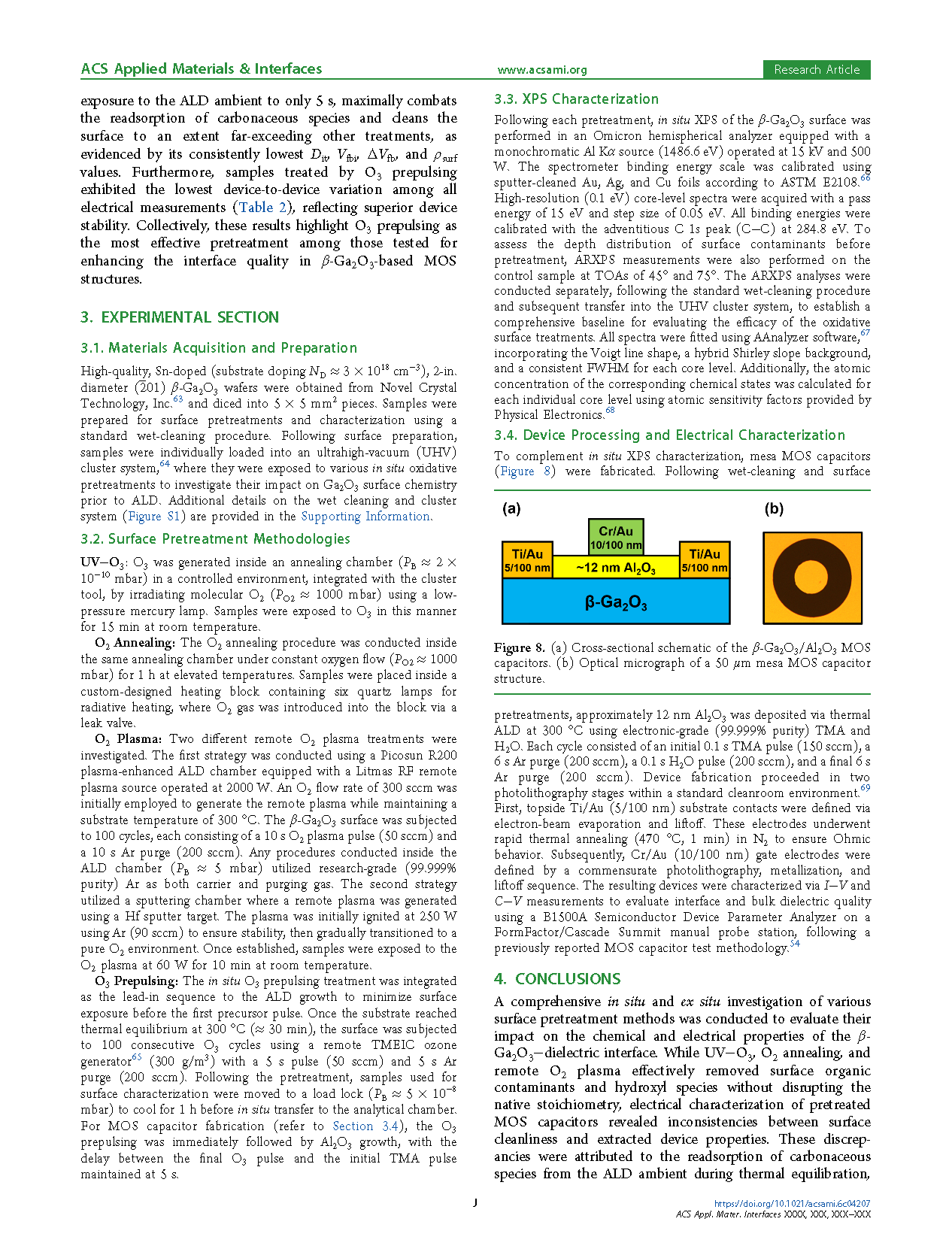
Proposed a novel in-situ O₃ prepulsing pretreatment integrated into ALD制程, only 5 s interval between final ozone pulse and ALD precursor injection to avoid surface re-adsorption of carbon contaminants.
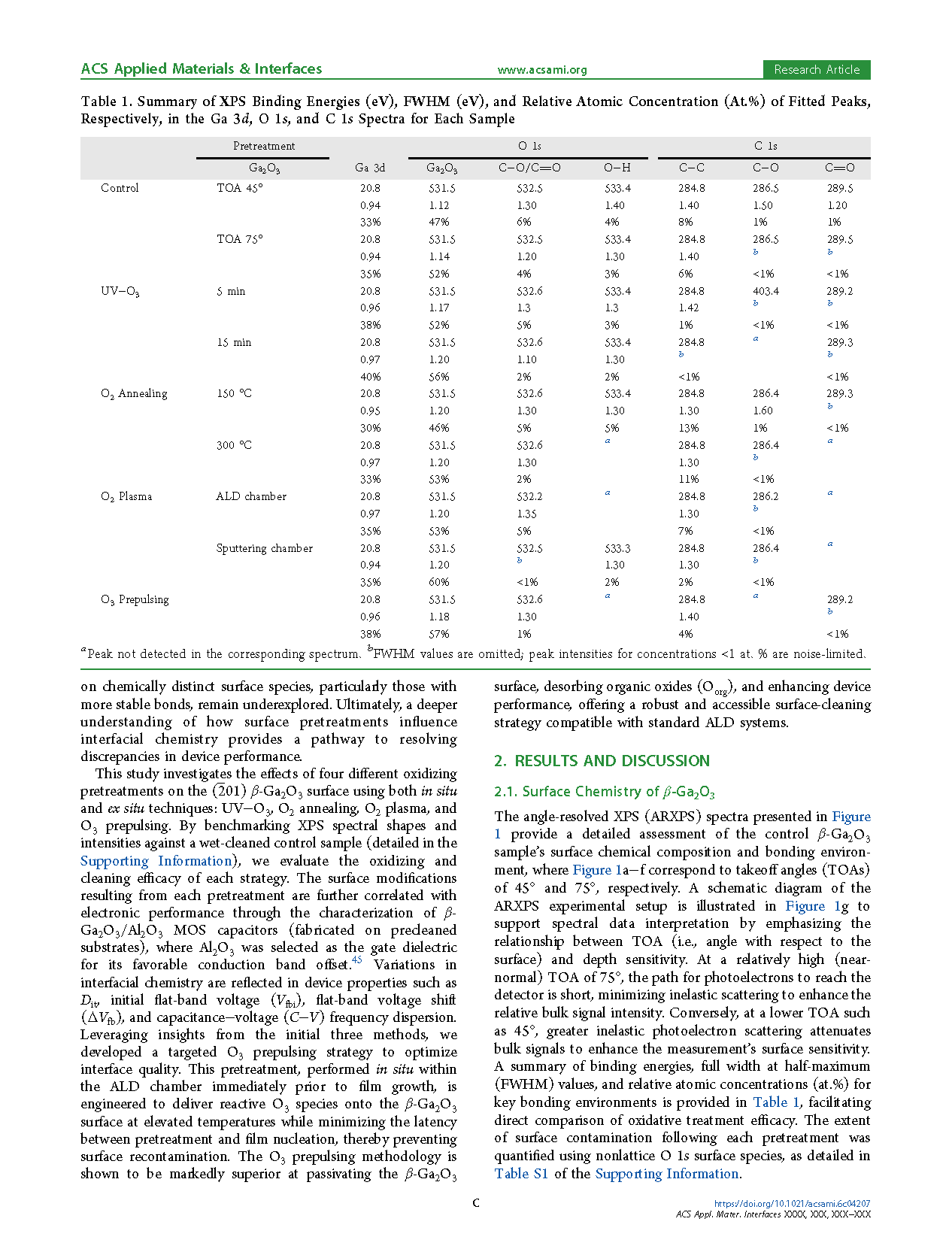
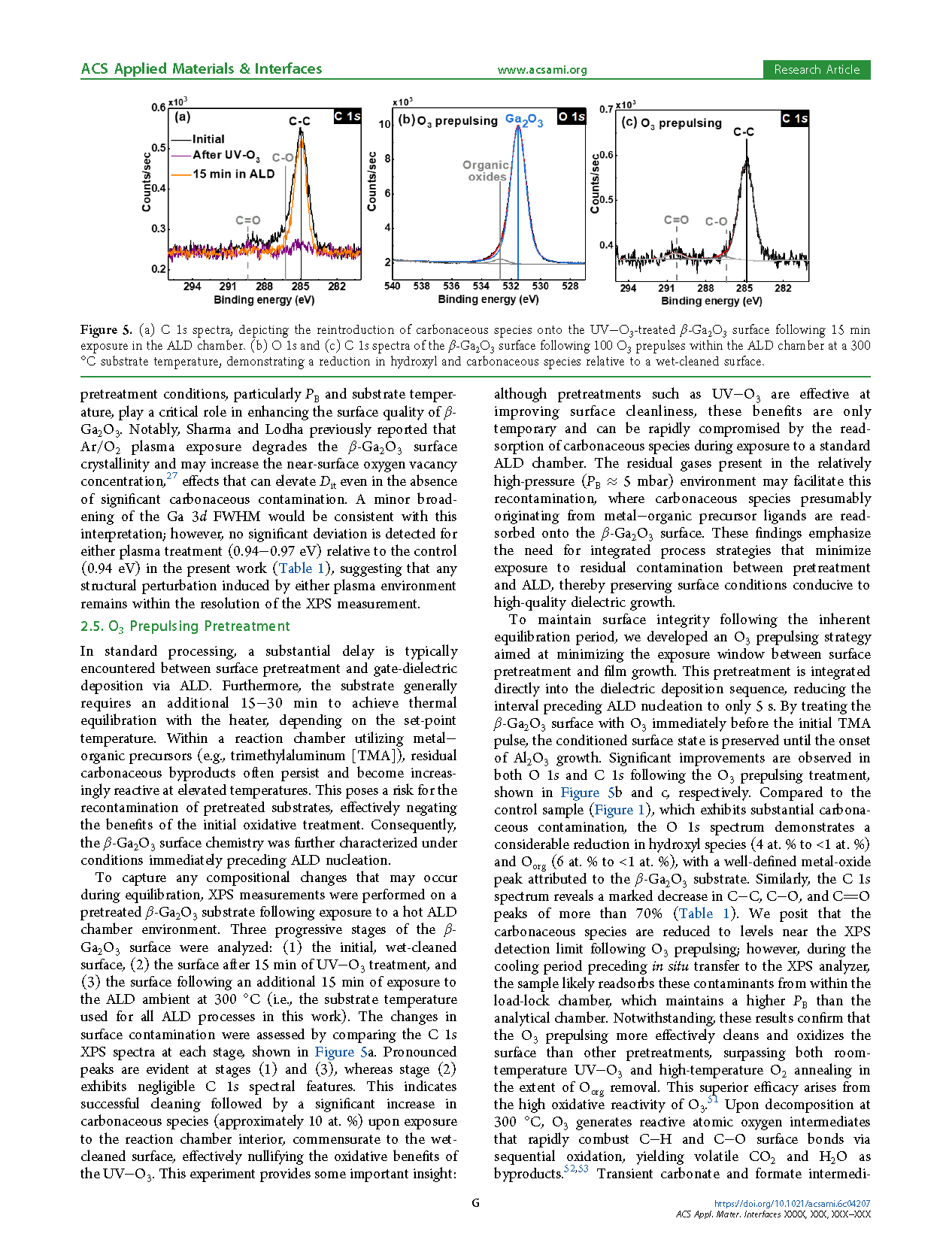
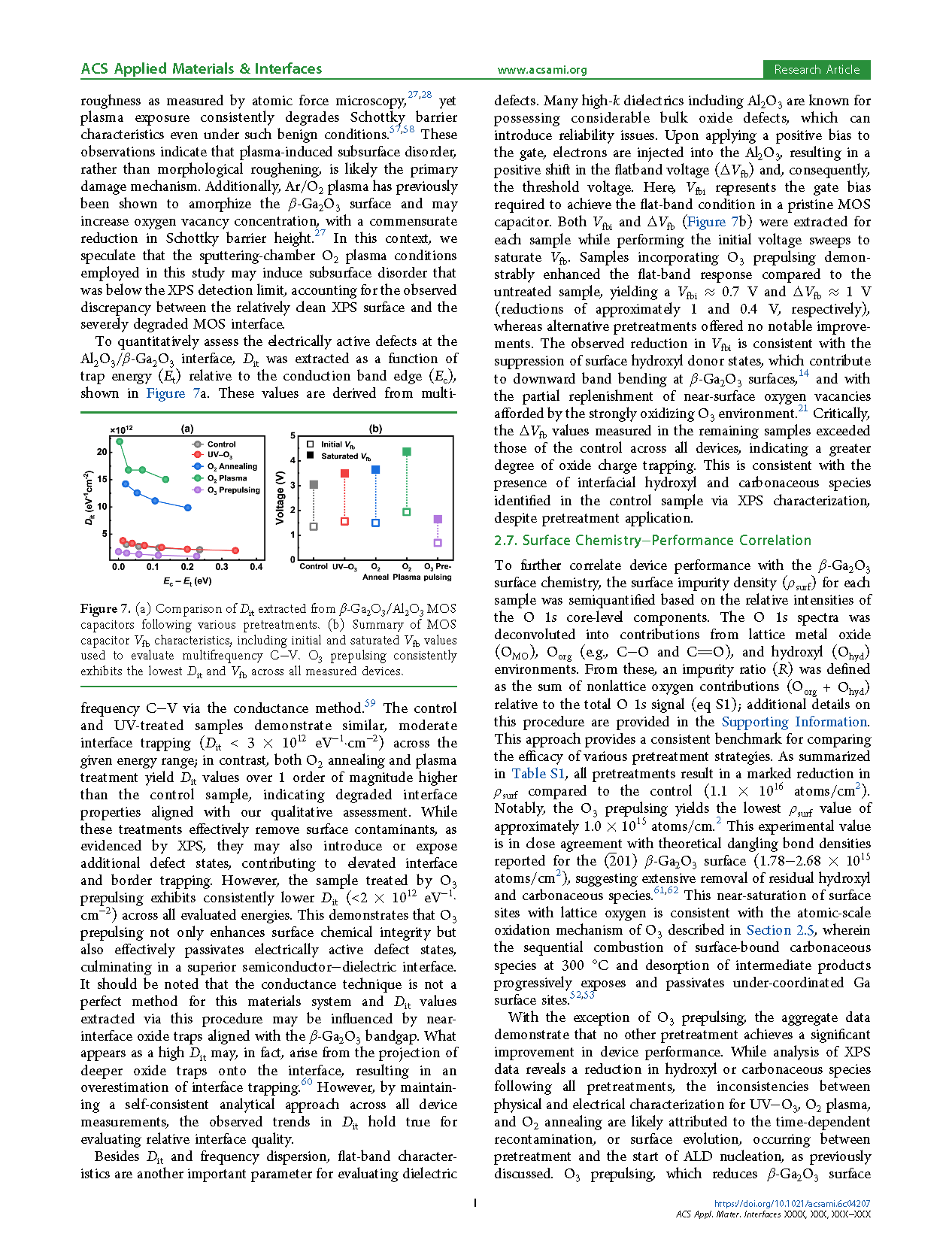
Verified by ARXPS and multifrequency C-V that O₃ prepulsing achieves the lowest surface impurity density (1.0×10¹⁵ atoms/cm²), minimum interface trap density (Dit=1.24±10×10¹² eV⁻¹·cm⁻²) and flat-band voltage drift among all tested processes.
The developed ozone prepulsing technique is fully compatible with mainstream industrial ALD equipment, easy for large-scale industrial promotion on β-Ga₂O₃ power device fabrication.
Conclusion
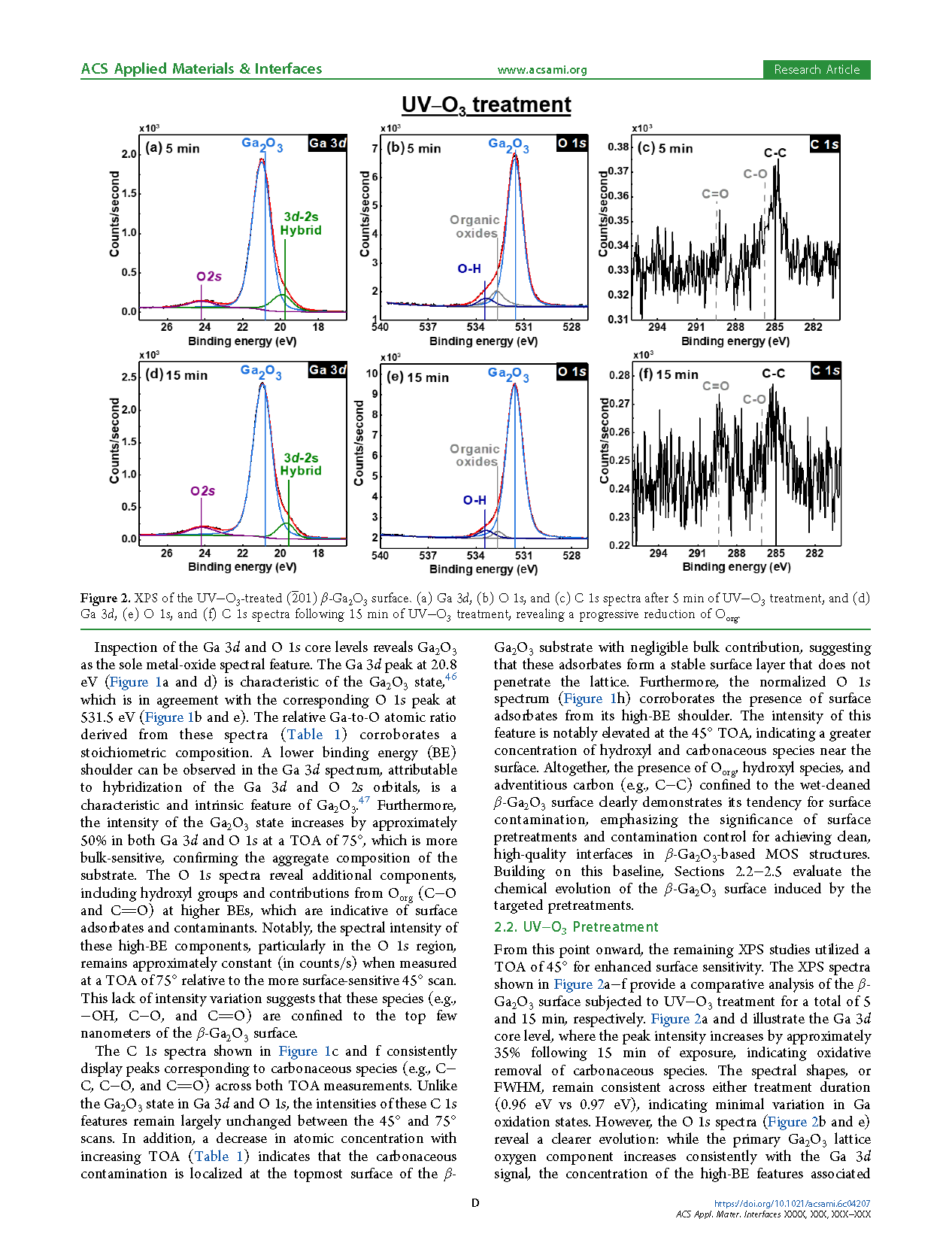
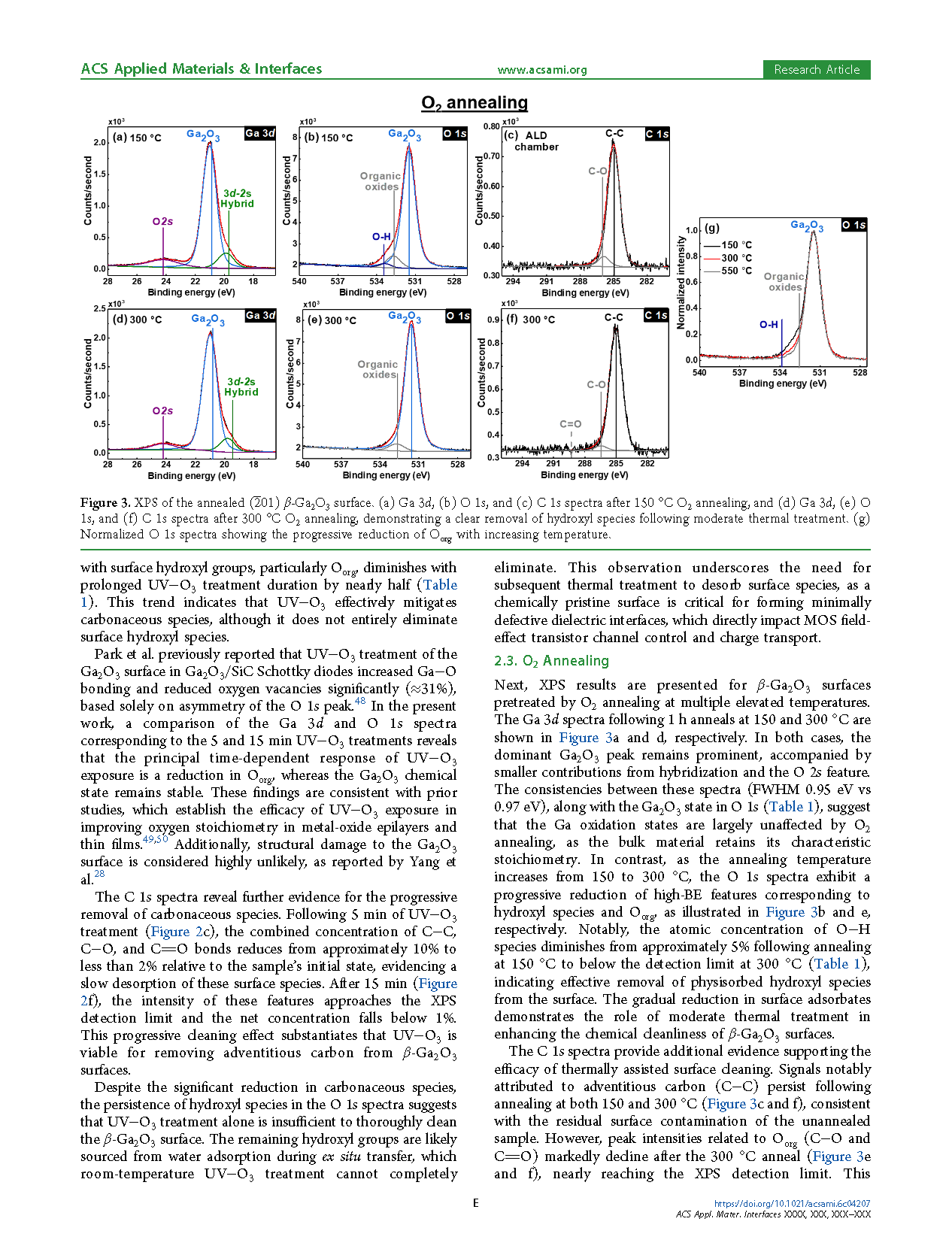
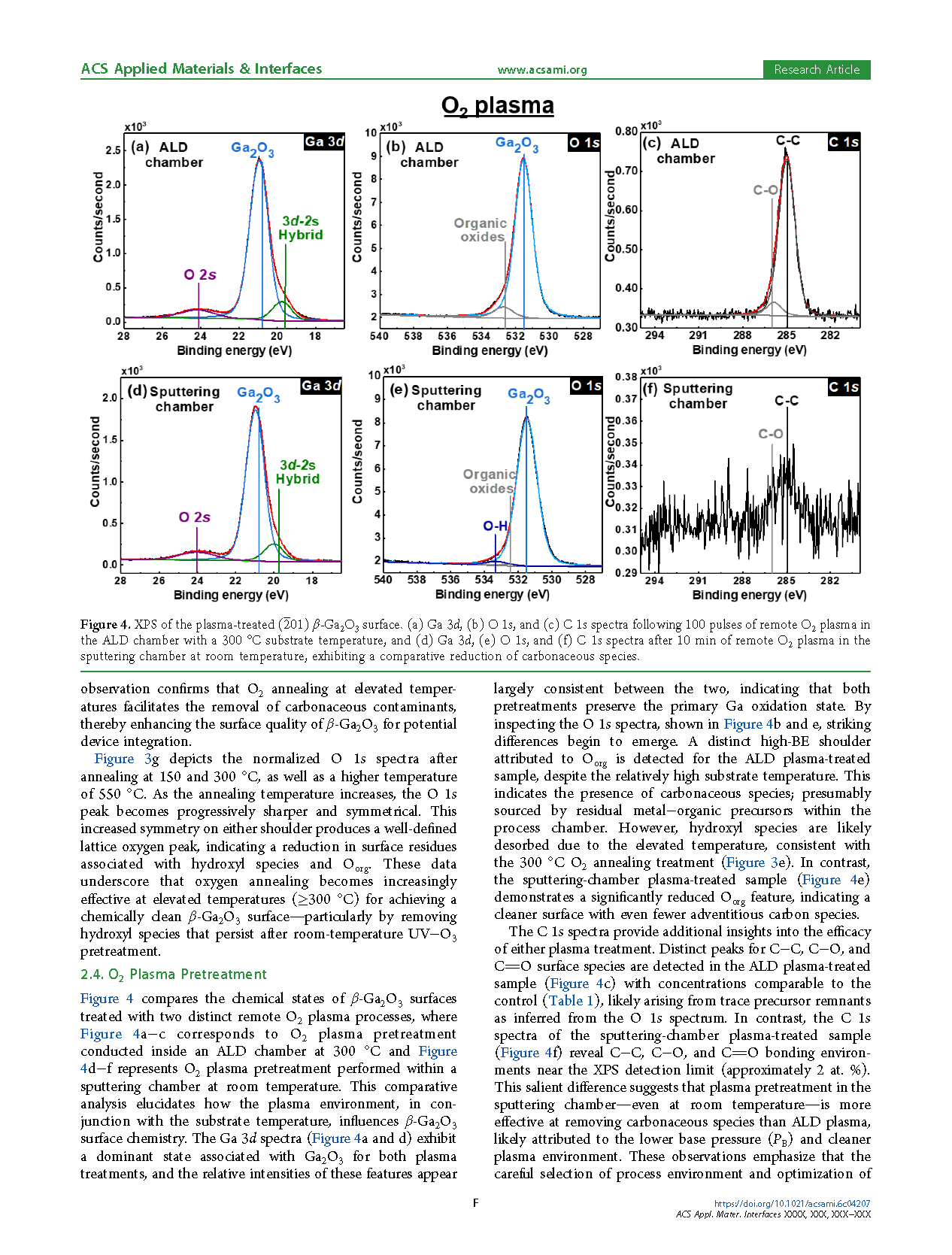
A comprehensive in situ and ex situ investigation of various surface pretreatment methods was conducted to evaluate their impact on the chemical and electrical properties of the β-Ga₂O₃−dielectric interface. While UV−O₃, O₂ annealing, and remote O₂ plasma effectively removed surface organic contaminants and hydroxyl species without disrupting the native stoichiometry, electrical characterization of pretreated MOS capacitors revealed inconsistencies between surface cleanliness and extracted device properties. These discrepancies were attributed to the readsorption of carbonaceous species from the ALD ambient during thermal equilibration, necessitating an alternative pretreatment approach. Therefore, we developed an integrated O₃ prepulsing strategy conducted within the ALD chamber, which minimized β-Ga₂O₃ substrate exposure to the reaction chamber environment and, consequently, surface recontamination. This accessible yet effective treatment yielded the most substantial improvements in both surface chemistry and electronic performance, as evidenced by XPS and C−V characterization. These results underscore the critical relationship between surface contamination and key device properties, highlighting the necessity for systematic and correlated chemical and electrical evaluations to guide future integration of β-Ga₂O₃ into advanced MOS technologies.
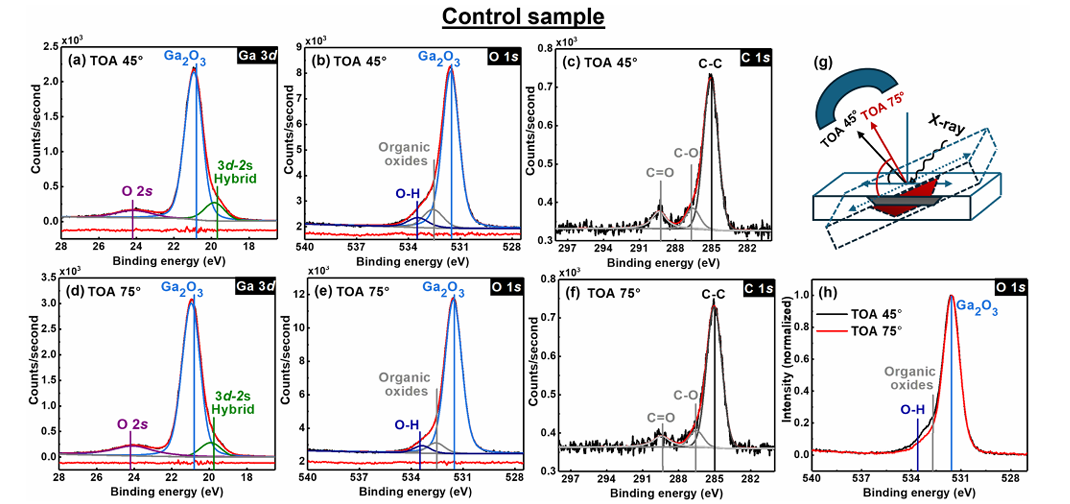
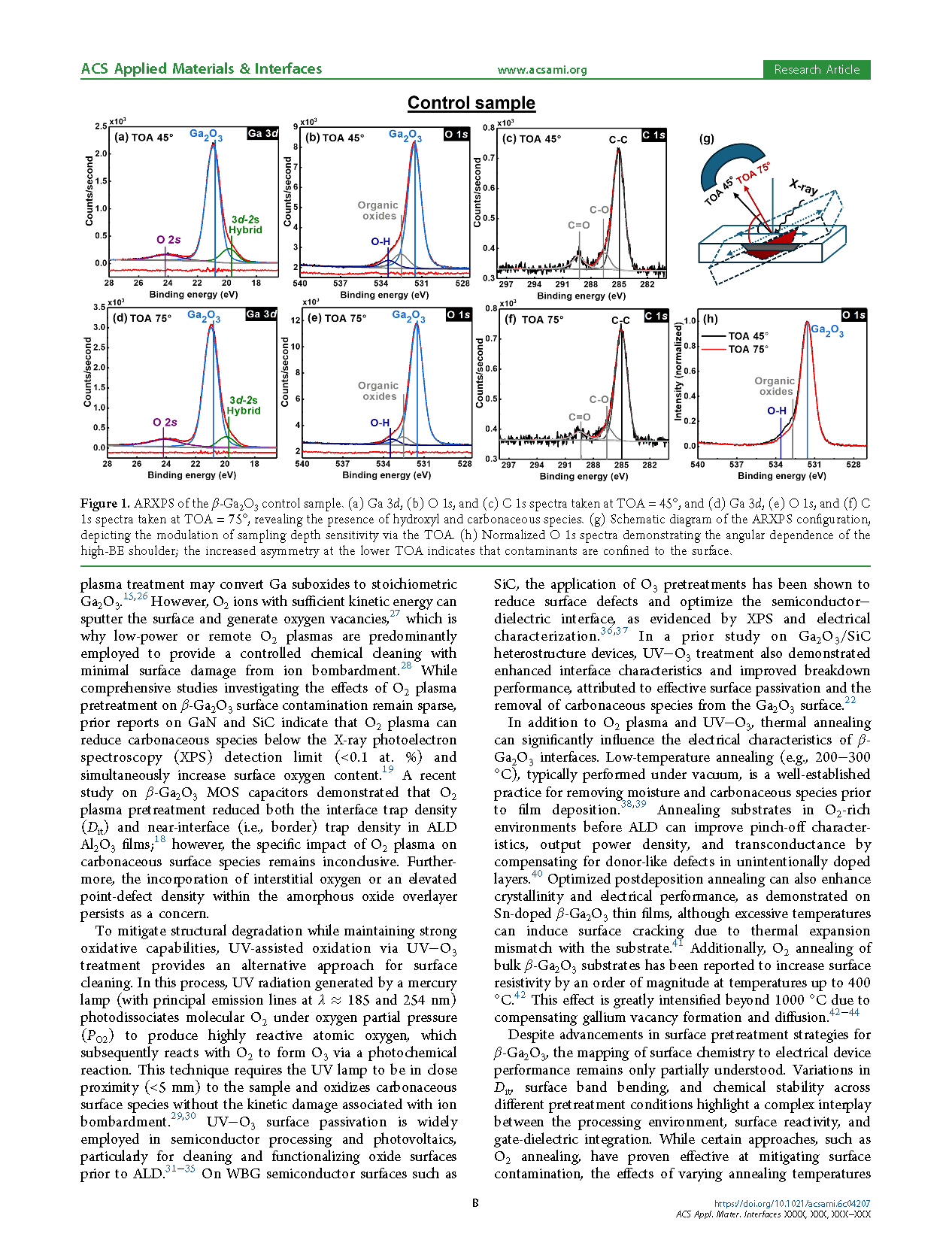
Figure 1 ARXPS of the β-Ga₂O₃ control sample. (a) Ga 3d, (b) O 1s, and (c) C 1s spectra taken at TOA=45°, and (d) Ga 3d, (e) O 1s, and (f) C 1s spectra taken at TOA=75°, revealing the presence of hydroxyl and carbonaceous species. (g) Schematic diagram of the ARXPS configuration, depicting the modulation of sampling depth sensitivity via the TOA. (h) Normalized O 1s spectra demonstrating the angular dependence of the high-BE shoulder; the increased asymmetry at the lower TOA indicates that contaminants are confined to the surface.
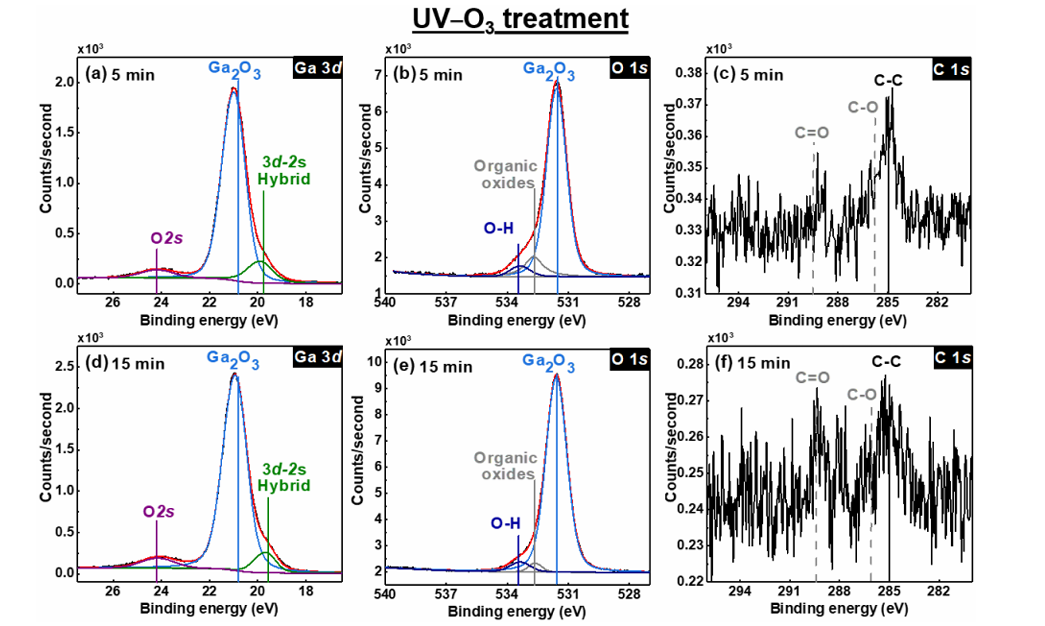
Figure 2 XPS of the UV−O₃-treated (201) β-Ga₂O₃ surface. (a) Ga 3d, (b) O 1s, and (c) C 1s spectra after 5 min of UV−O₃ treatment, and (d) Ga 3d, (e) O 1s, and (f) C 1s spectra following 15 min of UV−O₃ treatment, revealing a progressive reduction of O₍org.₎
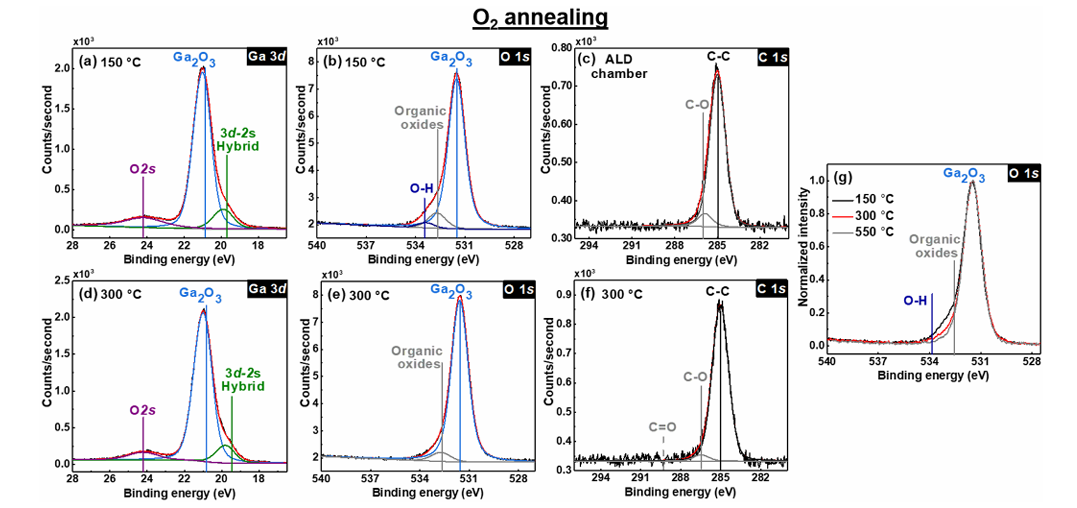
Figure 3 XPS of the annealed (201) β-Ga₂O₃ surface. (a) Ga 3d, (b) O 1s, and (c) C 1s spectra after 150 °C O₂ annealing, and (d) Ga 3d, (e) O 1s, and (f) C 1s spectra after 300 °C O₂ annealing, demonstrating a clear removal of hydroxyl species following moderate thermal treatment. (g) Normalized O 1s spectra showing the progressive reduction of O₍org₎ with increasing temperature.
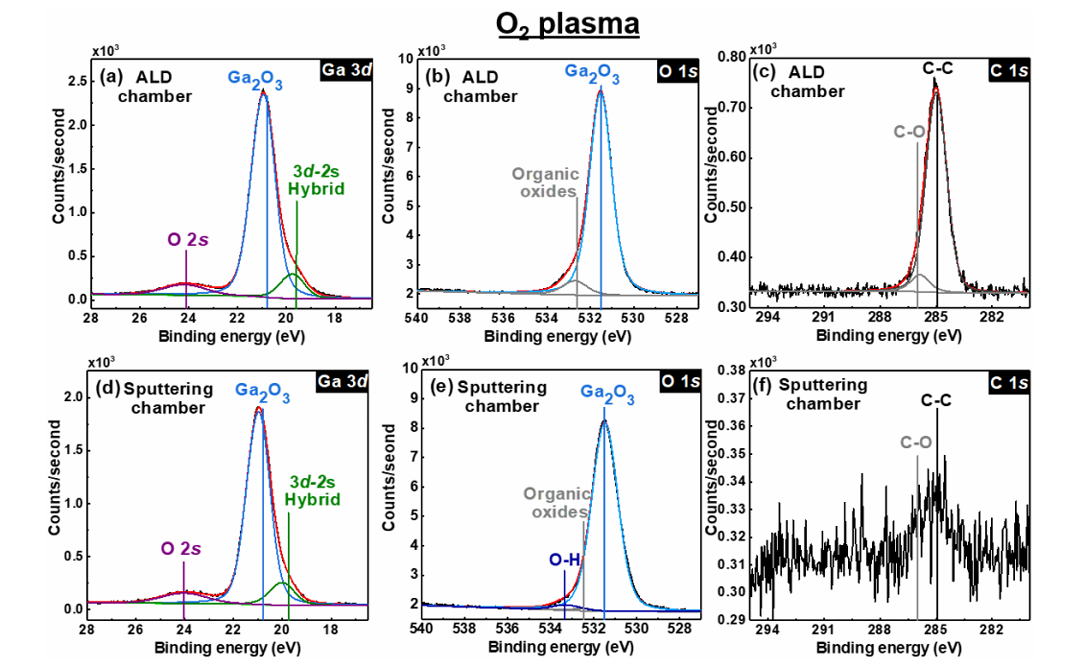
Figure 4 XPS of the plasma-treated (201) β-Ga₂O₃ surface. (a) Ga 3d, (b) O 1s, and (c) C 1s spectra following 100 pulses of remote O₂ plasma in the ALD chamber with a 300 °C substrate temperature, and (d) Ga 3d, (e) O 1s, and (f) C 1s spectra after 10 min of remote O₂ plasma in the sputtering chamber at room temperature, exhibiting a comparative reduction of carbonaceous species.
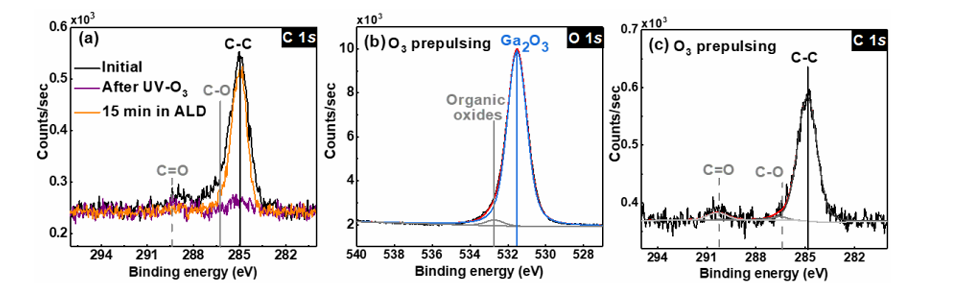
Figure 5 (a) C 1s spectra, depicting the reintroduction of carbonaceous species onto the UV−O₃-treated β-Ga₂O₃ surface following 15 min exposure in the ALD chamber. (b) O 1s and (c) C 1s spectra of the β-Ga₂O₃ surface following 100 O₃ prepulses within the ALD chamber at a 300 °C substrate temperature, demonstrating a reduction in hydroxyl and carbonaceous species relative to a wet-cleaned surface.
DOI:
10.1021/acsami.6c04207
Instruction
Official Account

Cooperation
Top