


Researchers from the Hefei Institutes of Physical Science, Chinese Academy of Sciences, University of Science and Technology of China, Shanghai Institute of Ceramics, Chinese Academy of Sciences have published a dissertation titled "Asymmetric polarization modulation of self-powered deep-ultraviolet photodetector based on an epitaxial β-Ga₂O₃/PZT heterojunction" in Applied Physics Letters.
Background
200–280 nm deep-ultraviolet (DUV) light is strongly absorbed by the ozone layer, enabling high signal-to-noise ratio detection with significant application value in both civilian and military fields. β-Ga₂O₃ has emerged as a core material for DUV photodetectors due to its ultra-wide bandgap of 4.9 eV, high breakdown field strength, and excellent stability. Heterojunction-based β-Ga₂O₃ photodetectors can operate in a self-powered mode at zero bias; however, the built-in electric field alone cannot efficiently separate photogenerated carriers, limiting device performance. The ferroelectric material PZT (lead zirconate titanate) exhibits a stable, tunable, and strong depolarization electric field, and can form a type-II heterojunction with β-Ga₂O₃. Nevertheless, β-Ga₂O₃ films grown on multi-domain ferroelectrics tend to be polycrystalline, leading to severe carrier scattering. Therefore, constructing high-quality epitaxial β-Ga₂O₃/PZT heterojunctions and developing ferroelectric-enhanced self-powered DUV photodetectors are of great significance for addressing the bottlenecks of existing devices and achieving controllable performance modulation.
Highlights
A high-quality epitaxial β-Ga₂O₃/PZT heterojunction self-powered DUV photodetector is fabricated for the first time, solving the problem of polycrystalline β-Ga₂O₃ films on multidomain ferroelectrics and reducing carrier scattering and recombination.
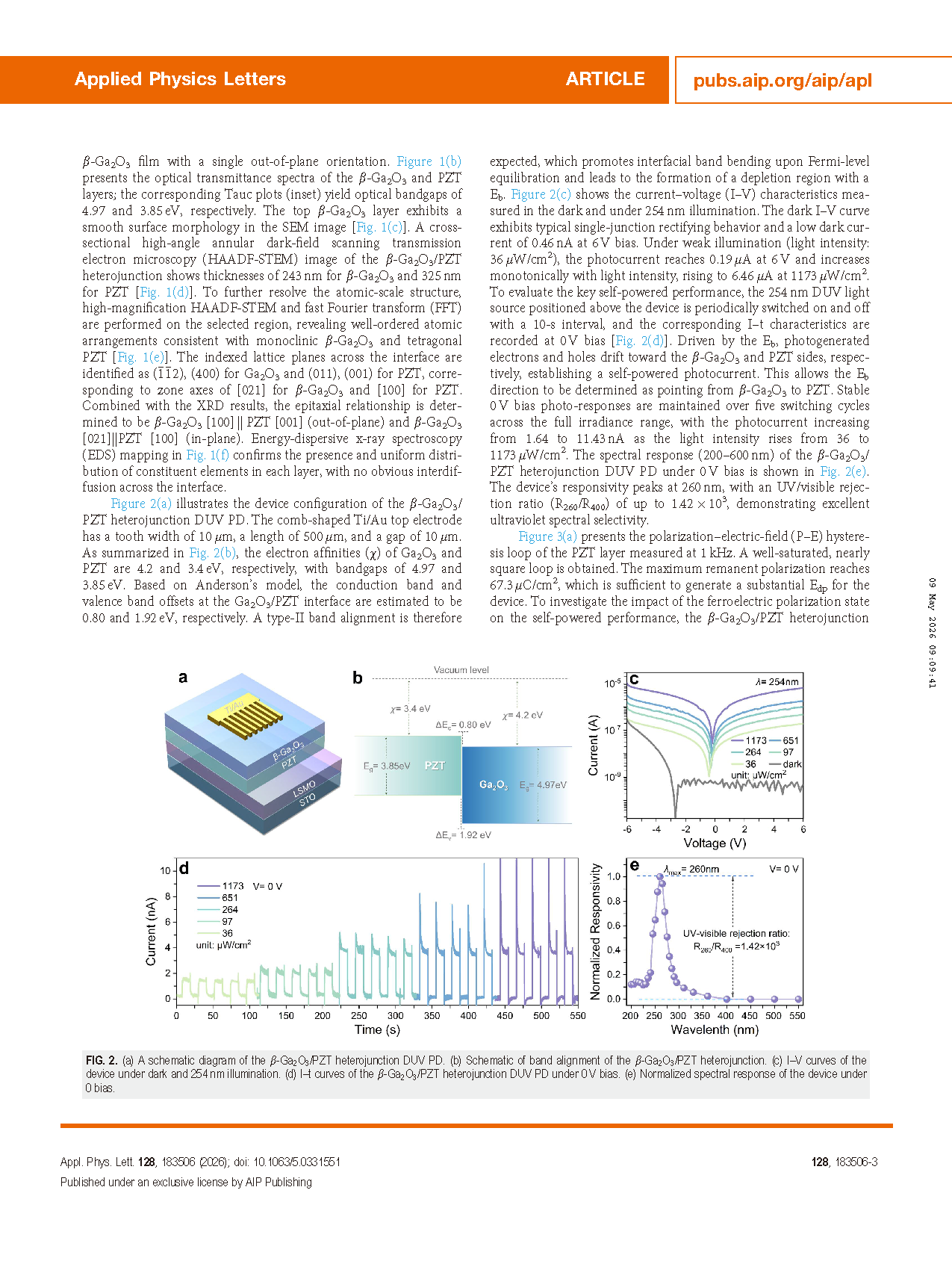
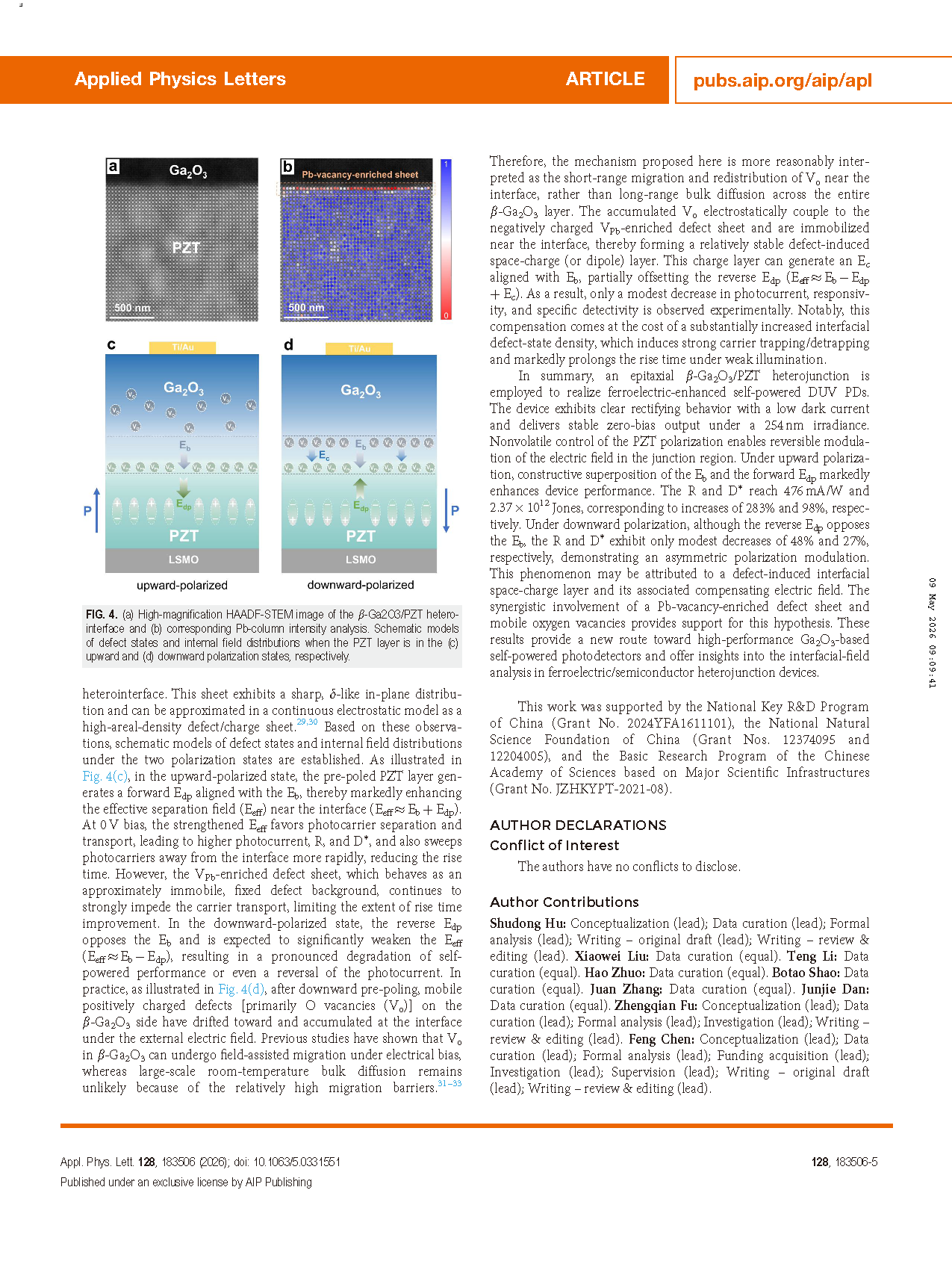
Nonvolatile and reversible modulation of device performance via ferroelectric polarization is realized. Upward polarization significantly enhances responsivity and detectivity, with a performance improvement much higher than the attenuation during downward polarization, showing a unique asymmetric polarization modulation characteristic.
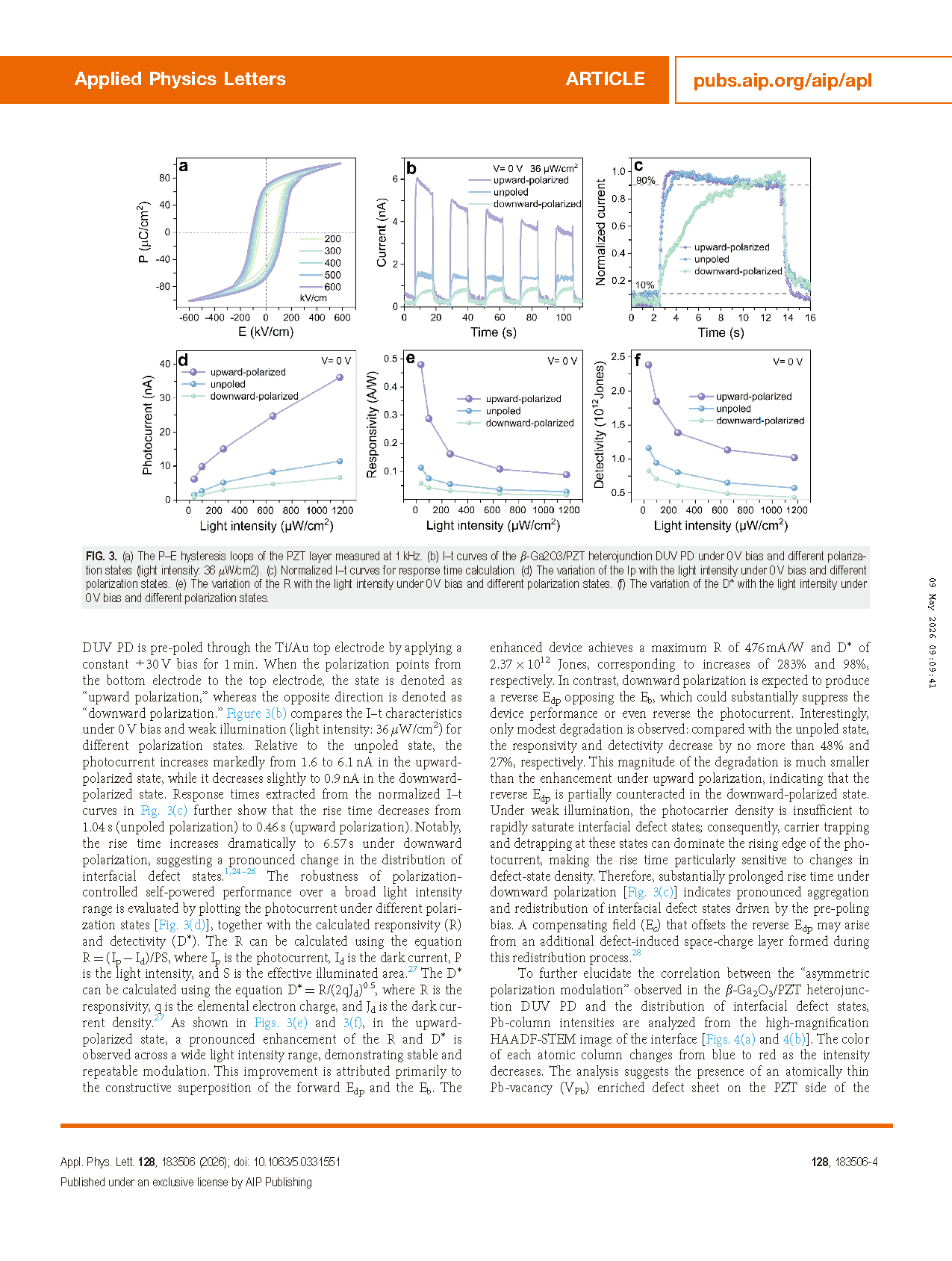
The mechanism of asymmetric polarization modulation is revealed: the synergistic effect of the interfacial Pb-vacancy-enriched sheet and mobile oxygen vacancies forms a compensating electric field during downward polarization, which partially counteracts the reverse depolarization electric field, providing new insights into interfacial electric field regulation in ferroelectric/semiconductor heterojunctions.
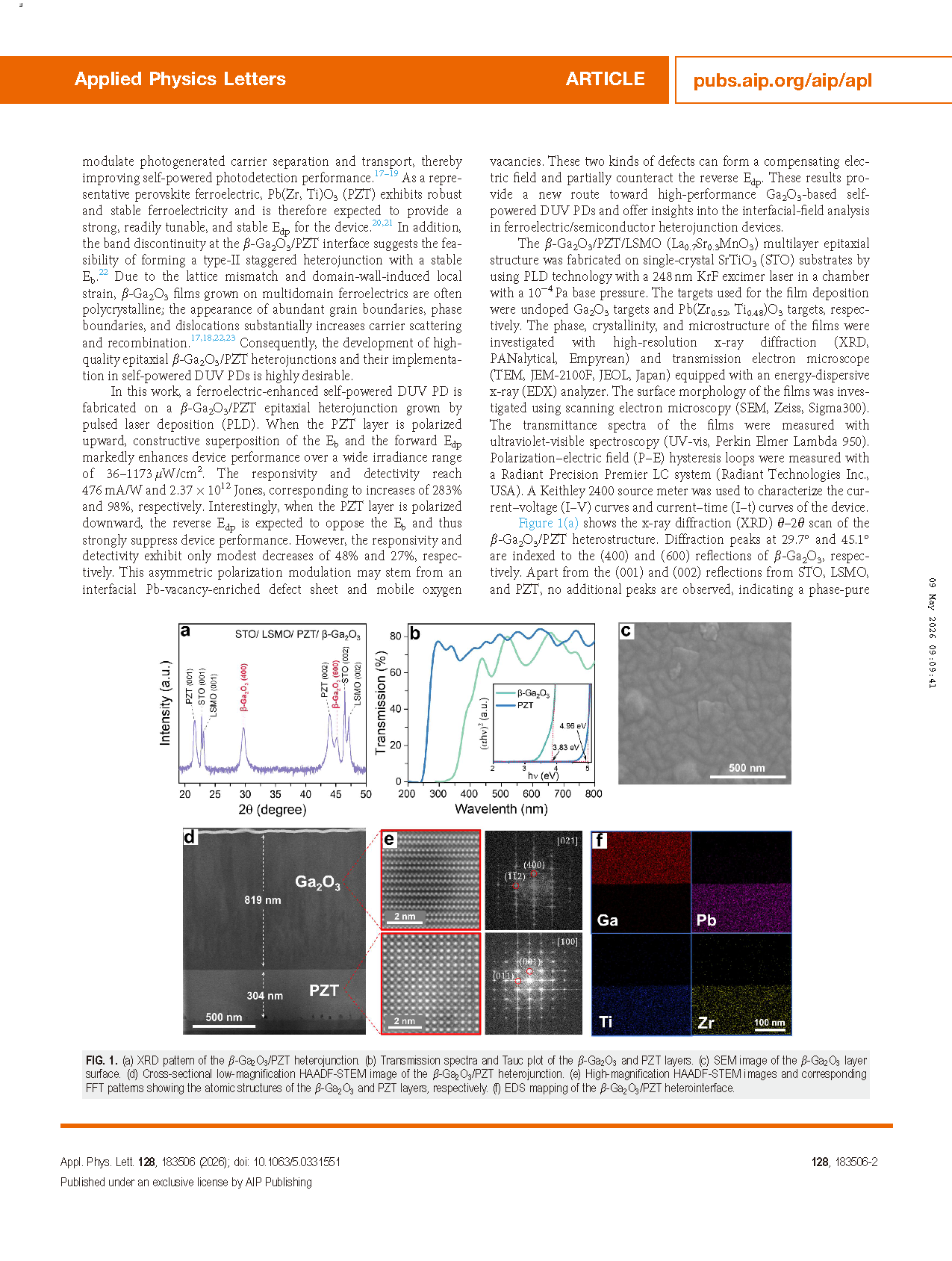
The device exhibits excellent DUV spectral selectivity with an UV/visible rejection ratio up to 1.42×10³, and stable photoresponse at zero bias, suitable for low-power DUV detection applications.
Conclusion
In summary, an epitaxial β-Ga₂O₃/PZT heterojunction is employed to realize ferroelectric-enhanced self-powered DUV PDs. The device exhibits clear rectifying behavior with a low dark current and delivers stable zero-bias output under a 254nm irradiance. Nonvolatile control of the PZT polarization enables reversible modulation of the electric field in the junction region. Under upward polarization, constructive superposition of the Eb and the forward Edp markedly enhances device performance. The R and D reach 476mA/W and 2.37 ×10¹² Jones, corresponding to increases of 283% and 98%, respectively. Under downward polarization, although the reverse Edp opposes the Eb, the R and D exhibit only modest decreases of 48% and 27%, respectively, demonstrating an asymmetric polarization modulation. This phenomenon may be attributed to a defect-induced interfacial space-charge layer and its associated compensating electric field. The synergistic involvement of a Pb-vacancy-enriched defect sheet and mobile oxygen vacancies provides support for this hypothesis. These results provide a new route toward high-performance Ga₂O₃-based self-powered photodetectors and offer insights into the interfacial-field analysis in ferroelectric/semiconductor heterojunction devices.
Project Support
This work was supported by the National Key R&D Program of China (Grant No. 2024YFA1611101), the National Natural Science Foundation of China (Grant Nos. 12374095 and 12204005), and the Basic Research Program of the Chinese Academy of Sciences based on Major Scientific Infrastructures (Grant No. JZHKYPT-2021-08).
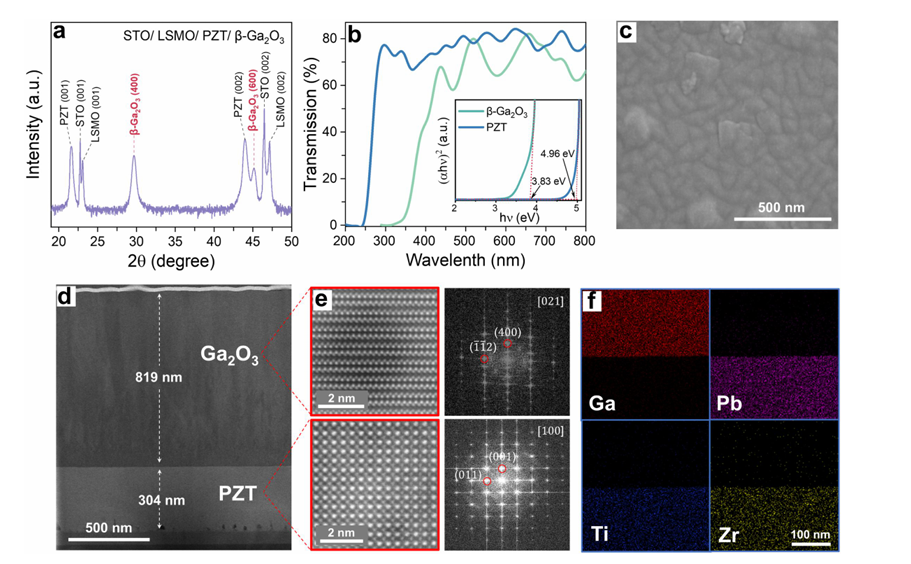
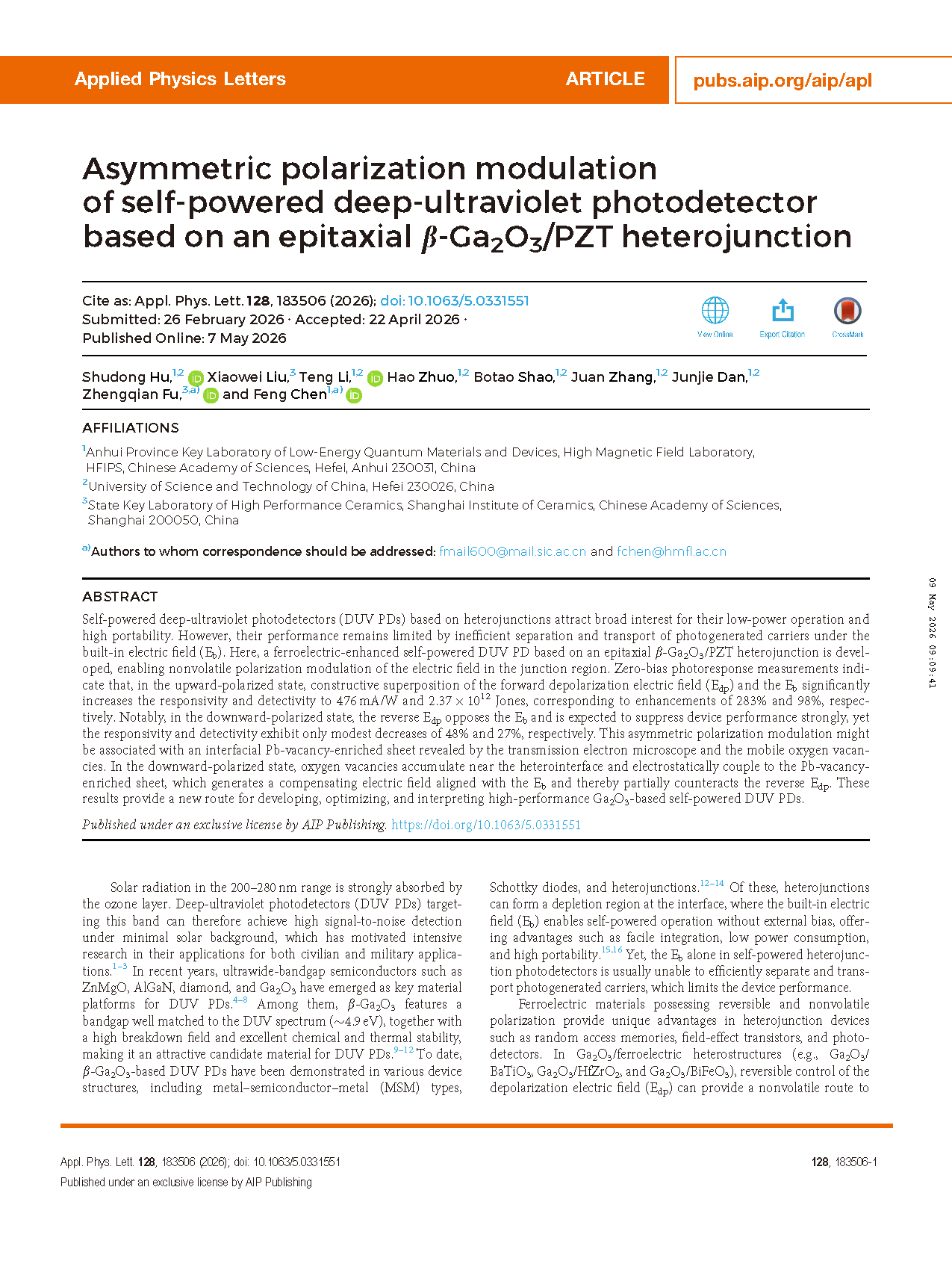
Figure 1 (a) XRD pattern of the β-Ga₂O₃/PZT heterojunction. (b) Transmission spectra and Tauc plot of the β-Ga₂O₃ and PZT layers. (c) SEM image of the β-Ga₂O₃ layer surface. (d) Cross-sectional low-magnification HAADF-STEM image of the β-Ga₂O₃/PZT heterojunction. (e) High-magnification HAADF-STEM images and corresponding FFT patterns showing the atomic structures of the β-Ga₂O₃ and PZT layers, respectively. (f) EDS mapping of the β-Ga₂O₃/PZT heterointerface
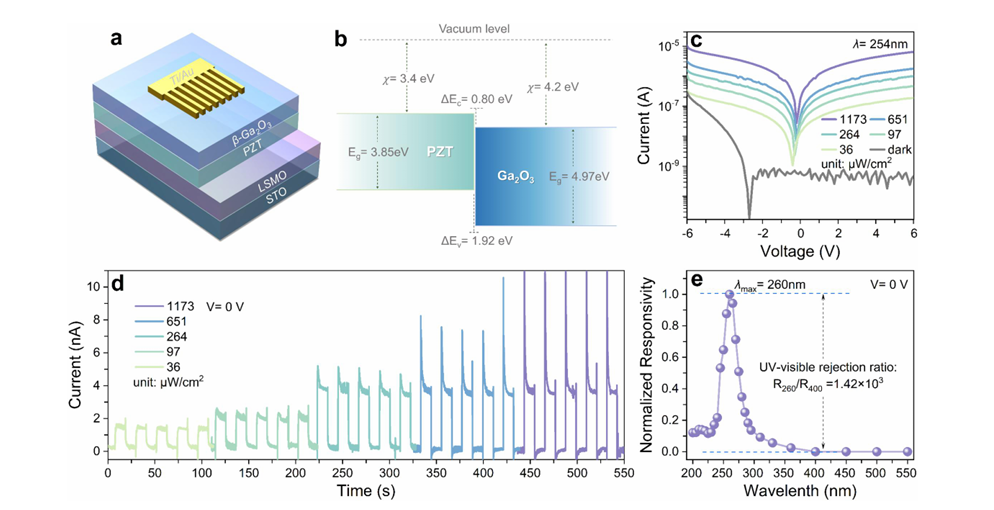
Figure 2 (a) A schematic diagram of the β-Ga₂O₃/PZT heterojunction DUV PD. (b) Schematic of band alignment of the β-Ga₂O₃/PZT heterojunction. (c) I–V curves of the device under dark and 254 nm illumination. (d) I–t curves of the β-Ga₂O₃/PZT heterojunction DUV PD under 0 V bias. (e) Normalized spectral response of the device under 0 bias.
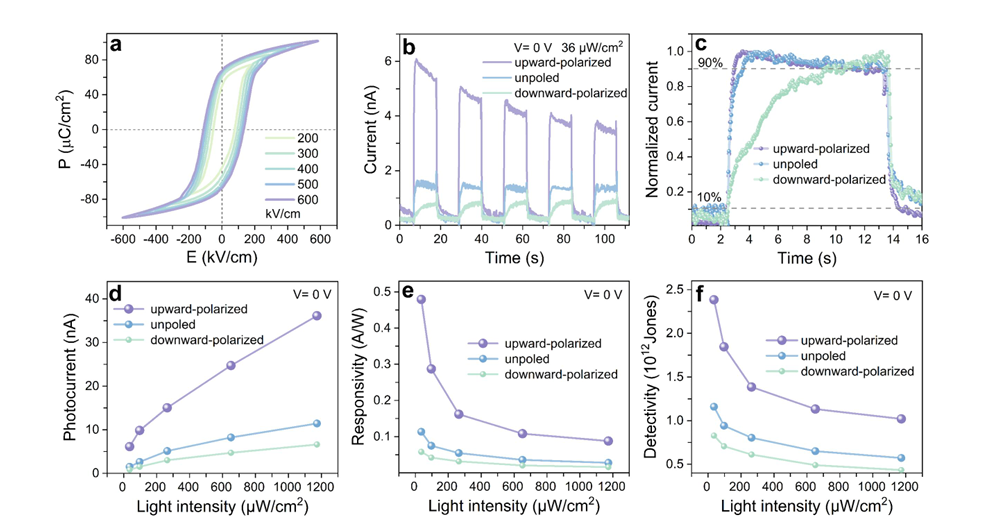
Figure 3 (a) The P–E hysteresis loops of the PZT layer measured at 1 kHz. (b) I–t curves of the β-Ga₂O₃/PZT heterojunction DUV PD under 0 V bias and different polarization states (light intensity: 36 μW/cm²). (c) Normalized I–t curves for response time calculation. (d) The variation of the Ip with the light intensity under 0 V bias and different polarization states. (e) The variation of the R with the light intensity under 0 V bias and different polarization states. (f) The variation of the D* with the light intensity under 0 V bias and different polarization states.
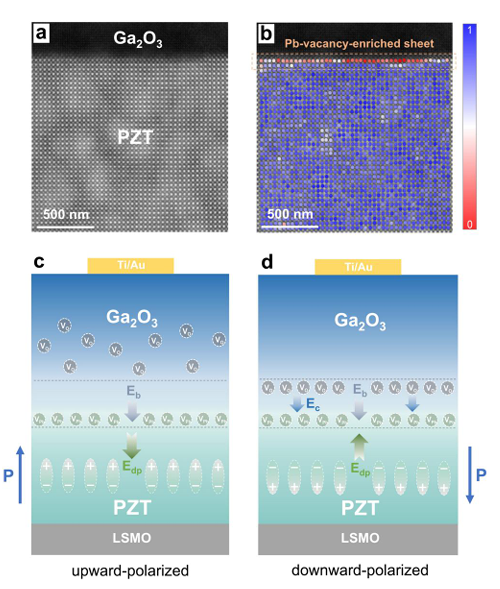
Figure 4 (a) High-magnification HAADF-STEM image of the β-Ga₂O₃/PZT heterointerface and (b) corresponding Pb-column intensity analysis. Schematic models of defect states and internal field distributions when the PZT layer is in the (c) upward and (d) downward polarization states, respectively.
DOI:
10.1063/5.0331551
Instruction
Official Account

Cooperation
Top